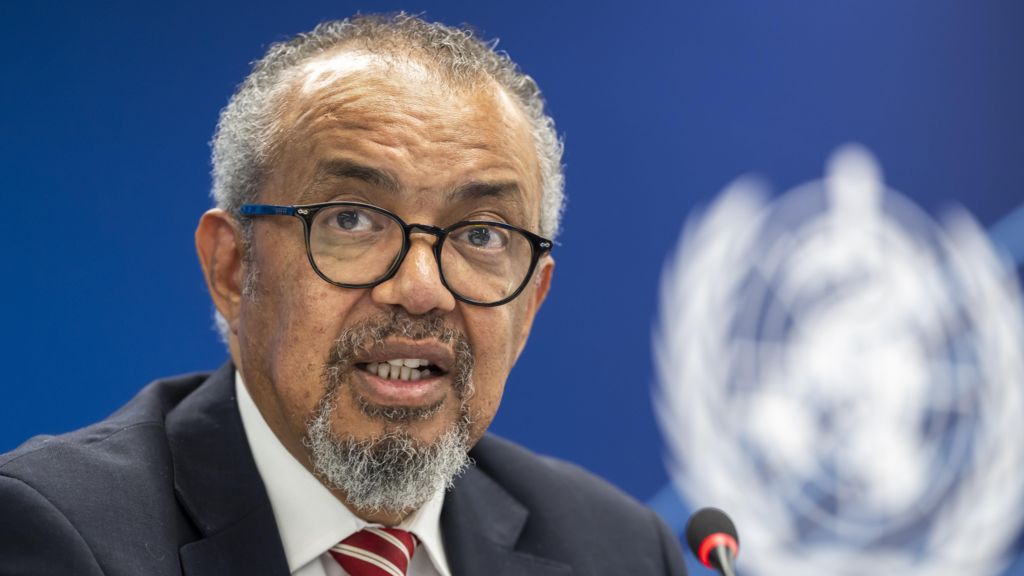
The world faces a rapidly escalating public health crisis in the eastern Democratic Republic of Congo (DRC), where the 2026 Ebola outbreak is projected to become the deadliest in recorded history if current infection trends hold, World Health Organization (WHO) Director-General Tedros Adhanom Ghebreyesus has announced.
Speaking to reporters, Tedros explained that at the current rate of transmission, the outbreak will eclipse the devastating 2014-2016 West African Ebola epidemic, which claimed more than 11,000 lives across the region. As of the latest WHO update, the 2026 outbreak – officially declared on May 15 – has already confirmed at least 4,300 cases and recorded over 2,000 deaths.
While the WHO has set an ambitious goal to reverse the outbreak’s spread within a three-month window, agency officials have stressed that this target only refers to bringing community transmission under control, not eradicating the virus entirely. A key complicating factor that has fueled the outbreak’s rapid growth is its unrecognized early spread: health officials confirmed this week that the virus began circulating as early as February, three full months before the outbreak was formally declared. Early cases were misdiagnosed as more common local illnesses, including malaria and typhoid, allowing undetected transmission to continue for months.
“We are chasing the virus, and the virus is ahead of us,” Dr Mohamed Janabi, WHO Regional Director for Africa, told reporters during a press briefing in Bunia, the DRC city closest to the outbreak’s epicenter.
Compounding challenges for frontline response teams, the 2026 outbreak is caused by the rare Bundibugyo strain of Ebola, a variant that has only been linked to two small, previously documented outbreaks in 2007 and 2012. No vaccines or antiviral therapies have received full regulatory approval specifically for this strain, leaving response teams with no standard, proven tools to stop transmission or treat infected patients.
Widespread regional instability in eastern DRC has further undermined containment efforts, Janabi added. Ongoing conflict has restricted access to affected communities, meaning health workers can only reach roughly 30% of confirmed cases to provide care and implement infection control measures.
Ebola is an extremely virulent viral pathogen with a high mortality rate. Symptoms develop between 2 and 21 days after initial exposure, beginning with sudden flu-like manifestations including fever, headache and fatigue that easily mimic more common tropical illnesses like malaria. As infection progresses, patients develop severe vomiting and diarrhea, often leading to acute organ failure and death. The virus spreads between humans through direct contact with infected bodily fluids, such as blood or vomit.
Despite the severe challenges, there are emerging signs of progress in research and development for targeted countermeasures. The UK’s Medicines and Healthcare products Regulatory Agency (MHRA) has granted regulatory approval to launch the first human clinical trials for an investigational Bundibugyo Ebola vaccine. The candidate is being developed by a research team at the University of Oxford, built on the same stable mRNA-vectored platform that powered the Oxford-AstraZeneca COVID-19 vaccine. Three additional independent research groups are also working on alternative Bundibugyo vaccine candidates, though those are still in pre-clinical development and have not yet entered human testing.
Separately, the WHO is sponsoring a clinical trial based in the DRC to test whether two existing antiviral therapies can improve survival rates for patients infected with the Bundibugyo strain, as global health authorities work to scale up evidence-based care while long-term vaccine development progresses.