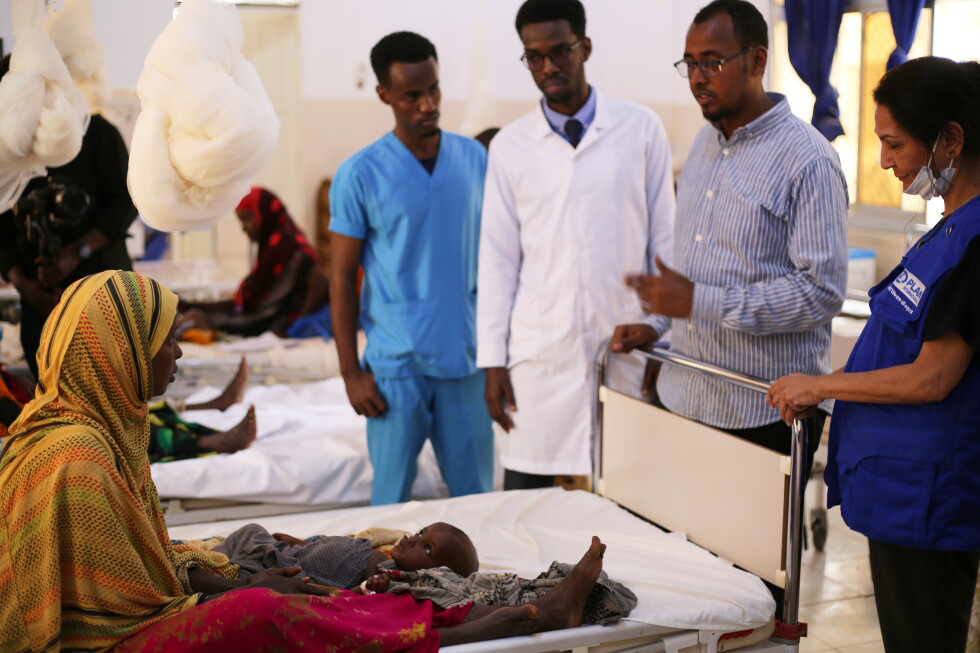
For Luul Mohamed, a 300-kilometer trek across parched Somali terrain with five young children ended with a desperate arrival in the southwestern city of Baidoa on August 3. With no food reserves and no clear plan for what comes next, Mohamed and her family are just one of hundreds of thousands of households forced to abandon their rural homes by a years-long drought that has pushed Somalia into one of the worst humanitarian emergencies of the decade.
Drought conditions destroyed all livelihoods in Mohamed’s home region of Middle Jubba, forcing her family to wander from village to village for nearly two weeks before reaching Baidoa, which has emerged as a primary refuge for people fleeing overlapping crises of water scarcity, food insecurity and persistent insecurity across southern Somalia. “We are very hungry and in a desperate situation,” Mohamed explained in an interview. “We have nothing to eat and can only place our hope in God, as He is the one who sustains us through this ordeal that culminated in our trip.”
What Mohamed’s family faces underscores a rapidly worsening crisis: years of sustained drought, ongoing conflict and crippling economic pressure have driven a surge in displacement, with growing numbers of rural Somalis packing what little they have left to settle in overcrowded displacement camps. Compounding this emergency, international humanitarian funding to address the crisis continues to shrink, even as hunger rates reach unprecedented levels.
Data from global humanitarian organization Plan International shows that roughly 2 million Somalis are now facing emergency-level food insecurity – more than double the number recorded just one year ago. The organization has already provided life-saving support to more than 200,000 people across Somalia this year, and it is joining Somalia’s national Disaster Management Agency in issuing an urgent appeal for scaled-up international intervention. Leaders of both organizations warn that the crisis could grow even more devastating if another extreme climate event hits the country later this year, as forecast.
The United Nations Food and Agriculture Organization projects a more than 90% chance that El Nino conditions will develop by mid-2023 (corrected from original typo of 2026) and intensify during Somalia’s critical October-to-December rainy season, bringing a high risk of catastrophic flooding that would reverse what little progress communities have made to recover from drought.
Somalia has long been one of the countries most vulnerable to climate extremes, trapped in a repeating cycle of multi-year drought followed by destructive, landscape-altering flooding. These consecutive shocks have systematically eroded traditional rural livelihoods, displaced millions of people, fueled repeated outbreaks of preventable disease, and pushed food insecurity to catastrophic levels.
Today, hundreds of thousands of people fleeing prolonged drought are packed into sprawling, informal displacement settlements on the outskirts of Baidoa. Among them is Habiba Adan, who left her home in the Bay region’s Awdiinle settlement after four straight years of drought wiped out all her crops and killed her entire livestock herd. She resettled in Baidoa with her two adult daughters, and while she longs to return home to rebuild, she says continued drought and repeated failed harvests have left that dream impossible.
“The drought we are experiencing has stretched for four consecutive years, and this year, most crops have again been decimated,” Adan said. “Farmers were only able to harvest enough to sow their fields for the next season, leaving our future bleak. Here in these camps, we lack food and essential support. We have no food, water, or money, and we sit idly.”
Plan International data shows Baidoa is now home to roughly 1.6 million people, nearly half of whom are displaced from their original communities. One in five of these displaced households lacks consistent access to clean drinking water, the most pressing immediate challenge facing the newly arrived. With no local water sources left intact, many families are forced to purchase water delivered by private trucks at exorbitant prices that most cannot afford long-term.
Reena Ghelani, global CEO of Plan International, visited displacement settlements and medical facilities in Baidoa and the surrounding Bay region last week, meeting directly with families affected by the crisis. She explained that most of the displaced families she spoke with had stayed in their home communities for years, doing everything possible to survive repeated droughts, only leaving once every last resource was exhausted.
Many fled “after waiting and waiting year after year of drought and just surviving,” Ghelani said. “And now they say there’s nothing left. They have no water. They have no stocks. The animals have died. There is literally nothing left anymore.” She added that soaring global and regional food prices have placed even more pressure on families already struggling to scrape together enough to feed their children.
Children have borne the brunt of this crisis, with malnutrition rates reaching alarming levels across southern Somalia. Data released in May by the Integrated Food Security Phase Classification, the global leading hunger monitoring body, shows that roughly half of all children under five years old in Somalia are facing acute malnutrition.
Plan International, citing data from partner organization Save the Children, reports that the number of children being treated for severe acute malnutrition – the deadliest form of the condition – in Baidoa has nearly tripled over just six months. Dr. Omar Abdikarin, a nutritionist working at a Baidoa hospital, says malnourished patients arrive from across the Bay region as well as neighboring Bakool and Gedo regions, overwhelming local care capacity.
“Malnutrition is prevalent in this region, and the majority of patients treated at this hospital suffer from malnourishment,” Abdikarin said. Beyond malnutrition, Ghelani noted that communities are facing widespread outbreaks of preventable and treatable diseases, including diphtheria, measles, malaria, cholera and acute diarrhea, stretching underfunded local health systems to breaking point.
The projected El Nino-driven heavy rains and flooding later this year add a dangerous new layer of risk to a country already reeling from multiple overlapping crises. Intense flooding could destroy what little remains of homes and farmland, contaminate already scarce drinking water supplies, and force hundreds of thousands of already displaced families to flee once again. Aid agencies warn that El Nino will push millions more into crisis before communities have had any chance to recover from the ongoing drought emergency.
For newly arrived families like Mohamed’s, the most urgent priority remains securing access to basic needs: clean drinking water and enough food to feed their children. Mohamed says her husband left the camp shortly after their arrival to search for day labor work on farms on the outskirts of Baidoa, hoping to earn enough money or find leftover crops to bring back to their children. A day after he left, Mohamed and her children were still waiting, unsure if he would return with good news.
Faruk reported this story from Mogadishu, Somalia.