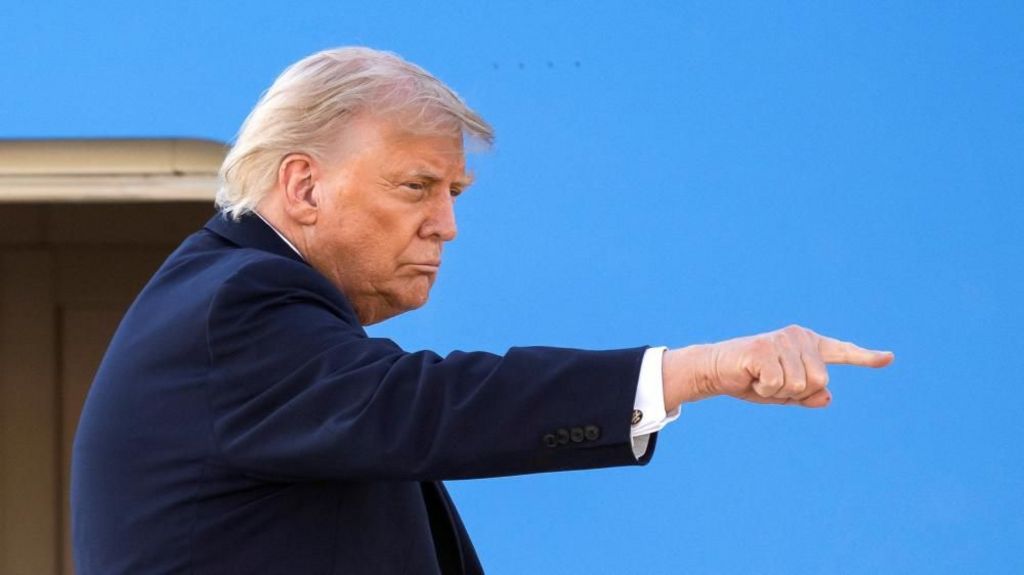
A recently uncovered security operation has pulled back the curtain on the persistent personal threat Iran poses to former and current US President Donald Trump, highlighting the deeply personal stakes at the heart of the six-month ongoing conflict between the United States and Iran. New details have emerged showing that last month, following the NATO summit held in Ankara, Turkey, Trump orchestrated an elaborate decoy operation that saw him secretly switch to an unmarked alternate aircraft rather than travel aboard the iconic Air Force One 747, leaving most of the press pool and White House staff aboard the standard presidential jet as a deliberate diversion.
Multiple US officials with knowledge of the operation have confirmed the extreme measures were taken in direct response to credible intelligence indicating Iran planned to launch a missile strike targeting Air Force One during its departure from Turkey. To complete the ruse, Trump was transported between locations and to the alternate aircraft inside an unmarked catering truck, a detail that has drawn sharp scrutiny given Trump’s long public focus on projecting unmatched strength against Iran.
The revelation adds new context to long-documented tensions between Trump and the Iranian leadership, stretching back to his first term in office. In February 2026, a joint Israeli airstrike carried out with US approval and coordination killed Iran’s supreme leader Ayatollah Ali Khamenei alongside multiple other top Iranian officials. Just one day after the strike, Trump acknowledged the personal nature of the conflict in a private phone call with ABC correspondent Jonathan Karl, saying: “I got him before he got me. They tried twice. Well, I got him first.”
Trump has not repeated those blunt remarks publicly in the six months since the strike began, but Defense Secretary Pete Hegseth echoed the framing in March comments, telling reporters: “Iran tried to kill President Trump, and President Trump got the last laugh.” Hegseth also noted that the Iranian commander who allegedly led the assassination plot targeting Trump had been killed in subsequent US strikes.
Security experts note that extraordinary secret travel measures are not unprecedented for US presidents traveling in or near active conflict zones; past commanders-in-chief have made unannounced secret trips to Afghanistan, Iraq, and Ukraine under heavy secrecy. However, this operation marks a historic first: no prior president has implemented such a full-scale decoy ruse without at least notifying major press outlets ahead of time, under embargo agreements that delay publication until the president is safely out of range.
Political analysts argue the months-long secrecy surrounding the Ankara operation was at least partially driven by a desire to protect Trump’s public image. The president has repeatedly claimed that Iran’s military has been thoroughly defeated and that the conflict is effectively over, so the optics of hiding from an active threat in a catering truck undermine that narrative of victory.
The threat of Iranian assassination plots against Trump is not a new development, however. Following Trump’s 2020 order for a drone strike that killed top IRGC commander Qasem Soleimani, Iranian leaders immediately vowed revenge against the US president and senior administration officials. At one point, a public mural in Iran depicted a drone targeting Trump as he played golf at his Florida resort, making the threat explicit.
Subsequent years have brought multiple uncovered plots against Trump, many tied directly to the IRGC. In 2022, the Biden administration uncovered an Iranian plot to target former Trump national security advisor John Bolton and issued a formal warning to Tehran. In July 2024, US law enforcement arrested Pakistani national Asif Merchant, who had alleged IRGC ties, for plotting to assassinate Trump. Four months later, Afghani citizen Farhad Shakeri was charged in a second separate assassination plot targeting the then-candidate. Merchant was convicted of the charges in March 2026, but Shakeri – who prosecutors say was directed by a senior IRGC official – remains at large.
While those plots were foiled before they could be carried out, Trump has already faced direct physical danger multiple times. In July 2024, during a campaign rally in Butler, Pennsylvania, a gunman opened fire on the stage, leaving Trump bloodied and injuring multiple attendees. Just two months later, Secret Service agents arrested an armed man hiding in trees near a Florida golf course where Trump was playing.
New York Times White House correspondent Maggie Haberman, who has covered Trump for decades, explained in a recent interview that these repeated threats have reshaped how the president views his conflict with Iran. “It was a galvanising moment for him,” Haberman said. “All of that in his mind becomes one big blur. For Trump himself, Iran and this feeling of being under threat is constant.”
Multiple White House sources have confirmed Trump often jokes openly about being a top assassination target, even as the threat remains ever-present. “Nobody told me how dangerous it is to be president, and if they had told me, I probably wouldn’t have run,” Trump has told aides, according to one senior official quoted by news outlet Semafor. “And he makes comments like that in jest, but there’s a reality behind that.”
After Trump ordered bombing strikes on Iran’s nuclear research facilities in 2025, followed by a widescale bombing campaign and naval blockade of Iran in early 2026, Tehran issued a new round of explicit threats targeting Trump personally. The president responded with a blunt warning of his own on his social platform Truth Social in July, writing: “Iran had made threats ‘to assassinate, or attempt to assassinate’ me and 1,000 missiles are Locked and Loaded and aimed at the Islamic Republic of Iran, with thousands more to immediately follow, should the Iranian Government act on its threat.”
In the days just before Trump’s departure from the NATO summit in Turkey, Iranian leaders doubled down on their threats. At Khamenei’s funeral, attendees carried a public banner reading “#KillTrump”. A week later, a large mural on a central Tehran building depicted Trump lying in a black coffin, with the words “We will kill Trump” and “Blood for blood” painted below the image. Iran has repeatedly denied involvement in any previous plots to assassinate Trump, but the public messaging following Khamenei’s death – and rising reports of civilian casualties from US and Israeli strikes – leaves no room for ambiguity: for Iran, the conflict is far from over, and Trump remains a primary target for revenge.
When Trump finally rejoined the press pool on the final leg of the return trip to the US, reporters pressed him about the unusual security measures, which included a Secret Service order to close all window shades on the decoy Air Force One during takeoff from Ankara. “I have read all the time I’m number one on their list,” Trump told reporters. “But if I go, you go, right?”