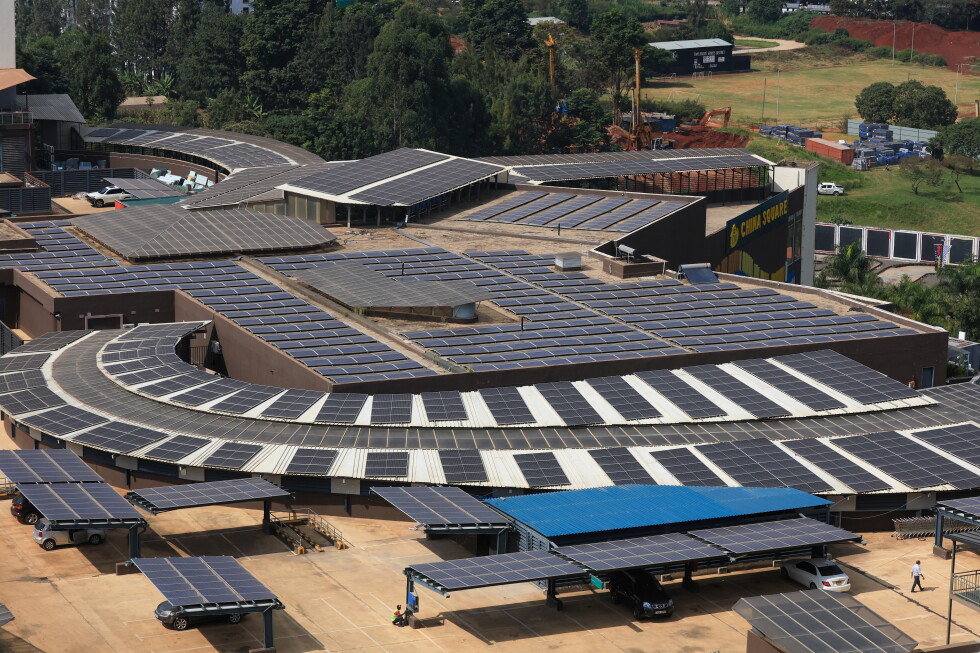
Across the African continent, the largest national economies are moving faster than ever to expand domestic solar manufacturing capacity, a strategic shift industry analysts tie to both broader industrial development ambitions and rising concerns over heavy reliance on Chinese imports that currently control the vast majority of the global solar supply chain.
Industry experts confirm Ethiopia, South Africa, Morocco and Nigeria are prioritizing localization of solar equipment production, scaling up operations from basic module assembly to more complex, high-value manufacturing processes. Even so, analysts broadly agree China will almost certainly retain its dominant global position in producing solar cells and other core supply chain components, a status reinforced by a persistent domestic supply glut that has pushed its export volumes to record heights.
Data from London-based think tank ODI Global shows cumulative Chinese investment in African renewable energy and associated construction projects hit $66 billion between 2010 and 2024. For the continent, the combination of fast-growing gross domestic product, crippling recent energy shortages in nations such as Zambia, and the ongoing need to expand electricity access to unserved communities makes Africa an ideal outlet for China’s excess solar production capacity, explained Olena Borodyna, senior geopolitical risk advisor at ODI Global.
South Africa, already the continent’s biggest importer of solar equipment, bringing in more than 3 gigawatts of product annually (almost all from China), has positioned itself as the continent’s most viable candidate for large-scale localized production. State-owned utility Eskom is moving forward with plans for a 1-gigawatt domestic solar manufacturing facility, designed to capture more economic value from the country’s rapidly expanding solar market while adapting to shifting national electricity demand patterns. Rising adoption of rooftop and decentralized solar systems has cut demand for power from the national grid, squeezing utility revenues and creating new incentives for business diversification.
In Nigeria, domestic solar panel assembly capacity has jumped from roughly 120 megawatts to 300 megawatts over the past two years, and the country’s annual solar imports, the vast majority sourced from China, are now nearly on par with South Africa’s. Morocco has already doubled its annual solar production capacity to around 1 gigawatt, while Egypt has multiple gigawatt-scale manufacturing projects poised to come online. According to Benjamin Clarke, policy director at the Africa Solar Industry Association, this growing focus on domestic solar manufacturing marks a profound shift for the continent’s energy sector. “A few years ago, local solar manufacturing was barely on the agenda anywhere in Africa,” Clarke noted. “It is now becoming a recognized pillar of industrial policy and green economic development.”
Demand for solar and other renewable energy sources across Africa has surged in recent years. Global off-grid solar industry group GOGLA projects that more than 10 million standalone solar kits will be sold across the continent in 2025, serving approximately 148 million people. That marks a 10% increase from 2024, with most growth concentrated in East and West Africa.
Despite this momentum, the global solar supply chain remains extremely concentrated, with China holding an unrivaled position. Currently, Africa has no commercial-scale solar cell manufacturing, meaning even new local assembly operations depend entirely on imported Chinese core components. “Most new factories assemble imported Chinese components rather than produce the high-value solar cells and other upstream materials, leaving Africa dependent on foreign technology for the most sophisticated parts of the supply chain,” Clarke explained.
Chinese investment has brought clear benefits, supporting the expansion of African manufacturing capacity and building local technical skills that create new employment opportunities. Borodyna noted that China’s longstanding expertise in scaling renewable energy technology manufacturing makes it a critical partner for African nations looking to expand their domestic sectors. “China will play a huge role in the build-out of manufacturing capacity across the continent, as well as continue solar exports to the continent,” she said. Still, experts agree the deeper knowledge sharing required to build fully integrated, independent domestic solar industries across Africa has yet to materialize, leaving meaningful technology transfer limited.
Hannah Pitt, an expert in energy and climate policy at the Rhodium Group, noted that heavy reliance on Chinese solar supplies will likely remain the norm across Africa for the foreseeable future. Trade restrictions implemented in the U.S. and Europe have encouraged Chinese solar firms to redirect new investment toward emerging regions including Africa and Southeast Asia. Ethiopia has emerged as a top destination for this investment, with more than half of all announced solar manufacturing investments since 2018 coming from Chinese sources, alongside additional investment from Japan. By contrast, major projects in South Africa, Nigeria and Morocco are mostly led by domestic companies or joint ventures with majority local participation.
Lauri Myllyvirta, an analyst at the Centre for Research on Energy and Clean Air, explained that years of extensive state support and steady investment in green technology manufacturing have left China with a large oversupply of solar equipment and falling domestic prices, a core driver of its massive global market share. Persistent oversupply pushed several major Chinese solar manufacturers, including industry leaders Longi and Jinko, into financial losses in the first quarter of 2026. For these struggling firms, expanding operations into overseas markets is widely seen as the only path to remaining viable.
An analysis from the Net Zero Industrial Policy Lab’s “China’s Green Leap Outward” report estimates Chinese firms have committed up to $250 billion to overseas green manufacturing projects between 2011 and the first half of 2025. Data from climate think tank Ember shows Chinese solar exports doubled in March 2026 to hit a new all-time monthly record, with 50 countries around the world setting single-month import records for Chinese solar equipment that same period.
“In terms of producing and manufacturing things — like solar panels, batteries, electric vehicles — really China is by far the lead in this race,” said Li Shuo, director of the Asia Society Policy Institute’s China Climate Hub. “I personally expect the dominance of China to be further cemented and not weakened over the coming years.”