After more than four years of full-scale conflict between Russia and Ukraine, a sharp escalation in long-range mutual strikes has pushed civilian casualty numbers to new highs, prompting the United Nations Secretary-General Antonio Guterres to publicly condemn attacks on population centers on both sides and call for an immediate end to violations of international humanitarian law.
The cycle of violence accelerated this week. On Wednesday, a Russian ballistic missile strike hit a commercial warehouse complex on the outskirts of Kyiv, killing at least 17 people and destroying storage facilities held by multiple retail operators. The attack was widely interpreted as a direct retaliation for repeated Ukrainian strikes on assets linked to Wildberries, the Russian e-commerce giant often called “Russia’s Amazon” that has emerged as a recent target for Ukrainian forces.
Overnight into Thursday, Ukraine launched one of its deepest cross-border drone attacks of the war, striking two key Russian oil refineries located hundreds of kilometers from the front lines. Ukrainian President Volodymyr Zelensky confirmed that targets were hit in the Yaroslavl region, 700 kilometers from the conflict zone, and Bashkortostan, 1,300 kilometers inland from the front. The governor of Yaroslavl called the assault the “most massive” drone attack on the region since the war began, with Russian defense officials reporting that 92 of more than 600 total Ukrainian drones downed overnight were shot down over the region. A drone also struck a Wildberries logistics center in Russia’s Tver region, extending Ukraine’s recent campaign against the e-commerce firm.
Russian forces responded quickly to the Ukrainian attack with new strikes across Ukrainian territory. Overnight strikes killed two civilians at a train station in Lozova, located in Ukraine’s northeastern Kharkiv region. In the Black Sea off Ukraine’s Odesa coast, a Russian strike hit a commercial cargo vessel carrying Ukrainian grain, leaving one crew member dead, according to Odesa’s regional governor. Kyiv’s air defense forces were unable to intercept any of the Russian missiles launched in this wave of attacks, intensifying Zelensky’s urgent pleas for additional air defense supplies from Western allies.
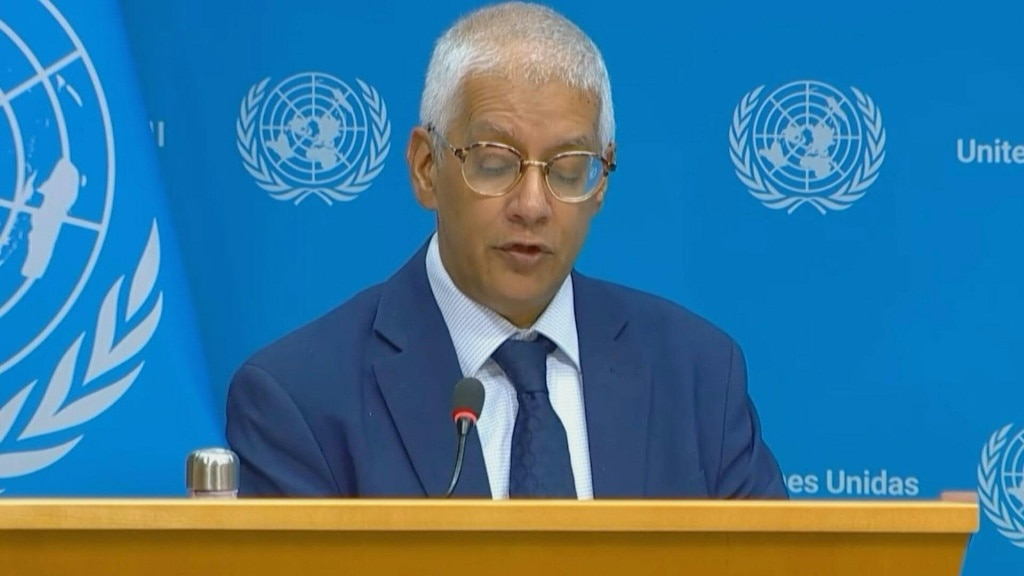
Speaking through his spokesperson Farhan Haq on Thursday, Guterres highlighted the alarming pattern of escalating strikes on populated areas that has driven the rising civilian death toll. “Attacks against civilians and civilian infrastructure are a clear violation of international humanitarian law, and must stop immediately,” Haq told reporters. Zelensky framed Ukraine’s deep strikes into Russian territory as a step toward eventual negotiations, saying in a social media post alongside footage of burning Russian infrastructure that “Russia must choose peace.” But four years into the full-scale conflict, diplomatic talks remain completely stalled, with both sides continuing to ramp up the intensity of long-range attacks.
In a parallel development announced Thursday, Zelensky will make his first visit to Serbia since the start of Russia’s full-scale invasion this coming Saturday. Serbia has long been a traditional ally of Moscow and is one of the few European countries that has refused to impose sanctions on Russia over the invasion. A senior Ukrainian official told Agence France-Presse that the visit amounts to a “slap in the face for the Russians,” while Serbian President Aleksandar Vucic confirmed the official visit, noting that talks will cover both countries’ EU accession bids, as well as economic and energy cooperation. Vucic emphasized that Serbia’s current policy toward the conflict will remain unchanged “until further notice” despite Zelensky’s upcoming visit.
Separately on Thursday, the head of the International Atomic Energy Agency (IAEA) issued an urgent warning over growing safety risks at the Russian-occupied Zaporizhzhia Nuclear Power Plant, Europe’s largest nuclear facility. IAEA Director Rafael Grossi said that the plant has seen a sharp rise in unplanned off-site power outages, a trend that he called “deeply concerning and clearly not sustainable.” Plant personnel continue to report regular military activity and explosions close to the facility site multiple times every day, Grossi added, repeating the agency’s longstanding call for “maximum military restraint” around the plant. Located close to active front lines, the Zaporizhzhia plant has repeatedly lost external power, forcing it to rely on emergency diesel generators to maintain cooling for its nuclear reactors. The facility most recently lost off-site power briefly on Tuesday, though the cause of the outage remains unconfirmed as of Thursday.