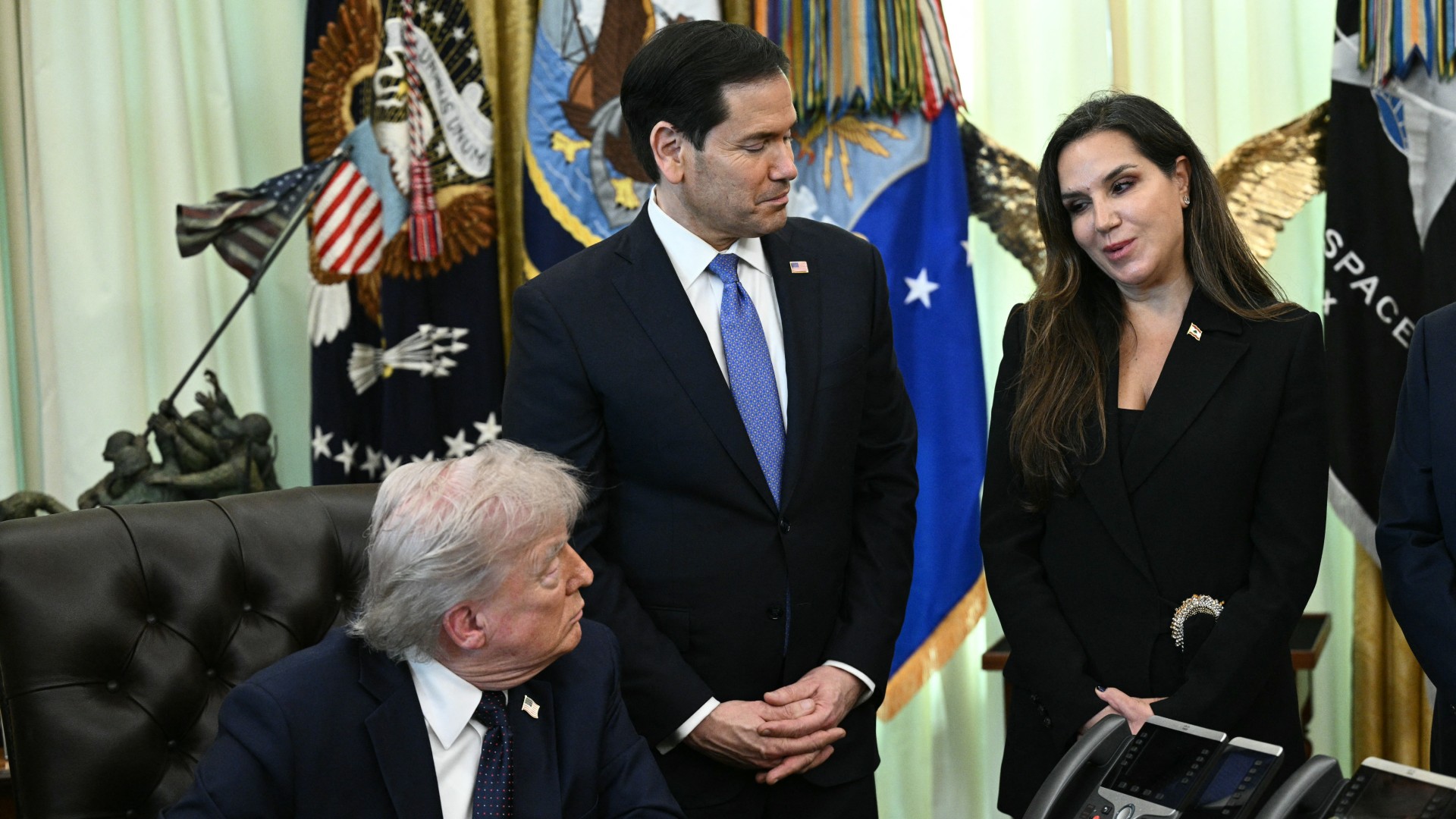
Exclusive reporting from Middle East Eye has uncovered new behind-the-scenes details of a surprising diplomatic gambit by former US President Donald Trump in late May, when he placed an unscheduled call to Lebanon’s ambassador to Washington demanding an immediate direct conversation with leaders of Hezbollah — a request that was ultimately turned down by Lebanese authorities. Multiple independent sources, including two Hezbollah-connected insiders and a senior Lebanese diplomatic official, have confirmed the sequence of events, which unfolded as a fragile ceasefire along the Lebanon-Israel border began to unravel.
Within days of the out-of-the-blue call on Lebanese Ambassador Nada Hamadeh Moawad, Trump took to his Truth Social platform on June 1 to announce that he had already spoken to Hezbollah through unnamed third-party intermediaries, and that the group had committed to halting all cross-border attacks against Israel. “Through highly placed representatives, I had a very good call with Hezbollah, and they agreed that all shooting will stop,” he wrote in the post. But new reporting directly contradicts this claim, laying bare the confusion and panic that gripped Lebanese official circles after Trump’s unexpected demand.
One insider close to Hezbollah described a frantic scramble among low-level Lebanese officials to track down a working contact number for any senior Hezbollah figure, even placing cold calls to random Shia religious leaders in a desperate attempt to fulfill the US president’s request. That account is disputed by a senior Lebanese diplomatic source, who confirms the core details of Trump’s call but denies any such frantic search took place. According to the diplomatic source, when Trump angrily demanded that Ambassador Moawad connect him to a Hezbollah representative, she immediately informed him that she lacked the authority to arrange that kind of contact.
Middle East Eye has reached out to the White House for official comment on the incident, and as of publication has not received a response. Following the exchange with Trump, Ambassador Moawad immediately notified Lebanon’s presidency of the request and sought guidance on how to proceed. Sources confirm that the presidential palace issued a clear directive: take no action and ignore Trump’s demand. Lebanese leaders feared that facilitating direct contact between the US president and Hezbollah would put the country’s presidency in a politically precarious position, as the Lebanese government had been working since April to position itself as the sole legitimate representative of Lebanon in all international negotiations tied to the border crisis.
The current crisis along the Lebanon-Israel border erupted in March, when the broader conflict between the US and Israel and Iran spilled over northward. Hezbollah launched rocket strikes into Israel in retaliation for the killing of Iranian Supreme Leader Ali Khamenei, and fighting has continued in fits and starts ever since. A ceasefire brokered in April as part of a US-Iran deal required an end to devastating Israeli airstrikes on Lebanese territory, and while the Lebanese state welcomed the truce, it moved quickly to assert its central role in negotiations, decouple its own border dispute from the broader US-Iran conflict, and launch direct talks with Israel under US mediation. For Lebanese leaders, a direct conversation between Trump and Hezbollah would undermine the presidency’s claim to be the sole representative of Lebanese interests, sources confirm.
A senior Lebanese security official added new context to the incident, confirming that Trump’s unsolicited request was just the latest in a long string of failed US attempts to open a direct communication channel with Hezbollah. “There have been many repeated offers from the United States, both previously and under the current administration, to open channels of communication with Hezbollah,” the official said. “They were all rejected. The political decision within the group has been not to open direct communication with the Americans.”
The most recent attempt before Trump’s call came through the CIA’s station in Beirut, where US officials asked a senior Lebanese security figure to mediate contact with the group. That request was rejected, as was an earlier attempt to open a channel through a former senior Lebanese security official prior to Trump’s public announcement. The US government officially designates Hezbollah as a terrorist organization, and has maintained a long-standing formal policy barring direct political engagement with the group.
Even more revealing, a senior Lebanese official confirmed that the US Embassy in Beirut had no advance knowledge of Trump’s plan to reach out directly to Hezbollah before he placed the call to Ambassador Moawad. After Trump’s public announcement, the embassy scrambled to contact its own informal intermediaries with ties to Hezbollah to verify whether any contact had actually taken place — and received a clear confirmation that no such communication had occurred.
After Trump’s announcement, unconfirmed circulating reports claimed that the contact had been arranged through Abdallah Safieddine, Hezbollah’s senior representative in Tehran, during US-Iran negotiations held in Islamabad. But a source familiar with the matter told Middle East Eye that Safieddine never even traveled to Islamabad for the talks, debunking that version of events entirely.