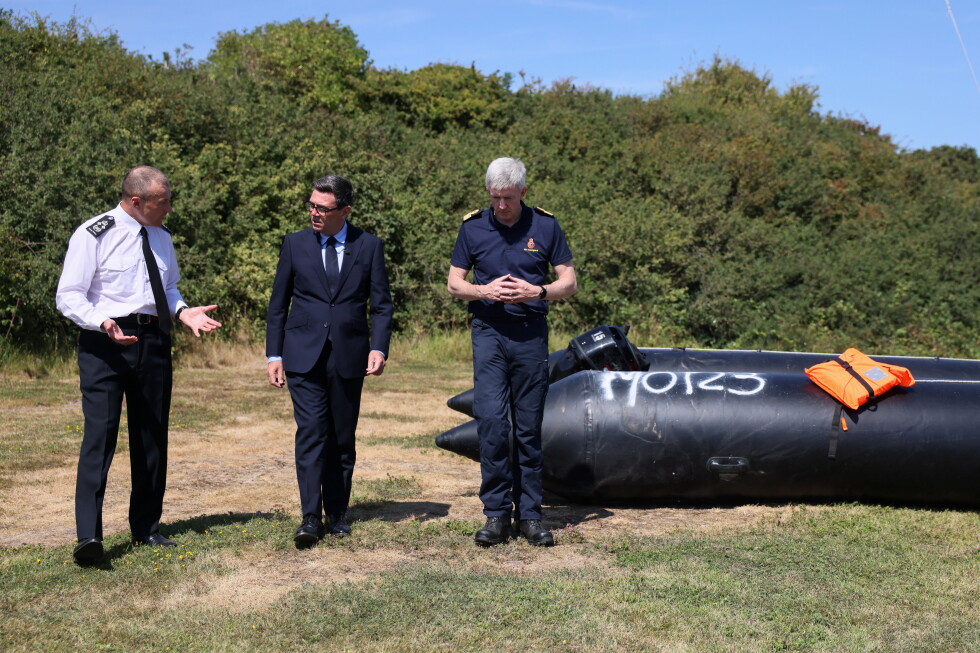
A large-scale cross-border rescue operation carried out by French and British emergency teams has saved 157 migrants whose small migration vessel suffered a catastrophic engine fire and began sinking while attempting to cross the English Channel, French maritime officials have confirmed.
The incident unfolded early Tuesday, when the overloaded makeshift boat was still within France’s designated search-and-rescue zone, just kilometers from British territorial waters. According to an official statement released by the maritime prefecture overseeing the English Channel and North Sea, the engine burst into flames unexpectedly, and the vessel started to break apart within minutes. In response to the urgent crisis, French authorities dispatched two dedicated rescue ships, a French Navy helicopter, and specialized medical teams to the scene. British emergency assets also joined the operation rapidly, with crews from the Royal National Lifeboat Institution and UK Border Force deploying to assist with the evacuation.
By the conclusion of the operation, all 157 migrants had been pulled from the frigid Channel waters to safety: 103 were retrieved by French rescue vessels, while the remaining 54 were rescued by British teams. All survivors were transported to the northern French port of Boulogne-sur-Mer for mandatory medical checks and emergency support services.
This incident marks the latest dangerous episode in the ongoing Channel migration crisis, and it sheds new light on the complex challenges rescuers face when responding to migrant vessels. The vessel involved in Tuesday’s rescue had initially departed from the Normandy coast on Monday, and had been under continuous monitoring by French rescue vessels overnight. During the hours before the engine fire, five passengers already required emergency assistance and were brought ashore to Boulogne-sur-Mer. The remaining passengers on board made the unusual decision to refuse offers of help from rescuers, choosing to continue their crossing.
French maritime authorities explain that this choice is far from uncommon. Migrants attempting the crossing in unstable, overloaded makeshift boats often only accept rescue intervention when they are facing an immediate, life-threatening emergency. Rescuers also face a difficult constraint: they cannot force passengers to disembark from unstable vessels, because a sudden rush to evacuate could cause the boat to capsize, putting all people on board at far greater risk of death.
Tuesday’s rescue comes just one week after four migrants lost their lives in two separate small boat crossing attempts in the Channel, highlighting the persistent deadly risk of this route for people seeking migration to the UK. In response to the rising number of crossings and associated deaths, the UK and French governments signed a new multi-million euro agreement earlier this year designed to crack down on unauthorized departures. The deal increases the number of police patrols along northern France’s coastline and upgrades regional surveillance infrastructure. It also provides funding for new detection technologies to target so-called “taxi boats” — small, usually inflatable motorized vessels that smugglers use to pick up migrants from remote stretches of the northern French coast and transport them across the Channel.