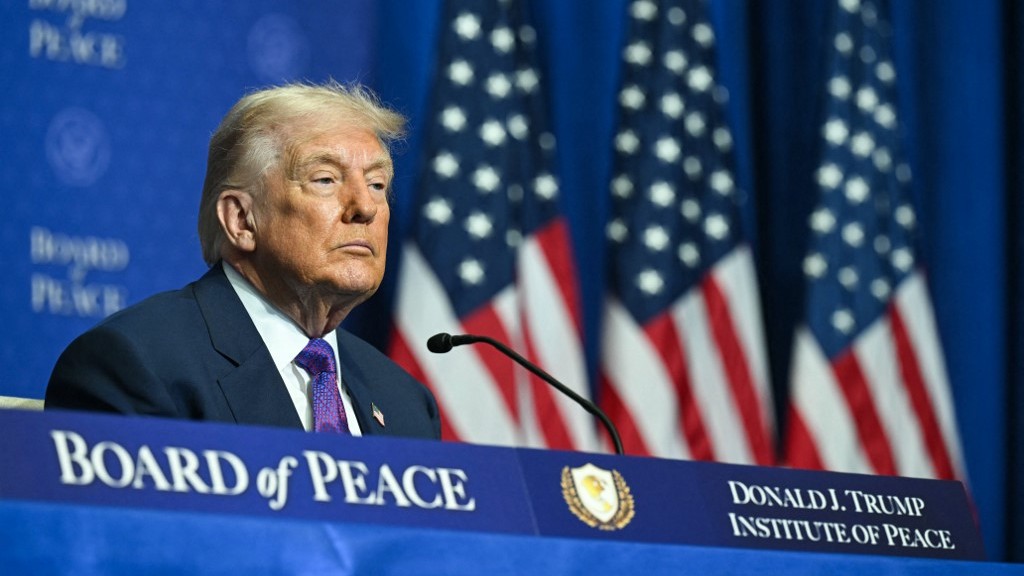
In a significant policy shift following high-stakes talks with Israeli Prime Minister Benjamin Netanyahu, the US-backed Board of Peace has toughened conditions for any Israeli military pullback from Gaza, abandoning a previously proposed phased approach to the conflict. The body now explicitly ties any Israeli withdrawal of forces beyond the Yellow Line — the de facto demarcation splitting Gaza into Israeli- and Palestinian-controlled zones — to the full and complete disarmament of Hamas, covering all light weapons, heavy armaments and underground tunnel networks.
The new position marks a sharp departure from the framework the board outlined just one week prior. Last week, board officials put forward a incremental plan that would have paired partial, step-by-step Israeli withdrawals back to the Yellow Line with gradual Hamas disarmament, matching comments from the board’s high representative Nickolay Mladenov, who said withdrawals and disarmament must “move in lockstep.” Initially, in Monday’s post-meeting statement, the body referenced a “full withdrawal of the IDF,” which kept open the door for earlier partial pullbacks. But within minutes, officials removed the word “full,” bringing the board’s stance directly in line with Netanyahu’s long-held demand that Israeli forces remain in Gaza until Hamas is fully disarmed.
The Yellow Line was originally drawn up after a controversial ceasefire agreement in October 2025. In the time since that truce, Israel has expanded its territorial control in the enclave, now holding more than 60 percent of Gaza, with Netanyahu publicly stating the goal of extending Israeli control to roughly 70 percent of the strip.
This policy reversal has already introduced new uncertainty to mediation efforts. Hamas had previously accepted the original phased sequencing of withdrawals and disarmament, and analysts warn the board’s retreat from its earlier position risks unraveling the fragile preliminary agreement, while rewarding Israel’s ongoing refusal to halt military strikes or begin pullbacks. According to Israeli outlet Israel Hayom, Netanyahu made his government’s position clear during talks with Mladenov: Israel will not end its offensive in Gaza, nor will it withdraw forces to the Yellow Line ahead of full Hamas disarmament.
Additional Israeli demands have further complicated negotiations. Israeli officials have sought formal assurances that even after Hamas completes disarmament, Israel will retain the right to carry out military strikes inside Gaza. The Israeli government also rejected Turkish and Qatari participation in a proposed international monitoring committee charged with overseeing disarmament, and demanded that all seized Hamas weapons be destroyed rather than stored.
Mladenov sought to temper expectations for quick progress following the contentious talks. “This is the start of the hard phase and I have never pretended otherwise,” he wrote on social platform X. “Not much of what we do now is dramatic. It is slow, grinding and technical work.”
Hours after the meeting concluded, violence continued on the ground: an Israeli air strike targeting the Sheikh Ajlin neighborhood of Gaza City killed two Palestinian civilians, underscoring the ongoing human cost of stalled diplomacy.