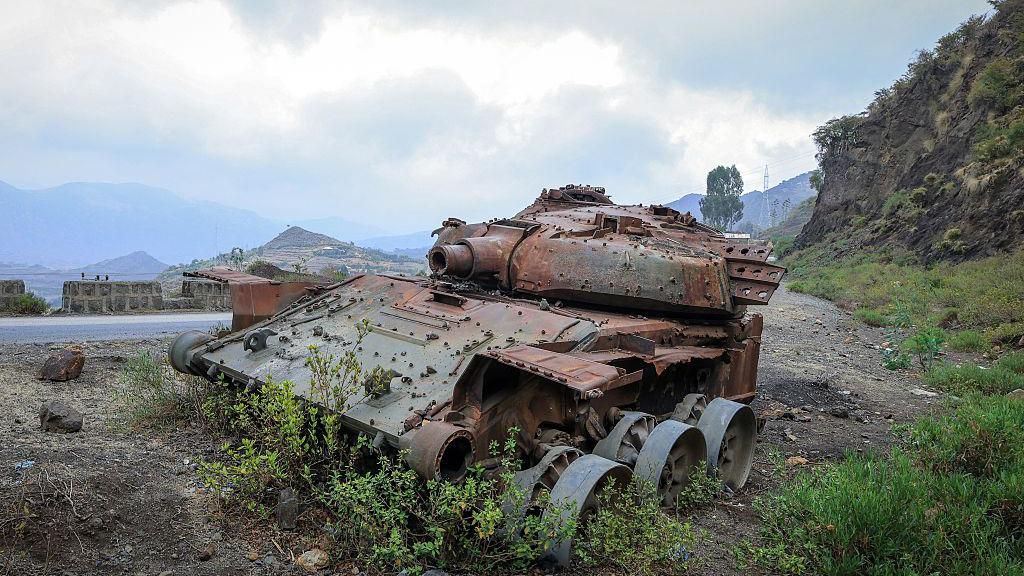
Four years after the conclusion of a devastating two-year civil war, Ethiopia’s Tigray region has been shaken by some of the most intense fighting since the 2022 peace deal, triggering a new wave of cross-border displacement and stoking international fears of a return to large-scale violence.\n\nOver the weekend, heavy confrontations broke out early Saturday in Shererina, a small strategically located community in western Tigray near the Ethiopia-Sudan border. Clashes, which featured heavy artillery fire and drone strikes according to a senior Tigray People’s Liberation Front (TPLF) source, continued through Sunday, forcing hundreds of ethnic Tigrayans to flee for safety into neighboring Sudan. Witnesses in the region reported continuous sounds of explosions, heavy small arms fire, and military aircraft operating over the area throughout Saturday, while Sudanese medical and local sources confirmed that both wounded combatants and civilian refugees have crossed the border. The full death toll from the latest outbreak of violence remains unconfirmed as of press time.\n\nThe 2020–2022 civil war between the TPLF and Ethiopia’s federal government killed hundreds of thousands of people before an African Union-mediated peace agreement brought active hostilities to a close in November 2022. However, core provisions of the peace deal have never been fully implemented, and tensions have escalated sharply in recent months after TPLF forces retook full control of Tigray region, ousting the interim administration established as part of the peace settlement. The latest fighting in Shererina adds another layer of complexity: the wider western Tigray area has been the site of long-running territorial disputes between Tigray and Ethiopia’s southern Amhara regional state, making the border locality strategically sensitive to multiple competing stakeholders.\n\nBoth sides have immediately traded blame for initiating the clashes, deepening the risk of further escalation. The TPLF-led Tigray regional administration has labeled the federal government’s actions an “open war” against the region, accusing Addis Ababa of violating the 2022 peace deal in a deliberate campaign to subjugate and divide the people of Tigray. For its part, the Ethiopian federal government has not released a full official public statement, but Minister Abraham Belay publicly confirmed the clashes had occurred in a social media post. Belay blamed the outbreak of violence on what he called the “TPLF clique,” warned that continued conflict would bring “worse consequences” for the region, and simultaneously called for diplomatic engagement, noting that all outstanding disputes must be resolved through peaceful negotiation rather than armed confrontation. \”Today, it is better to reach out for peace before destruction,\” he wrote.\n\nBeyond Ethiopia’s borders, regional observers have raised growing concerns that the renewed Tigray conflict could become entangled with the ongoing civil war in Sudan, turning the northern Ethiopia border region into a new front for a proxy conflict. Multiple diplomatic sources have reported unconfirmed accusations that rival factions in Sudan are providing military backing to opposing sides in the Tigray dispute, a development that could dramatically destabilize the entire Horn of Africa region if the current clashes expand.