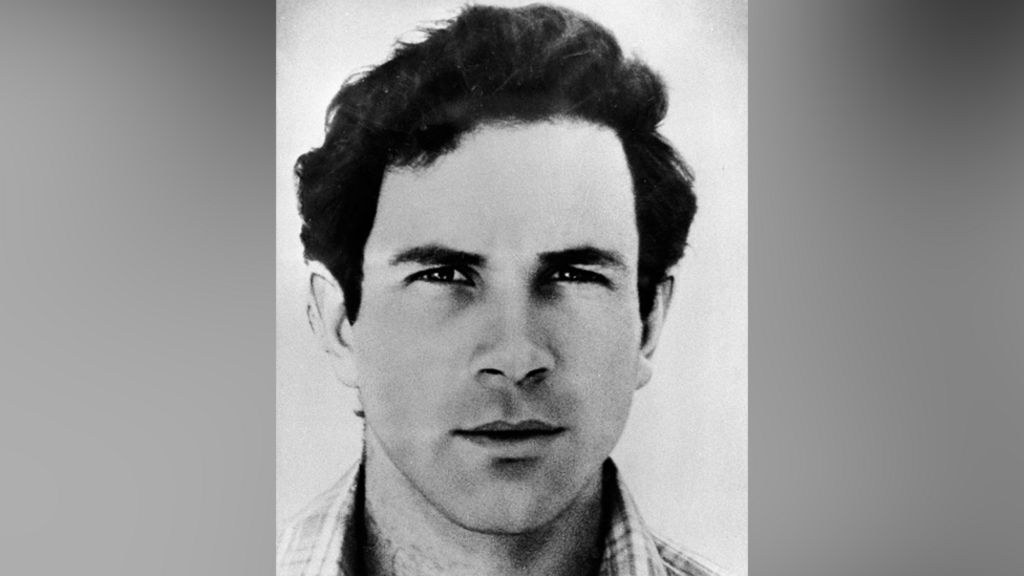
Half a century after one of the most bold hostage rescue operations in modern military history, Uganda has inaugurated a public statue honoring Yonatan Netanyahu, the fallen Israeli commando leader and older brother of current Israeli Prime Minister Benjamin Netanyahu, who died during the Entebbe raid. The memorial stands directly outside the defunct Entebbe International Airport terminal where the 1976 operation unfolded, casting a permanent marker to the complex legacy of the event that transformed relations between Uganda and Israel.
In remarks at the unveiling ceremony, Uganda’s army chief General Muhoozi Kainerugaba framed the monument as a tribute to Netanyahu’s extraordinary courage and selfless commitment to duty. As the commander of the Israeli elite commando unit that carried out the raid, Yonatan Netanyahu remains the only Israeli soldier killed in the operation, which successfully freed more than 100 hostages held by hijackers.
The 1976 crisis began when four militants — two Palestinian members of the Popular Front for the Liberation of Palestine and two German collaborators — boarded an Air France Airbus A300 during a stopover in Athens. The flight had departed Tel Aviv bound for Paris, and the hijackers seized control of the aircraft, forcing it to refuel in Libya before diverting to Entebbe, where then-Ugandan dictator Idi Amin welcomed the plane and offered support to the hijackers.
The militants issued sweeping demands: $5 million in ransom and the release of 53 imprisoned militants held across Israel, France, Germany, Switzerland and Kenya in exchange for the hostages’ lives. Most non-Israeli and non-Jewish hostages were released in the days immediately after the hijacking, but roughly 100 people who were Israeli or Jewish were kept captive in the old terminal building.
In a pre-dawn raid on July 4, 1976, Israeli elite commandos flew nearly 2,500 miles from Israel via Kenya, landing undetected at Entebbe and launching an assault that concluded in less than 90 minutes. While the operation was widely celebrated in Israel as a landmark victory against terrorism, it delivered a devastating public humiliation to Amin’s regime.
The human cost of the operation extended far beyond Yonatan Netanyahu’s death. Three hostages died during the fighting, and a fourth hostage, 74-year-old Dora Bloch, who had been transferred to a Kampala hospital for treatment, was later murdered on Amin’s orders. All seven hijackers and three local accomplices were killed in the raid, alongside at least 45 Ugandan soldiers who fought alongside the hijackers under orders from Amin’s government.
In his address, Kainerugaba offered nuanced recognition of all lives lost in the operation. “The Ugandan soldiers fought valiantly… in what they believed was a justified cause,” he said. “Of course, today, we know that the government of Idi Amin, which they served, was a brutal dictatorship which did not represent the Ugandan people.” He also paid tribute to the fallen hostages, saying “May their memories continue to inspire future generations in the pursuit of peace, justice and human dignity.”
The bronze statue depicts Netanyahu striding forward, weapon in hand, a dramatic depiction of the commando’s final advance during the raid. Looking back on the 50-year period since the operation, Kainerugaba described the Entebbe crisis as “one of the most significant episodes in modern history” and framed the current close relationship between Kampala and Jerusalem as a “remarkable journey” from a painful shared chapter to a constructive modern partnership.
“Today, Uganda-Israel relations have developed into a partnership characterised by mutual trust, respect and co-operation,” he added. The event marks a striking turning point in how Uganda confronts the legacy of the Entebbe raid, decades after the operation toppled international confidence in Amin’s regime.
Benjamin Netanyahu, who previously visited the Entebbe site 10 years ago, has long cited his brother’s example as a core influence on his approach to counterterrorism. “I learned from my brother that you need two things to defeat the terrorists: clarity and courage,” he said during that 2016 visit.