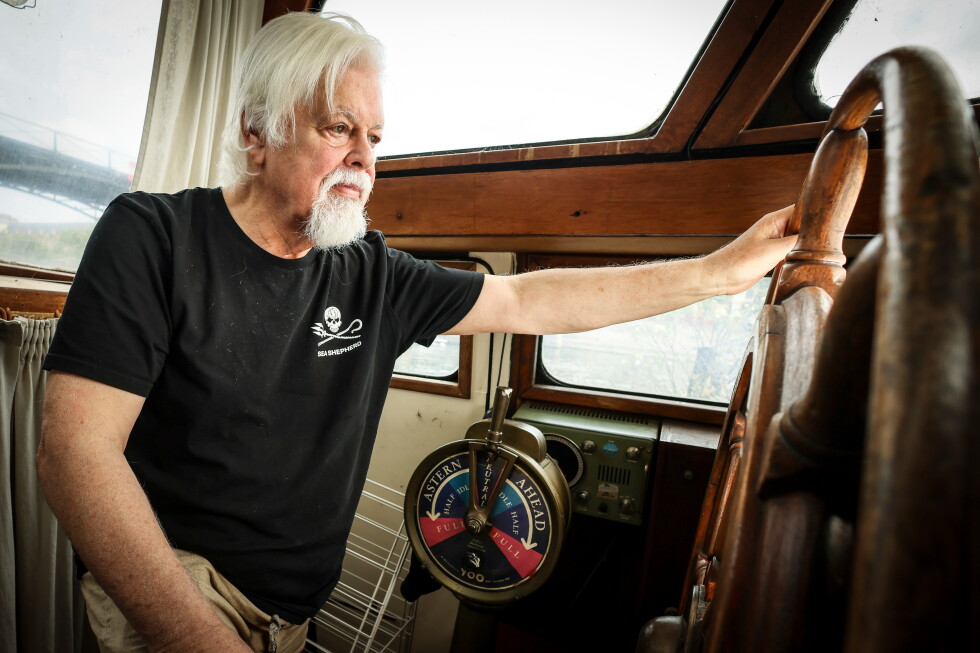
In a high-stakes confrontation between Icelandic law enforcement and anti-whaling campaigners, Icelandic coast guard units and police special forces have seized a protest vessel operated by an organization founded by veteran anti-whaling activist Paul Watson, detaining all 21 members of its crew, Icelandic officials confirmed Saturday.
The incident traces back to Thursday evening, when the crew of the Icelandic commercial whaling ship Hvalur 9 placed an emergency distress call, reporting that their safety was threatened by the protest vessel Bandero, which is owned and operated by the Captain Paul Watson Foundation. According to the Icelandic Coast Guard’s official account, the Bandero repeatedly defied direct orders from coast guard officials: first to exit Icelandic territorial waters, and later to cut its engines.
Around midnight on Thursday, armed joint units of the Icelandic Coast Guard and the elite Viking Squad police special force boarded the Bandero and took the entire crew into custody. Notably, Paul Watson, the 75-year-old founder of the foundation that owns the vessel, was not on board during the operation. In an official statement released after the seizure, the Captain Paul Watson Foundation confirmed the action and reported that detained crew members are being held aboard the vessel with all their personal communication devices confiscated.
By Friday, the Bandero had been escorted into Reykjavik, Iceland’s capital port, and Icelandic police have assumed lead responsibility for the ongoing investigation. Iceland’s national public broadcaster RÚV has reported that law enforcement intends to request deportation for all 21 detained crew members, alongside a permanent ban on their re-entry to Iceland.
Iceland stands as one of only three nations alongside Norway and Japan that continue to permit large-scale commercial whaling, setting annual hunting quotas for fin and minke whales within its exclusive economic zone. While the country exports the vast majority of its whale meat to Japan, demand for the product has dropped sharply since 2019, when Japan withdrew from the International Whaling Commission and restarted its own commercial whaling operations. Domestically, commercial whaling has grown increasingly divisive in Iceland, as local consumption of whale meat has fallen to near-negligible levels in recent years.
This latest encounter adds another chapter to Paul Watson’s decades-long, high-profile campaign against commercial whaling. A Canada-born activist, Watson stepped down as head of the Sea Shepherd Conservation Society, the pioneering anti-whaling group he co-founded, in 2022 to launch the Captain Paul Watson Foundation. Watson’s confrontational direct-action tactics, which have included high-seas standoffs with whaling vessels, earned him global celebrity support and a starring role in the popular reality television series *Whale Wars*, but have also repeatedly landed him in legal custody.
Earlier this year, Watson spent five months imprisoned in Greenland following his arrest on a Japanese extradition warrant stemming from a 2010 incident where he was accused of obstructing a Japanese whaling vessel. Upon his release in December 2024, Watson publicly stated he would avoid travel to nations where he faced arrest risk, telling reporters: “I have to make sure that I don’t land in Iceland or another country where Interpol might try to have me arrested again.”
Watson was first placed on Interpol’s “red notice” most-wanted list in 2012, and was only removed from the roster earlier this year in 2025. Watson’s uncompromising, direct-action approach has long created divisions within the global conservation movement, and fishing and marine shipping firms have repeatedly accused his activists of endangering crew lives and vessel safety. Earlier this year, the Bandero was involved in a collision with a Norwegian-owned industrial krill trawler operating in Antarctica; the trawler’s owner called the incident a deliberate attack that put their crew at risk and could have triggered a major environmental catastrophe in the sensitive Antarctic ecosystem.