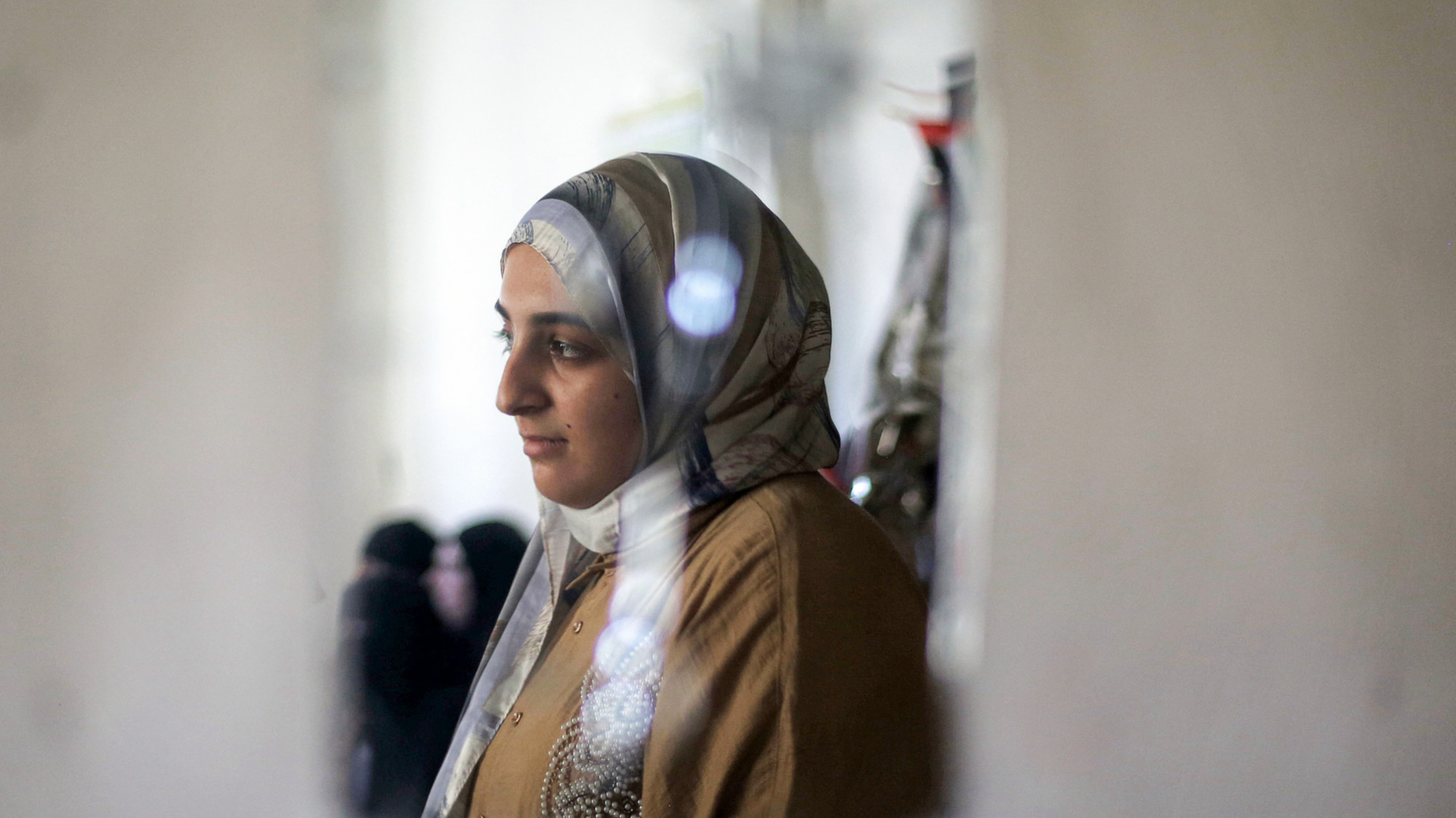
For generations of Palestinian students, the General Secondary Education Certificate exam – widely known as Tawjihi – stands as a defining milestone. Traditionally, it brings closure to 12 years of schooling, opens the door to university, and is marked by joyous celebrations of hard-won achievement and hopeful plans for the future. But nearly three years into Israel’s military campaign in Gaza, this pivotal academic moment carries a drastically different weight for thousands of young Gazans. For these students, just surviving long enough to sit the exams and receive their results has become an extraordinary accomplishment.
One story that has captured widespread attention is that of Saba Rabah, a 2024 Tawjihi graduate who claimed the top score across Palestine’s scientific stream, with a nearly perfect 99.9 percent average. The result fulfilled a childhood dream Rabah had nurtured for years – but the celebratory moment was deeply shadowed by the loss of her father, killed in an Israeli airstrike on the al-Maghazi refugee camp in central Gaza earlier this year. The final selfie the pair shared, taken during Eid al-Fitr in April 2024, remains one of Rabah’s most cherished possessions.
From childhood, Rabah’s parents pushed her to excel academically and supported her ambition to attend medical school. “In my last conversation with my father, he told me he dreamed I would rank among the top students in the scientific stream and study medicine, just as I had always hoped,” Rabah told Middle East Eye. “He said he wanted to spend his retirement in my future clinic.”
Rabah’s path to the top score was littered with obstacles no student should ever face. Like thousands of Tawjihi candidates across Gaza, she pursued her studies in conditions that turned the most basic educational tasks into daily battles for survival. Just days before her final exams, an Israeli strike damaged her family’s rented displacement shelter, leaving only one room intact. That small space served as kitchen, bedroom, living area, and study space all at once.
“No words can describe the suffering of studying while starving or while fleeing,” Rabah said. She recalled repeated episodes of displacement, where she was forced to choose between carrying her textbooks, her mother’s life-saving heart and blood pressure medication, or assisting her 25-year-old quadriplegic brother Saeed. Basic educational supplies have become unattainable luxuries in blockaded Gaza: no new textbooks have entered the territory in three years, making even second-hand copies rare, and a pack of 200 A4 sheets now costs roughly $150, out of reach for most families. Unreliable electricity and spotty internet access have further complicated efforts to study remotely.
Through the hardest moments, Rabah held onto her father’s dream, with her mother and siblings reminding her of what he had wanted for her. “Every family in Gaza has experienced grief. We have lost fathers, mothers, siblings and sometimes entire families,” she said. “We didn’t choose to live through this violence, but we keep trying to live and hold on to the small moments because that is our right. The only solution is for the Israeli war to stop. We don’t want to lose any more of our loved ones. We want to study like everyone else. We want to live in dignity.”
Rabah’s story is far from unique. Thousands of Tawjihi students across Gaza navigated repeated bombardment, displacement, injury, and grief to sit for their exams this year. Among them is Maram Muqit, a northern Gaza student who took her exams just four months after an Israeli bullet became lodged in her spinal cord, leaving her partially paralyzed.
Muqit was injured while walking back to her family’s displacement tent from a math class, her mother Naheel explained. “Doctors told us she might never walk again if she remains in Gaza because of the lack of medical supplies,” Naheel said. Before she was wounded, Muqit had attended two makeshift schools, despite the constant danger of traveling across northern Gaza. Her parents begged her to stay home for safety, but she refused to miss any chance to learn. When internet was available, she downloaded YouTube lessons and studied materials shared by her teachers on WhatsApp.
Before the current conflict, Muqit and her family lived in Beit Lahia, but their home was destroyed in the first month of Israeli attacks. They have been displaced multiple times since, and now live in a tent in the al-Atatra neighborhood in northern Gaza. Muqit is currently undergoing rehabilitation at al-Wafa Hospital, where she balanced intensive therapy with exam preparation. Despite the exhaustion of balancing treatment and studying, she earned an outstanding 96.6 percent on her Tawjihi exams.
“When the results came out, we cried instead of celebrating. Her father and I tried to help her stand, but she still couldn’t keep her balance,” Naheel said. The hospital later allowed Muqit to spend a day with her family at the displacement camp, where relatives and friends held a small celebration. When she returned to the hospital, staff and fellow patients celebrated her achievement, bringing her small gifts to mark the milestone.
Even with her strong score, Muqit’s future remains uncertain. She has long dreamed of studying dentistry, but fears her injury and disability will block her from pursuing the career she has wanted since childhood. “I am happy I achieved the grades I needed. But I am sad that I may never walk again,” she said. “I hope I can get an electric wheelchair, travel abroad for treatment and go to university.”
For other high-achieving students, the joy of a strong Tawjihi result never came at all. Among the nearly 19,000 Palestinian students killed by Israeli forces since October 2023, per Palestinian Ministry of Education data, is Yahya Nasman. Nasman scored a 96.6 percent on his 2024 Tawjihi exams – but he and five members of his family were killed in an Israeli airstrike on their Gaza City home just one week before results were announced in July.
Two days before the attack, Nasman’s uncle Waleed hosted Yahya and another family member for a small post-exam meal. Waleed said his nephew had spent the year balancing studying with the daily work of helping his family survive the war: fetching clean water, collecting firewood, and securing basic supplies. Over pizza, Yahya spoke confidently about his plans: he was sure he would earn high marks, he told his uncle, and he wanted to study architectural engineering so he could help rebuild the thousands of homes destroyed across Gaza.
Waleed remembered his nephew as the most caring member of the family, always the first to step in to help anyone in need before returning straight to his studies. The day before the strike, Yahya brought his six-year-old sister Arwa to play with Waleed’s daughters – a meeting Waleed never imagined would be their last. The next day, 12-year-old Ayham, Yahya’s brother, returned to the family home to find it reduced to rubble. He ran to alert relatives, who rushed to the site hoping to find survivors.
“My brother, his wife and their three children, including Yahya, were killed instantly,” Waleed said. “The force of the explosion threw parts of their bodies hundreds of metres down the street. I collected the remains of my nephews and nieces from the road and the displacement camps before burying them.” Five days after the attack, the family learned Yahya had earned one of the highest Tawjihi scores in Gaza. What should have been a joyous celebration became one more moment of grief. “Yahya was one of thousands of students who tried to build a future despite everything happening around them,” Waleed said. “We want people around the world to help stop the attacks on Gaza. Every day more people are killed.”
Official data from the Palestinian Ministry of Education underscores the catastrophic toll the conflict has taken on Gaza’s education sector. Since October 2023, Israeli forces have wounded at least 28,293 students, killed nearly 19,000 students and roughly 800 teachers and education workers, and damaged or destroyed 279 schools, leaving Gaza’s entire education system in ruins. Even after a tentative ceasefire agreement was reached in October, Israel has continued near-daily airstrikes across the strip, killing at least 1,200 people since the truce took effect. Total Palestinian fatalities from Israeli attacks since October 2023 now exceed 73,000, according to local officials.