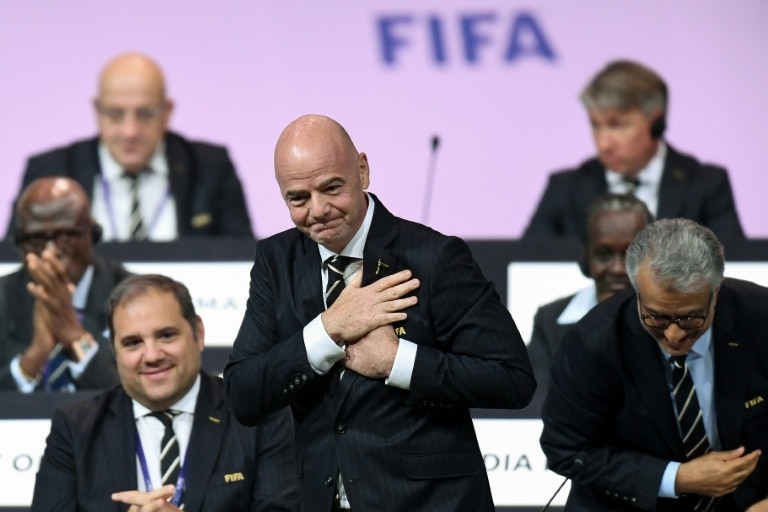
The long-simmering tensions between global football’s two most powerful governing bodies have erupted into open confrontation after UEFA formally declared that FIFA President Gianni Infantino has lost the confidence of European football and a large swathe of the wider global football community. The break in trust follows the high-profile collapse of a controversial plan to allow private investment in FIFA’s flagship events, including the men’s World Cup and Club World Cup, which was scrapped only after widespread international backlash from confederations across the globe.
Infantino’s proposal, which had been drafted behind closed doors, centered on the creation of a new commercial subsidiary called FIFA Forward Enterprise (FFE). Valued at an estimated $20 billion, the subsidiary was projected to raise up to $4.2 billion in private capital, with FIFA promising a $20 million one-time payout to each of its 211 member associations by early 2027, alongside increasing core funding for the 2027–2030 cycle from $8 million to $20 million per member. But the plan faced immediate and fierce opposition from UEFA, which derided the proposal as a “shabby, back room, opaque deal” and threatened a full boycott of all FIFA competitions if Infantino attempted to force the proposal through. Facing overwhelming opposition, Infantino and FIFA were forced to withdraw the plan entirely.
In a hard-hitting official statement released after the withdrawal, UEFA made clear that the damage to trust could not be undone by the plan’s cancellation. The European governing body noted that the controversy comes just weeks after FIFA and Infantino celebrated what was widely deemed a successful expanded 48-team World Cup hosted across three North American countries, a high that has now been completely overshadowed by the private investment fiasco.
UEFA’s statement argued that the 56-year-old Swiss Football administrator has broken core promises he made when he was first elected FIFA president in 2016. At the time of his initial election, Infantino pledged to bring full transparency to FIFA’s governance and emphasized that all FIFA funds belonged to its member associations, not to the FIFA president personally. “On both these promises, he has failed to deliver,” UEFA said. “The shabby, back room, opaque deal he hatched and tried to force through were anything but transparent. And with reserves standing at over $5 billion, he has also failed to use associations’ money for the benefit of the game.”
The governing body added that secret, fast-tracked policy proposals have no place in global football governance, and it is time for a full reckoning to prevent similar oversteps from occurring in the future. “We cannot keep going on like this with secret schemes on fast track timescales,” the statement read. “In the coming days and weeks, UEFA will work with its member associations and in close cooperation with other confederations to reflect on how this happened and devise a plan to make sure that it cannot occur again. That review should be thorough and fundamental. No option should be off the table.”
The collapse of the plan and the public loss of confidence marks a major turning point for Infantino, who was widely expected to win re-election unopposed for a third and final term as FIFA president next year. Political analysts of global football now expect the public rebuke could clear a path for a challenger to emerge and contest the election. This confrontation is the latest escalation of long-running tensions between UEFA and FIFA: UEFA president Aleksander Ceferin already boycotted the 2026 World Cup final in protest of FIFA’s policies earlier this year.
While UEFA framed the withdrawal of the controversial proposal as a victory for the integrity of global football, the organization stressed that the fight to repair governance at FIFA is only just beginning. “This is a victory for the whole game. But it must not be the end of the story,” the statement concluded. “The proposal has gone. The task of rebuilding trust in FIFA has only just begun.”