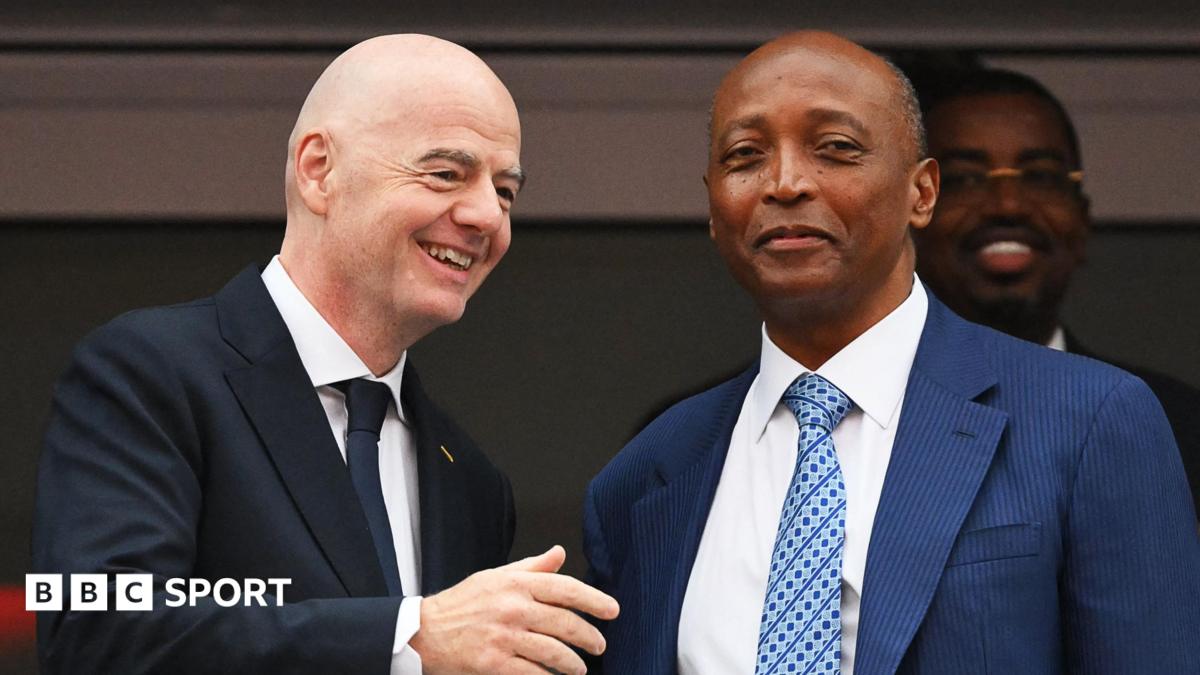
Global football is currently in the grip of a major governance and commercial storm, centered on FIFA President Gianni Infantino and his controversial proposal to sell minority stakes in FIFA’s flagship competitions to private external investors. As three of FIFA’s six continental confederations have already lined up in open opposition, all eyes are turning to Africa: will the Confederation of African Football (CAF) emerge as the unexpected key bloc of support for the embattled FIFA leader, and what forces are shaping its position?
Infantino’s plan would establish a new commercial subsidiary, FIFA Forward Enterprise, designed to attract outside investment. FIFA projects the initiative could raise up to $4.2 billion by the end of 2024, with all net proceeds pledged to be reinvested into development programs for football across the globe. So far, UEFA (Europe), the Asian Football Confederation, and CONCACAF (North America, Central America and the Caribbean) have all formally rejected the proposal, with UEFA even threatening to boycott FIFA competitions including the World Cup if the plan moves forward. CAF, however, has maintained notable public silence to date, with its executive committee only set to convene next week to formally assess the proposal and discuss a unified position.
The roots of CAF’s cautious stance stretch far beyond the current proposal, anchored in a deeply intertwined personal and institutional relationship between CAF President Patrice Motsepe and Infantino that has yielded tangible financial benefits for African football. Since both leaders took their respective posts in 2021, the two confederations have aligned closely. Motsepe has repeatedly praised Infantino as a loyal friend to African football, highlighting the Swiss executive’s key contributions to the continent: most notably, the expansion of the FIFA World Cup from 32 to 48 teams, which secured Africa a guaranteed nine qualification spots, up from the long-controversial previous allocation of just five. That shift alone has been framed as a transformative win for the continent, ending decades of perceived marginalization.
Ties between the two organizations run even deeper through personal connections. Veron Mosengo-Omba, who served as Motsepe’s deputy at CAF from 2021 until March 2024, previously held a senior leadership role as FIFA’s chief member associations officer. He is a long-time friend of Infantino, having studied law alongside him in Switzerland, and was recently elected president of the Democratic Republic of Congo’s national football federation in May. Under Motsepe and Mosengo-Omba, CAF has already improved its overall financial position, particularly by boosting revenue from its flagship tournament, the Africa Cup of Nations (AFCON), progress that many in African football credit to the close partnership with FIFA.
For cash-strapped African national federations, the financial incentive to back the proposal is clear. Most African federations receive minimal government funding, with many struggling to cover core operating costs, let alone invest in infrastructure, grassroots development and women’s football. Under the new proposal, each of CAF’s 54 member associations would receive an upfront payment of $20 million as early as 1 January 2025 if the plan is approved by the 19 September deadline, with a further $20 million to follow. That level of funding is life-changing for many programs across the continent.
“Football is a very expensive venture, especially on the African continent where resources are not easy to come by,” explained Rogers Byamukama, a representative of Uganda’s national football federation. “What is wrong with making more money and sharing that money with those that need it most?”
Fleetwood Haiya, president of Malawi’s football federation, echoed that sentiment, noting his government cannot even afford to allocate $1 million annually to football amid broader public resource constraints. “Malawi needs money. Malawi needs stadiums,” Haiya said. “I’m 100% in support (of the FIFA proposal). There is no dispute. I don’t understand why FIFA took so long to do this.”
Leaders across the continent point to already tangible results from past FIFA funding. Cape Verde’s impressive run to the knockout stage on their World Cup debut in 2026 came after the federation used FIFA grants to upgrade logistical and training support during qualification. Malawi’s women’s national team also pulled off a major upset at the 2024 Women’s Africa Cup of Nations, beating defending champions Nigeria in their finals debut, a result Haiya attributes directly to FIFA development funding. “Gianni Infantino believed in our project for women’s football,” he added. For many African administrators, the promise of additional funding will only strengthen their existing loyalty to Infantino.
However, the close alignment between CAF and FIFA has not been without controversy, and the proposal has already sparked internal division across African football. Critics note that Motsepe has largely avoided public pushback on controversial FIFA decisions that have harmed African interests: when U.S. authorities blocked Somali referee Omar Artan from entering the country ahead of the 2026 World Cup, and when FIFA controversially overturned a one-match suspension for U.S. striker Folarin Balogun, CAF declined to issue any public criticism, unlike many other global governing bodies. The 2025 AFCON was also forced to reschedule to a disruptive December-January window to accommodate FIFA’s expanded Club World Cup last year, and the recent decision to shift AFCON from a biennial to quadrennial tournament starting in 2028 has been widely criticized as a move that prioritizes FIFA’s global calendar over African interests.
Beyond past disputes, some prominent African football leaders warn that opening major competitions to private investment threatens the long-term integrity of the game, even if the short-term funding is attractive. “It does not sit well,” said Isha Johansen, former president of the Sierra Leone Football Association, former CAF executive committee member and former FIFA Council member. “As a businessman or woman you want something out of it. You’re not just doing it out of generosity. What price does one have to pay in order to get to this elevated development for football in Africa? I do hope that they (CAF) go along with all the other confederations.”
Johansen acknowledged that the funding on offer would be transformative for African football, but argued that leaders must draw a line to protect the sport’s core mission. “It is an offer that is hard to refuse,” she said. “We (in Africa) need the money. I think we now come to a point where you really need to know where to draw the line and not sacrifice the beautiful game.”
The final vote on the proposal requires a simple majority of FIFA’s 211 member associations to pass, meaning 106 votes in favor. If all member associations from UEFA, the AFC and CONCACAF follow their confederation’s leadership in opposing the plan, 136 votes will already be against the proposal. Even if all 54 of CAF’s member associations unite behind Infantino, opposition from the rest of the world is likely to block the plan, leaving African football caught between short-term financial opportunity and a global movement against increased privatization of the world’s biggest sport.