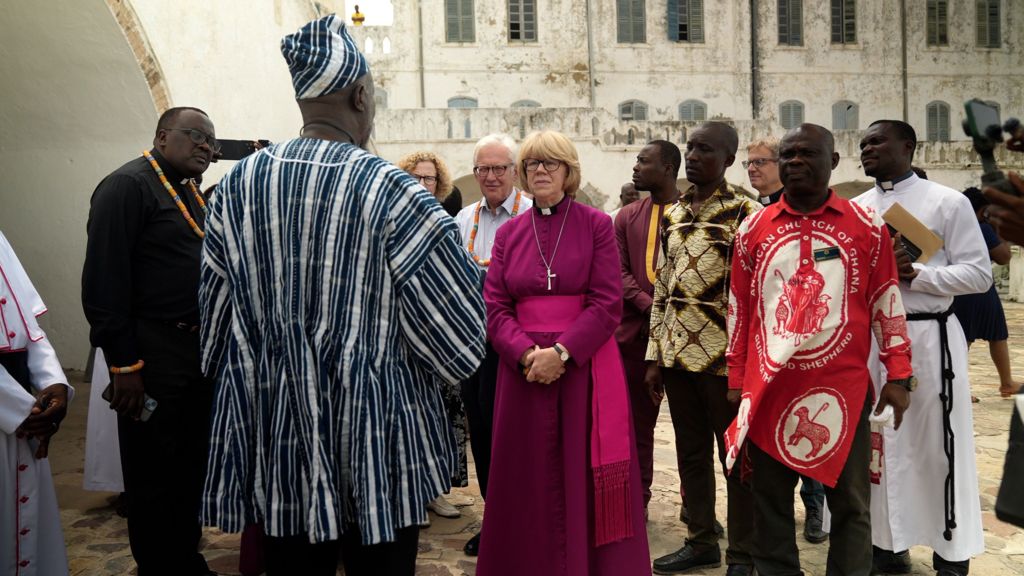
During her first pastoral visit to Africa as the head of the Church of England, Dame Sarah Mullally, the Archbishop of Canterbury, has stood by the church’s controversial 100 million-pound reparative justice fund set up to address the institution’s deep ties to the transatlantic slave trade. The confirmation came during a somber tour of Cape Coast Castle, one of Ghana’s most infamous slave trading outposts, where thousands of enslaved Africans were detained before being trafficked across the Atlantic to the Americas.
After walking through the windowless dungeons where enslaved people were crammed in inhumane conditions and passing through the iconic “Door of No Return” that marked their final departure from the continent, Dame Sarah spoke openly about the weight of the church’s historical complicity. Touring the site, she said, forced a visceral reckoning with the crimes committed by the institution she now leads.
“We played a part in the transatlantic slave trade. That is clear,” the archbishop told reporters on the trip. “Part of the Christian belief in repentance is about action, so we are putting in place action to support those communities that feel the legacy of the slave trade.” She described being deeply unsettled by the contrast between the horrific dungeons below and a Christian chapel built above them, calling the arrangement a stark, inescapable illustration of how the church was directly embedded in the system of human trafficking.
The Church of England has a well-documented history of involvement in the transatlantic slave trade: its missionary branch operated slave-worked plantations in the Caribbean to generate funding for missionary work, dozens of clergy personally owned enslaved people, and the church accepted substantial donations from prominent slave trading families and businesses. An internal audit three years ago also confirmed that the church’s historical endowment fund held major investments in a company engaged in slave trafficking. That audit prompted a formal decision to establish the £100 million fund, which is earmarked for investment, historical research, and community outreach in regions still grappling with the intergenerational harm of slavery.
Despite the church’s stated goals, the fund has faced significant pushback since it was announced. Critics have challenged the historical findings outlining the church’s level of complicity, raised legal questions about the fund’s structure, and voiced ideological opposition to the project of reparative justice.
Ghana has emerged as a global leader in the campaign pushing for reparations from nations and institutions that accumulated wealth from the transatlantic slave trade, and the archbishop’s visit and reaffirmation of the fund has drawn praise from senior Ghanaian officials. Foreign Minister Samuel Okudzeto Ablakwa said Dame Sarah’s actions send a critical message to global institutions grappling with their own historical legacies. “What the Archbishop of Canterbury is doing in Ghana on her current visit will begin to send the right signals,” he said. “And those who are either revisionists or who are obstructionists within the Church of England are going to start thinking twice.” He added that the Christian faith the church brought to Africa centers the principle that sin must be acknowledged before forgiveness can be granted, a standard that applies to institutions as well as individuals.
Dame Sarah’s March installation as head of the Church of England made history as she became the first woman to hold the post of Archbishop of Canterbury, and her trip to Ghana marks a key milestone in her first year in the role, with reparative justice as the central theme of the Ghana leg of her tour.