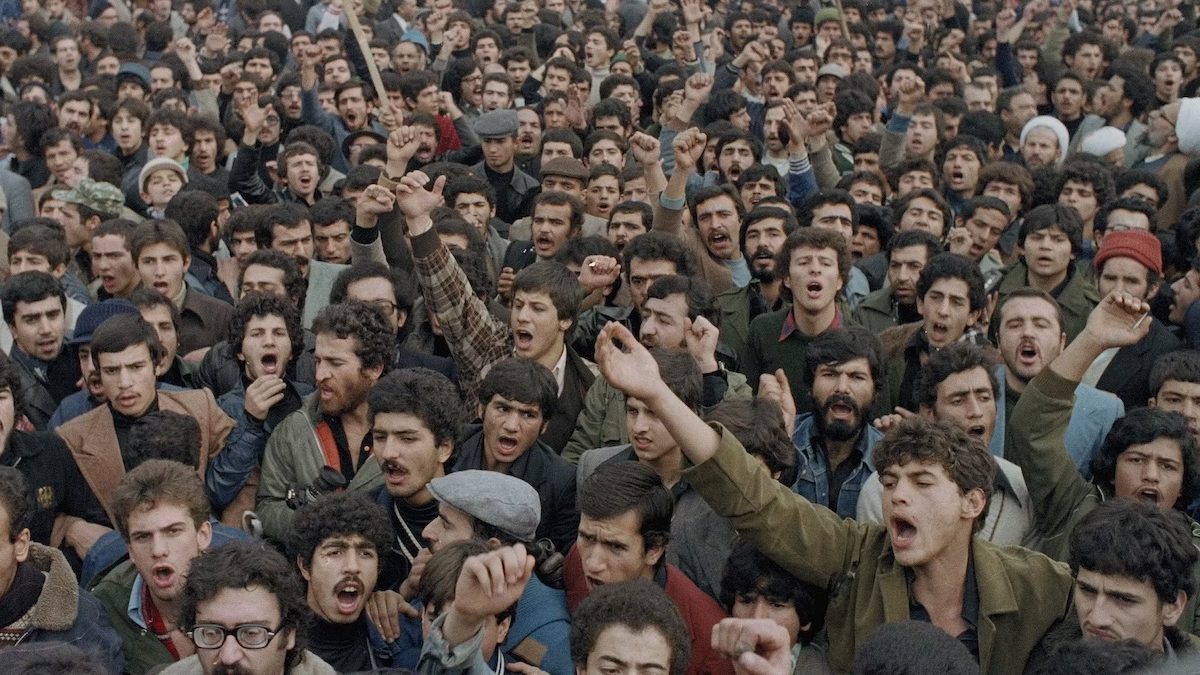
Nominated for the 2026 International Booker Prize, Shida Bazyar’s *The Nights Are Quiet in Tehran* uses the 1979 Islamic Revolution not as a backdrop for grand historical drama, but as the quiet, unrelenting force that reshapes the fates of five ordinary family members across generations. Translated by Ruth Martin and published by Scribe, the multi-voiced, polyphonic narrative skips across decades between its four chapters, opening with a prologue that holds out hope for a free Iran in a not-too-distant future. Unlike many historical works centered on major political upheavals, this novel prioritizes the stories that official records often erase — stories that would disappear entirely without the framework of fiction.
The story opens in the early aftermath of the revolution, following young communist teacher Behzad and his two political allies, Sohrab and Peyman, who all dream of building what they call the “real revolution” — a people-driven transformation of Iran’s core institutions that would deliver a prosperous, sovereign nation. But the divide between Peyman’s worldview and that of his comrades lays bare the roots of Iran’s repeated failed attempts at democratic reform.
Peyman, an artist by instinct who always carries a camera, only turned to politics after the 1979 upheaval. Before that, he cared little for the ideological texts and flyers his friends championed. A pragmatic realist, he argues that the only foundations for a meaningful people’s revolution are basic needs: food, clean water, and accessible education. When the shah’s portraits are removed from classroom walls, he rejects the idea of hanging any individual’s image in their place. Behzad and Sohrab, by contrast, envision new portraits of Marx, Engels, Mao, and Lenin — ideological figures far removed from the daily lives and beliefs of most Iranians.
Behzad, an atheist who approaches ideology with the fervor of a true believer, devotes himself to studying past revolutions and advocating for armed struggle. He dismisses the general Iranian population as uneducated and superstitious, claiming he and his comrades already understand the people — and that they themselves are the authentic voice of the people. He argues that violence is a necessary tool for political change, failing to recognize that violence committed in the name of “the people” is no different from violence committed in the name of God: both ultimately serve to prop up illegitimate power. It is only a decade later, living in exile in Germany, when Behzad learns that Peyman has been executed that he finally confronts the true human cost of the violence he once championed. Peyman’s death — of a man who understood rational truth but could not persuade others to follow him — becomes a haunting metaphor for the death of reason itself in a nation where ideological believers of all stripes treat violence as the only solution.
As the story shifts to life in German exile, the narrative moves to Behzad’s wife Nahid, whom he married before the couple fled persecution. Plagued by a suffocating, constant loneliness as she struggles to adapt to what she calls the “cold language” of her new home, Nahid’s experience echoes the words of Polish poet Czesław Miłosz: “Language is the only homeland.” Her deep melancholy stems from the untranslatable nature of culture and identity — a rift that even her own daughter, Laleh, recognizes, once saying “I really don’t want to know what it feels like to be Mama.” Just as a poem can never retain all its nuance when moved to another language, migrants can never fully integrate into a new culture without losing a core part of themselves. Nahid reflects that a translated poem of the 14th-century Persian poet Hafez, exiled to a foreign tongue, mirrors her own exile: even if the words are there, the essence is lost. A once-educated and confident woman, she feels like a child again in Germany, unable to navigate the unspoken rules of her new society and even afraid she will pass on mistakes to her daughter while helping with homework.
This intergenerational rift of identity and belonging deepens with Laleh’s perspective. In 1999, when a reformist Iranian president opened the country to limited travel, Laleh returns to Iran with Nahid. Though she is welcomed and cherished by her extended family, she feels like an outsider. Even in Germany, the only country she has ever truly known, she faces constant small reminders that she does not fully belong: a magazine seller questions whether she can read German; she worries others dismiss her father because of his grammatical mistakes; she fears strangers will recognize the family as foreigners and set fire to their car on a road trip. While she does not experience the crippling loneliness her mother endures, her identity is fractured between two worlds, with no single place that feels fully like home.
As with any work of historical fiction, the novel carries small inconsistencies that readers familiar with Iranian culture and history will notice. For example, a passing claim that premarital sex carries the death penalty in Iran is inaccurate, as capital punishment for sexual offenses is only applied to adultery and rape. Another anecdote about a schoolgirl having her fingernails pulled out for wearing nail polish feels exaggerated outside the context of political imprisonment, and a small scene of a young man courting Laleh in a cafe lacks logical consistency. But these minor flaws do little to undermine the novel’s core power.
Novelist Toni Morrison once wrote that official historical accounts erase the interior lives of ordinary people, and that fiction acts as a form of “literary archaeology” — a practice that can reconstruct lost pasts and revive the voices of those silenced by larger political forces. That is exactly what Bazyar achieves with her sharp, incisive prose in *The Nights Are Quiet in Tehran*. This book does not just tell a story of revolution and exile: it gives voice to the people history forgets.