As U.S. President Donald Trump’s temporary 10% global tariff is set to expire this Friday, the White House is moving forward with plans to roll out a new slate of import duties targeting dozens of trading partners, top American trade representative Jamieson Greer confirmed Tuesday. This renewed tariff push comes as the Trump administration works to rebuild its core trade policy agenda after a series of major legal setbacks earlier this year that invalidated many of its earlier tariff measures.
In February, the U.S. Supreme Court struck down a large portion of Trump’s original tariffs, prompting the administration to implement a temporary 10% global import levy to maintain its trade pressure while drafting new policy. That temporary measure will expire at the end of this week. According to trade analysts, the incoming tariffs, framed around allegations that trading partners fail to crack down on forced labor, will replace the expiring temporary levy, with rates set to range between 10% and 12.5%.
The new round of tariffs is expected to cover the majority of U.S. trade volume, Greer confirmed Tuesday, telling CNBC “We expect to see some action soon” when pressed for details on the new measures, though he declined to share a specific timeline for implementation. The European Union has already pushed back against the planned measures, stating publicly that it considers tariffs imposed on forced labor grounds by the U.S. to be completely unjustified.
The Trump administration has already moved to implement new targeted tariffs against key trading partners in recent days. Last week, Washington announced a 25% duty on select Brazilian goods set to take effect Wednesday. While exemptions have been carved out for products the U.S. does not produce domestically, as well as goods including beef, coffee and certain aircraft components, the measure still impacts more than $11 billion in Brazilian exports to the U.S. The Brazilian government has issued a sharp rebuke of the policy, and the American Chamber of Commerce in Brazil has warned that the tariffs place Brazil among the nations facing the most restrictive access conditions to the U.S. market.
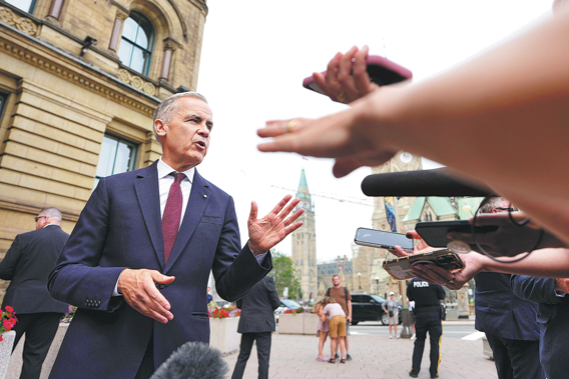
On Monday, the administration unveiled a 50% tariff on a wide range of Canadian products, scheduled to go into effect in 30 days. In response, Canadian Prime Minister Mark Carney told reporters in Ottawa Tuesday that his government is currently considering “all options” to respond to the measure, though he added that he and President Trump have agreed to intensify bilateral negotiations over the coming weeks to reach a potential negotiated settlement.
The new 50% Canadian tariff also comes as the U.S. engages in high-stakes renegotiation of the U.S.-Mexico-Canada Agreement (USMCA), the trilateral trade pact governing North American trade. The Trump administration recently rejected calls to extend the current terms of the agreement, and Greer is scheduled to travel to Mexico for negotiations tied to the joint USMCA review from Wednesday through Friday.
In an additional major trade announcement Tuesday, Trump disclosed a new phased tariff schedule for imported generic pharmaceuticals. Starting in August 2028, a 100% sector-specific tariff will go into effect on imported generic drugs, rising to 200% in 2029. To create a window for drug manufacturers to shift production to the U.S., the president added that the tariff will be set at zero for imports between August 2026 and the start of the 2028 levy. Swiss generic drug giant Sandoz confirmed Wednesday it would continue holding talks with U.S. policymakers to address the impact of the new policy.
Trade experts have warned that the broad new slate of tariffs risks reigniting global trade tensions, with high chances of retaliatory measures from U.S. trading partners that could escalate into a wider trade conflict that disrupts global supply chains and raises costs for American consumers.