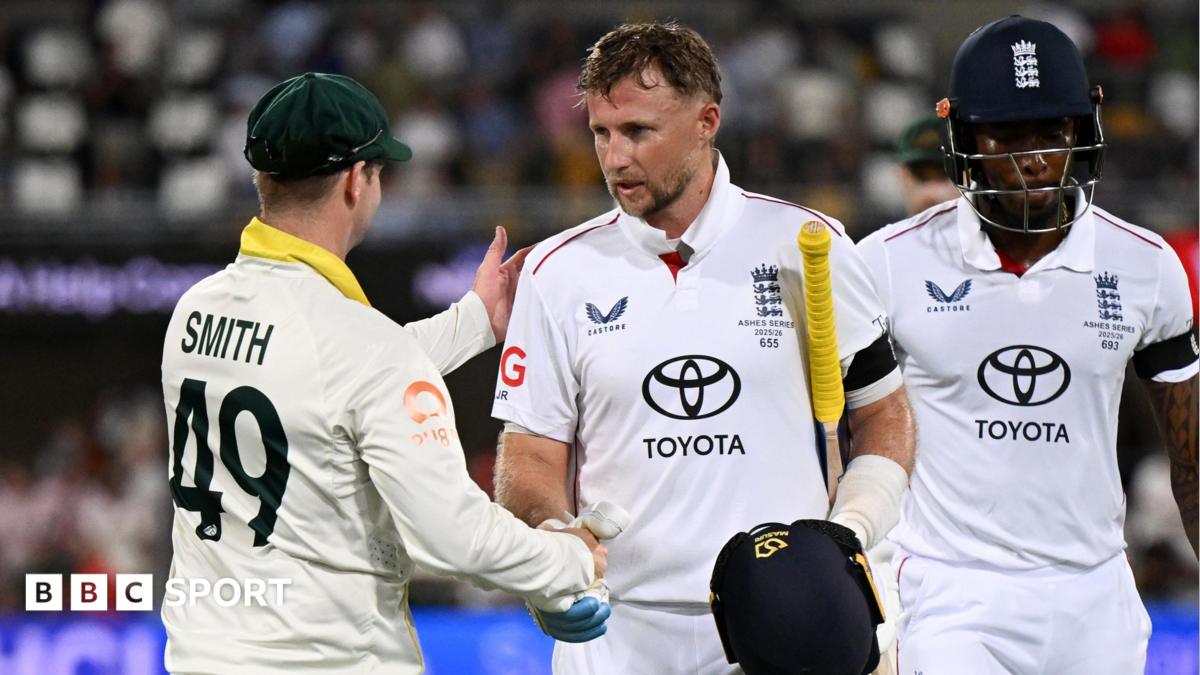
The iconic Ashes cricket rivalry between England and Australia could one day take center stage on Indian soil, if Cricket Australia chief executive Todd Greenberg gets his way. In an interview with BBC Sport journalist Timothy Abraham, Greenberg has called for both cricketing governing bodies to keep the groundbreaking idea on the table as the sport works to reignite global interest in the traditional Test format.
For more than a century, England and Australia have only contested Test matches against one another as part of the Ashes series, the bi-annual home-and-away competition that rotates between the two nations roughly every four years, with Australia currently holding the urn after a dominant 4-1 victory in the 2025-26 series. That tradition is already set to break next year, however: the two sides will clash in a standalone one-off Test at the Melbourne Cricket Ground (MCG) in March 2027 to mark the 150th anniversary of their very first Test meeting.
It is this spirit of evolution that Greenberg says should open the door to exploring a neutral-venue match in cricket’s largest and most high-impact market. “It’s not something that we are planning, but it’s open for consideration. We’d have to be open to considering all options,” Greenberg told BBC Sport. A fixture of this kind would require formal approval from both the England and Wales Cricket Board (ECB) and the Board of Control for Cricket in India (BCCI), but Greenberg pointed to strong existing relationships between all three governing bodies as a solid foundation for discussion.
Cricket Australia is already laying the groundwork for expanding its footprint in India, with the country’s domestic Big Bash League set to play its first ever overseas match in Chennai this December, where the Melbourne Renegades will face off against the Perth Scorchers. The move is explicitly designed to tap into the world’s biggest cricket market and grow the competition’s global profile. While Test cricket has seen declining popularity in India in recent years, overshadowed by the explosion of T20 franchise cricket and the Indian Premier League, Greenberg argued that a historic England-Australia Test on Indian soil would draw massive fan interest. “There’s no doubt [it] would capture the imagination,” he said. “I think Test cricket between us, India and England is very strong and probably bucking the trend in some other parts of the world. We want to make sure we grow and strengthen it.”
Greenberg also addressed ongoing controversy around the 150th anniversary Test scheduled for next year, which will be played under lights with a pink ball – a first for men’s Test cricket at the MCG. A number of high-profile former Australian players have publicly criticized the decision, departing from the format of the 1977 centenary Test, which was played as a traditional daytime match. But Greenberg defended the change, noting that a daytime match would struggle to draw large crowds given most fans work and attend school during weekday hours. He added that favorable broadcast time zones for UK audiences and larger overall viewership numbers make the pink-ball format a strategic choice to grow the sport’s reach.
“It will anger some of the traditionalists but we’re in the business of getting more eyeballs on our game,” Greenberg said. “We wanted to get as many people for the game as possible. Playing that game in the day while people are at work and school would’ve made that difficult. Clearly there’s a commercial imperative with broadcast rights back in the UK and the time zone. Pink-ball Tests for us are hugely advantageous in terms of audience.”
The CA chief also pushed back against criticism of the MCG’s recent Test pitch, which England infamously won in just two days during the 2025-26 Ashes series. He confirmed that preparations for the 2027 anniversary Test will target a flatter, less grassy pitch designed to produce a longer, more spectator-friendly contest. Greenberg emphasized that the governing body is working to strike a careful balance between honoring the 150-year history of Anglo-Australian Test cricket and adapting the format to meet the needs of modern audiences to ensure its long-term survival. “We’re trying to balance celebrating 150 years of Test cricket between our two countries but also have an eye on the future and how we can evolve the sport,” he added.