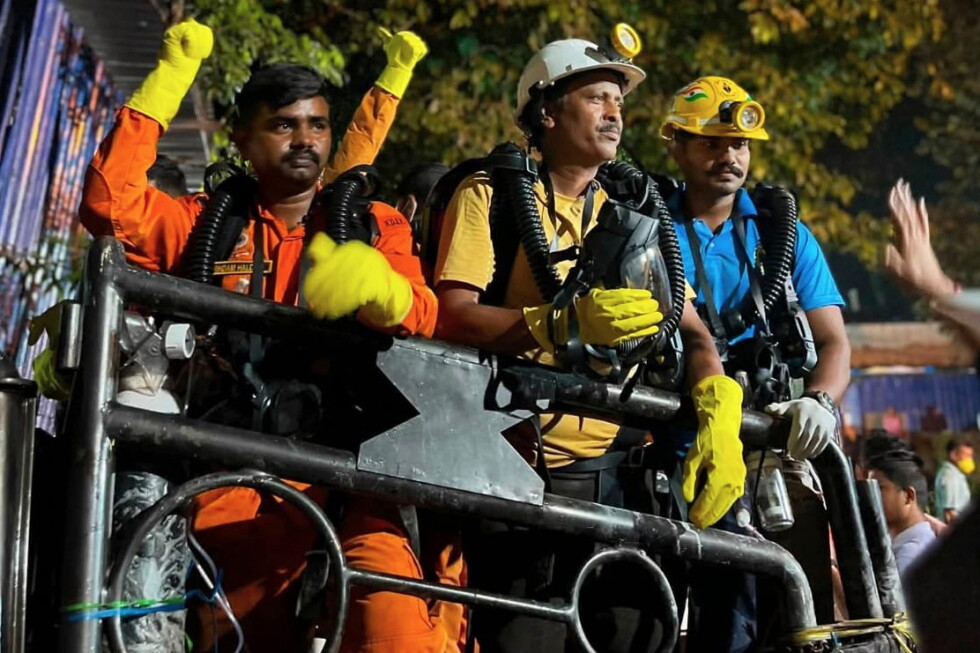
GUWAHATI, India – Rescue operations for trapped workers at a collapsed hydropower tunnel in India’s Himalayan state of Sikkim concluded Thursday, after recovery teams pulled the bodies of the final 13 missing workers, raising the total confirmed death toll to 25.
The tragedy unfolded on Monday, when a methane gas buildup ignited a powerful explosion inside the tunnel of the under-construction 500-megawatt Teesta Hydroelectric Project. The site sits roughly 40 kilometers south of Sikkim’s capital Gangtok, in the seismically active Teesta River basin. The blast trapped dozens of workers deep underground, leaving no chance of survival for those caught in the disaster. Multiple state and national agencies launched a coordinated four-day rescue effort, but operations were slowed significantly by high levels of toxic gas lingering inside the tunnel, according to official statements.
After all trapped workers’ remains were recovered, search teams conducted a full final structural inspection of the damaged tunnel, the Sikkim state government confirmed in an official release. In response to the disaster, authorities have assembled a high-level special committee to launch a full investigation into the causes of the explosion. The panel will also be tasked with outlining new regulatory safeguards to prevent similar deadly accidents on future infrastructure projects.
This latest industrial disaster has drawn renewed attention to systemic construction safety risks across India, where the country’s rapid push for large-scale infrastructure expansion frequently clashes with challenging geographic conditions, inconsistent safety oversight, and common construction lapses. Experts note that the Teesta River basin, where the hydropower project is located, presents uniquely high dangers for underground construction. The region is marked by young, geologically fragile rock formations intersected by frequent fractures and naturally occurring underground pockets that can trap ancient gases such as methane. Combined with ongoing seismic activity and unpredictable subterranean conditions, tunnel projects in the area carry inherently elevated risk.
This disaster is far from an isolated incident in India. Just this year, a coal mine explosion in neighboring Meghalaya state claimed the lives of 18 workers. In 2023, a major tunnel collapse on an infrastructure project in northern Uttarakhand state trapped 41 workers for 17 days before a dramatic multi-week rescue effort successfully freed all those stuck underground.