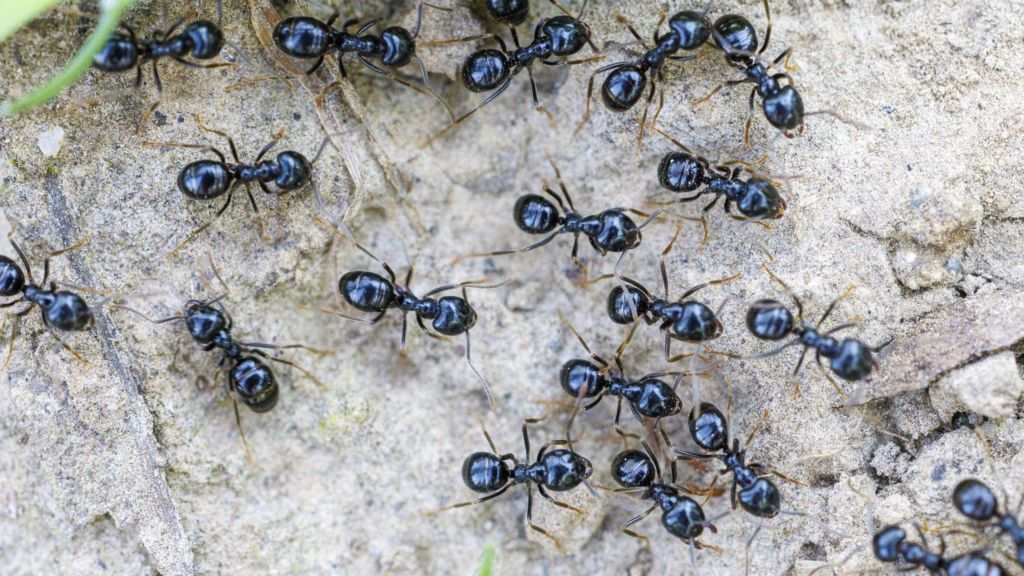
A high-profile food safety case is making headlines in South Korea, where the owner of an elite two-Michelin-starred Seoul restaurant is facing steep legal penalties after being charged with serving unapproved ants as a gourmet dessert topping. Local media outlets have confirmed that state prosecutors are pushing for a 12-month prison sentence and a 20 million Korean won (equivalent to roughly $13,510) fine against the unnamed eatery owner, whose menu included ant-topped sorbet that violates the country’s strict food safety regulations. Under South Korean law, only 10 specific insect species are cleared for human consumption – a list that includes grasshoppers, locusts, and two-spotted crickets, but excludes all ant varieties. The case first came to the attention of food safety regulators after Ministry of Food and Drug Safety officials stumbled across customer reviews posted online, paired with photos of restaurant dishes visibly sprinkled with whole ants. Subsequent investigations by authorities have revealed that over a four-year period, the restaurant imported approximately 49,000 ants from suppliers based in the United States and Thailand to incorporate into multiple menu items. Most notably, testing from South Korean health regulators found that the ants used by the restaurant contained dangerously high levels of heavy metals – as much as 55 times the concentration allowed for commercially sold edible insects, local newspaper The Chosun Daily reported. In court, the restaurant owner has mounted a defense pushing for leniency, acknowledging that ants did appear on the menu but arguing their use was extremely limited. The ants only featured as a topping for sorbet in the restaurant’s 15-course tasting menu, he explained, and all guests were explicitly notified that they could request an alternative topping if they preferred not to eat ants. The owner further noted that roughly 40% of diners opted out of the ant topping entirely, receiving fermented vinegar or edible flowers instead, and that using ants as a gourmet ingredient is common practice at high-end restaurants in other countries including Australia, Denmark, and the United Kingdom. South Korea’s formal approval process for edible insects weighs multiple key criteria before clearing an insect species for commercial use, including potential food safety hazards, inherent toxicity, nutritional value, and the ability to breed and process the insects consistently under hygienic conditions. While the case has not named the specific restaurant or its owner, there are only 10 two-Michelin-starred restaurants across South Korea, all of which are based in Seoul. For context, the Michelin Guide’s globally recognized rating system awards up to three stars to restaurants based on rigorous assessment of ingredient quality, flavor consistency, technical cooking skill, and the chef’s unique creative vision. Two stars, the rating held by the restaurant at the center of this case, indicate the establishment serves “excellent cooking” that is “worth a detour” per Michelin’s official criteria. It is worth noting that ants have a long history as a traditional food source across many global cultures, valued as a delicacy in multiple regions of Asia, Africa, and Latin America. Weaver ants and their eggs are a common ingredient in traditional Thai and Cambodian cuisine, for example, and queen ants are considered a luxury ingredient on par with caviar in parts of Colombia. Now, the Seoul court hearing the case is scheduled to issue its final verdict on September 2, with the outcome expected to set a clear precedent for how South Korean regulators handle unconventional gourmet ingredients that fall outside of existing approved food frameworks.