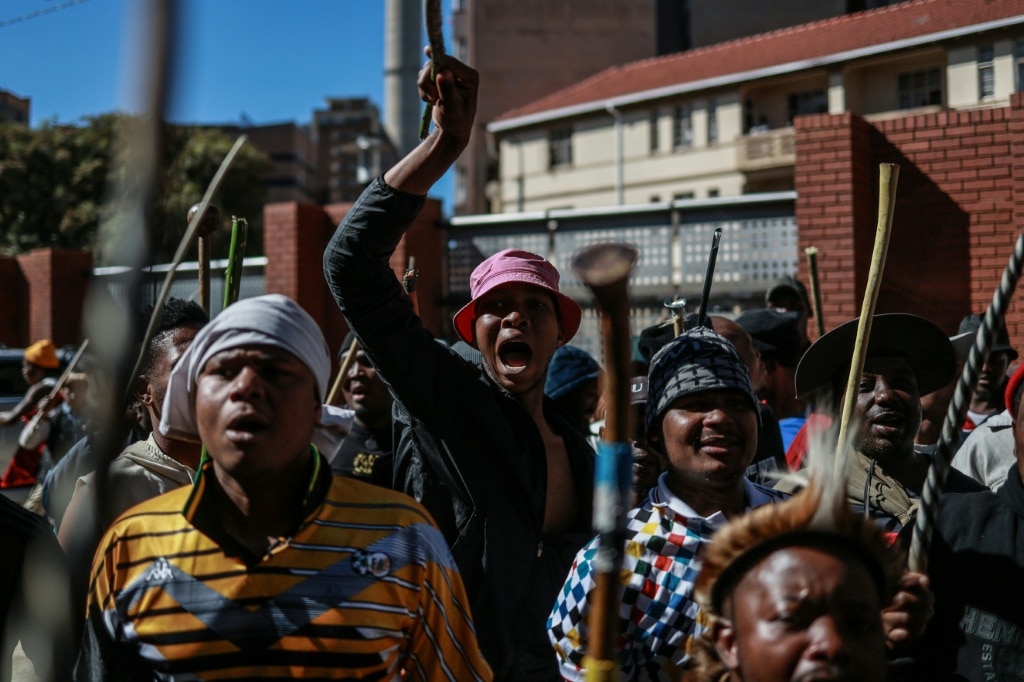
A surge of xenophobic violence targeting undocumented migrants in South Africa has forced more than 160,000 foreign nationals to flee the country over the past two months, an Agence France-Presse tally compiled from repatriating government data confirms. Weeks of nationwide unrest, instigated by local groups demanding all undocumented migrants leave by the June 30 deadline, have devolved into deadly attacks that have claimed the lives of at least four migrants, with several foreign governments disputing that official death toll and reporting higher fatalities.
Desperate to escape targeted violence, migrants from across the African continent have crowded into consulates and community gathering spaces to arrange transport home, many leaving with nothing more than the small belongings they could carry as they feared for their safety. Zimbabwe and Malawi account for the largest share of returnees, with hundreds more migrants fleeing from Ghana, Kenya, Lesotho, Mozambique, Nigeria, Uganda and other African nations.
By July 18, Zimbabwe’s cabinet reported 108,366 of its citizens had returned to the country, most organizing their own repatriation. Malawi, meanwhile, confirmed more than 46,890 of its people had arrived home since early June, with the government deploying 699 buses to facilitate the cross-border journey; six migrants died during the transit process. South African government data shows nearly 2,000 Mozambicans have also returned, after two Mozambican nationals were killed in late May during violence that followed a protest in the coastal town of Mossel Bay — the first fatalities of South Africa’s latest wave of anti-migrant unrest. South African authorities have since confirmed the additional deaths of an Ethiopian national and a Malawian national linked to anti-foreigner sentiment.
Nigeria has reported two of its citizens killed in ongoing xenophobic attacks, while Ghana confirmed one of its nationals died in anti-immigrant unrest in a Cape Town township. South African officials have rejected both claims, warning that widespread disinformation is being spread across social media platforms. To date, Nigeria has repatriated roughly 1,490 of its nationals, and Ghana has evacuated at least 926 citizens via air. Both nations have called for the crisis, which they label “Afrophobia”, to be added to the agenda for the upcoming African Union summit, and Ghana has postponed a scheduled state visit by South African President Cyril Ramaphosa amid the tensions.
As Africa’s most economically developed nation, South Africa has long drawn both documented and undocumented migrant workers from across the continent, who leave their home countries in search of employment opportunities unavailable where they live. Local vigilante groups behind the current unrest frame migrants as drivers of rising crime and competitors for limited jobs, stoking tensions in impoverished townships already grappling with systemic poverty, high unemployment and underfunded, ineffective policing. However, independent analysts argue that migrants are being scapegoated for deep-rooted structural failures in South Africa, including a national unemployment rate that exceeds 30% and widespread dysfunction in the delivery of basic public services.
The current wave of unrest has its roots in low-level demonstrations that began last year, when undocumented migrants were blocked from accessing public health care at clinics and hospitals. Protests grew dramatically in the lead-up to the June 30 departure deadline, and unrest has continued in the weeks following that date. One prominent anti-immigrant group, Operation Dudula, has vowed to hold weekly demonstrations until the country’s local government elections in November.
Xenophobic violence is not a new crisis in South Africa: repeated waves of anti-migrant unrest have swept the nation over the past three decades. The 2008 anti-immigrant riots left 62 people dead and displaced thousands more, with further large-scale outbreaks occurring in 2015 and 2016. Deadly violence in 2019 saw armed mobs target foreign-owned businesses across Johannesburg, killing at least 12 people, 10 of whom were South African citizens. What makes the current crisis unprecedented, however, is that it marks the first time multiple foreign governments have coordinated to organize large-scale simultaneous voluntary repatriations for thousands of their trapped nationals.