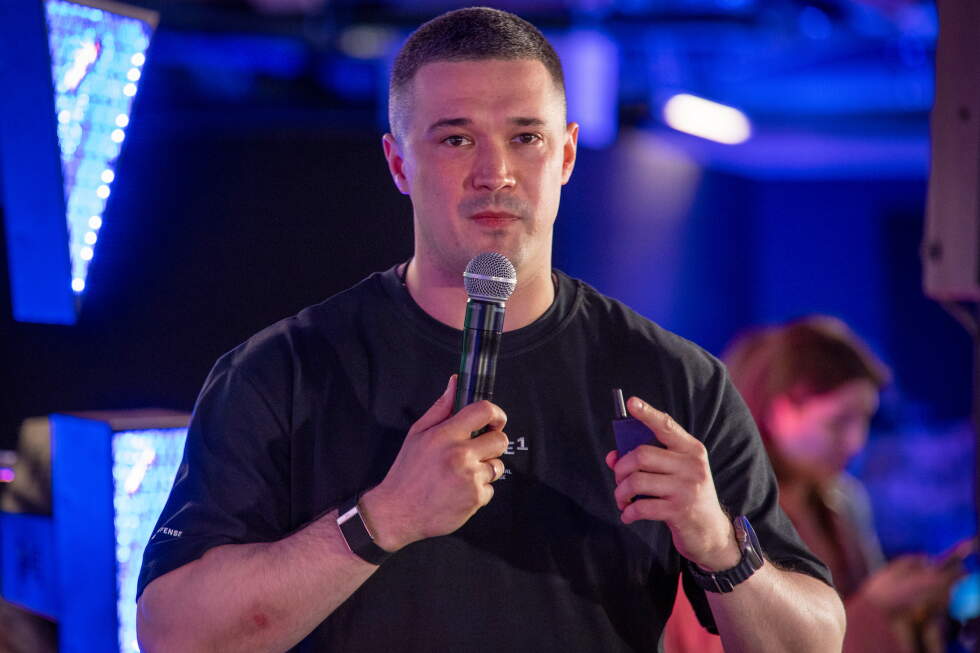
Six months into Mykhailo Fedorov’s tenure as Ukraine’s youngest defense minister, a high-stakes feud between the 35-year-old tech entrepreneur turned military reformer and the country’s top military commander has upended Kyiv’s wartime leadership, triggering public protests and internal political turmoil amid Ukraine’s ongoing defense against Russia’s full-scale invasion. President Volodymyr Zelenskyy has removed Fedorov from his post as part of a broader government cabinet reshuffle, a decision that has exposed deep divides over how Ukraine should adapt its military strategy to a rapidly changing battlefield shaped by emerging technology.
Fedorov, a self-described innovator with no prior military experience, built his reputation as the public face of Ukraine’s revolution in drone warfare. Before his appointment as defense minister in January, he led Ukraine’s digital transformation portfolio, where he rolled out widely praised e-governance platforms that streamlined public services. As defense minister, he pushed sweeping changes to military procurement rules to root out systemic corruption, and accelerated the development of Ukraine’s domestic drone industry that has redefined combat operations against Russian forces.
Under Fedorov’s leadership, Ukraine emerged as a global pioneer in battlefield drone technology, a development that has drawn close attention from military powers across the United States, Europe, and the Middle East. He also took credit for restricting Russian military access to Elon Musk’s Starlink satellite internet network, a key communications infrastructure for Ukrainian forces on the front lines. In a social media statement released after his dismissal, Fedorov asserted that his tenure had turned Ukraine into both a global technological leader and a formidable defense powerhouse.
The core of the conflict between Fedorov and his top military counterpart, 60-year-old Commander-in-Chief Gen. Oleksandr Syrskyi, centered on competing visions for military organization and reform. A veteran of Soviet military training who graduated from Moscow’s Higher Military Command School and served in the Soviet Artillery Corps, Syrskyi has long been associated with the rigid, top-down command culture of the Soviet-era military establishment. Fedorov has publicly accused Syrskyi of actively blocking the modernizing reforms he says are essential for Ukraine to succeed, arguing that the nature of the war has shifted dramatically with the rise of new technologies, and the old guard of military leadership has refused to adapt.
Fedorov’s criticism aligns with widespread complaints from frontline soldiers and veterans, who have blamed Syrskyi’s traditional command approach for causing unnecessarily high casualties in costly offensive operations. Protesters across Ukraine have framed Fedorov’s ouster as evidence that Zelenskyy has chosen to side with the entrenched old military guard over a popular reformer, with demonstrations drawing veterans, active-duty soldiers on leave, and civilian supporters of change.
Syrskyi, for his part, has rejected claims of internal conflict, writing in a column for Ukrainian military outlet Militarnyi that he is focused on fighting Russia, not internal battles with the defense ministry. He emphasized that the General Staff has always cooperated with the defense ministry, and will continue to do so regardless of who is appointed minister, noting that military personnel follow orders and fulfill their duties rather than choosing their command structure.
The general does carry a complex legacy from the course of the war, however. He oversaw two of Ukraine’s most significant early victories: the successful defense of Kyiv in the opening weeks of Russia’s 2022 full-scale invasion, and the 2022 Kharkiv counteroffensive that reclaimed thousands of square kilometers of Ukrainian territory. But his nickname, “the Butcher”, gained widespread traction during his command of the months-long defense of Bakhmut, one of the war’s bloodiest battles that claimed tens of thousands of lives on both sides. His reputation suffered further damage following an investigation published by Ukrainian outlet Babel last month, which documented allegations of abuse and disproportionately high recruit casualties in the Skelia assault regiment, a unit closely tied to Syrskyi.
The fallout from Fedorov’s dismissal has already reached into upper ranks of the Ukrainian military: the deputy commander of Ukraine’s air force resigned in protest, warning that the leadership change would weaken the country’s air defense capabilities. Many demonstrators have called for a generational shift in military leadership, saying new commanders are needed to prioritize preserving the lives of Ukrainian soldiers.
For Zelenskyy, the controversy carries significant political risks. Critics have argued that the ouster was motivated by a desire to eliminate a potential future political rival, and the public backlash has weakened public confidence in his leadership amid ongoing wartime strain. On the Russian side, pro-war commentators have greeted news of Fedorov’s dismissal with open celebration, pointing to his role in organizing long-range drone strikes on Russian oil facilities that have triggered widespread domestic fuel shortages, as well as mid-range attacks that disrupted Russian military supply lines. While Russian commentators have acknowledged Syrskyi’s success in building layered defense lines that have stalled Russian advances, they have expressed hope that the public dispute over the reshuffle will fuel damaging internal political infighting in Kyiv and erode the cohesion of Ukraine’s military, playing into Moscow’s wartime objectives.