ROME – As global progress toward ending hunger remains alarmingly fragile, the head of the International Fund for Agricultural Development (IFAD) has issued a stark warning that persistent geopolitical conflicts and energy market disruptions could drive millions more people into food insecurity by spiking costs for fuel, fertilizer, and staple foods.
A newly released United Nations food security report published Tuesday confirms that while global hunger levels have seen a slight, modest decline in recent years, current trends project that more than 500 million people will still face chronic undernourishment by 2030, with Africa set to bear the overwhelming majority of that burden.
In a July 10 interview with The Associated Press, IFAD President Alvaro Lario outlined the severe risks of ongoing instability: if sustained disruptions to shipping lanes and energy supplies—including heightened uncertainty around the Strait of Hormuz amid the ongoing Iran conflict—persist, an additional 9 to 18 million people could fall into hunger.
“We are living in an era with the highest number of active conflicts in modern memory, and that number continues to climb,” Lario said. “Wherever conflict breaks out, hunger, displacement, and refugee populations all grow alongside it.”
Conflict stands as one of the single greatest barriers to global hunger reduction, Lario emphasized. Wars and geopolitical tensions disrupt critical supply chains for energy and agricultural inputs, pushing up costs across already inflation-strained global food systems. What makes this dynamic particularly dangerous, he noted, is that hunger and conflict fuel one another, creating a self-reinforcing cycle that cannot be broken without targeted investment in global stability.
Skyrocketing energy costs have already hit fertilizer production and agricultural output hard, with the most severe impact falling on small-scale farmers. For many of these producers, diesel fuel is a non-negotiable input for pumping irrigation water, harvesting crops, and transporting goods to regional markets. As fuel costs rise, production expenses follow, creating a direct ripple effect that pushes up retail food prices for consumers worldwide.
Beyond affordability pressures and conflict-driven disruptions, the new report identifies climate change as an accelerating threat to global food security. While global food production continues to expand to meet population growth, roughly one-third of the entire global population still cannot afford a nutritionally adequate healthy diet. That figure jumps to 77% in low-income nations, Lario said.
“The biggest challenge we face today is no longer just producing enough food to feed the global population,” Lario explained. “It is making healthy, nourishing diets affordable for everyone, everywhere.”
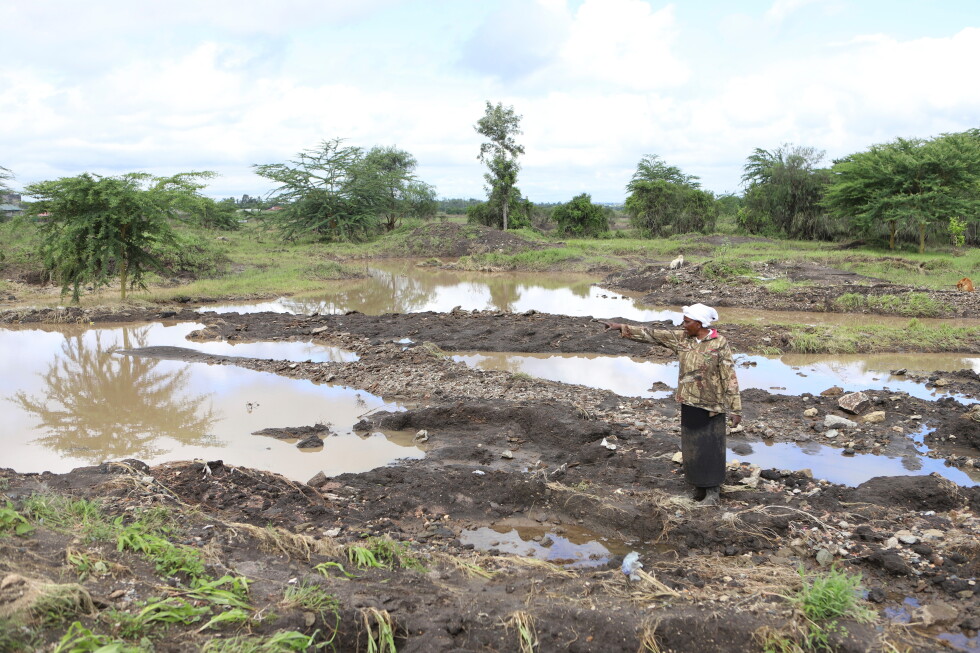
Extreme climate events including catastrophic flooding, prolonged multi-year droughts, and record-breaking heat are increasingly disrupting agricultural production across every inhabited continent, and have become a regular reality for many rural communities. Instead of relying primarily on emergency disaster response after crises hit, Lario argued that governments must prioritize investing in climate resilience and adaptive infrastructure before disasters occur.
“This is the new normal for global agriculture,” Lario said. “We are seeing catastrophic floods in regions that never faced them before, and droughts that persist for four or five years straight, wiping out harvest after harvest.”
To address this gap, IFAD is scaling up investments in climate adaptation programs designed to help vulnerable rural communities withstand floods, droughts, and extreme heat. Lario stressed that this support is desperately needed for the millions of smallholder farmers who produce the majority of the world’s food supply, yet have the least resources to adapt to shifting conditions.
The report also marks a significant milestone in global food security trends: for the first time in recorded history, Africa has surpassed Asia as the region home to the largest number of food-insecure people. By 2030, the report projects that nearly 60% of the world’s chronically hungry population will reside on the African continent, making it the clear epicenter of the global hunger crisis.
Lario attributed this shift to a combination of rapid population growth across the continent and slower economic development compared to many parts of Asia, and called for dramatically increased international investment in African agriculture, infrastructure, and local food systems. Currently, African nations import nearly $100 billion in food annually, a statistic Lario said underscores the urgent need to strengthen local production, post-harvest storage, distribution networks, and regional food trade across the continent.
Without urgent action to build more resilient food systems, Lario warned, overlapping threats from conflict, energy market volatility, and climate extremes will derail what limited progress the world has made toward ending global hunger.