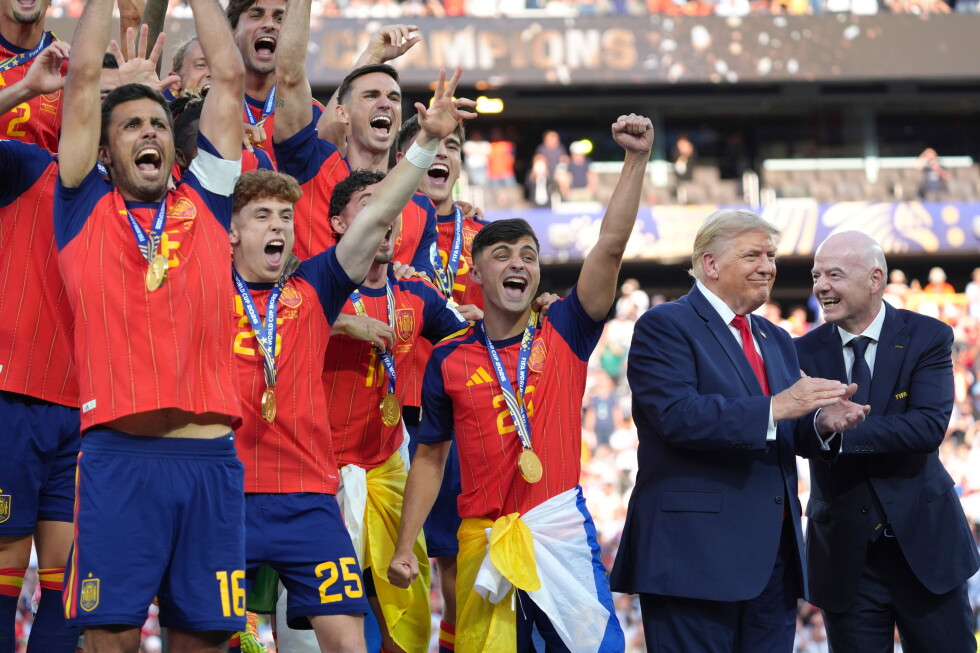
The 2026 FIFA World Cup, an unprecedented logistical feat bringing 48 teams, 104 matches, and 16 stadiums across three North American nations – the United States, Canada, and Mexico – was always set to face high stakes and endless potential pitfalls, from on-field controversies to off-stage organizational chaos. But when the final whistle blew on the tournament’s six-week run, the event outperformed nearly all low expectations, emerging as a largely successful showcase of global soccer that kept most of the drama where it belongs: on the pitch.
After Spain claimed the trophy with a tense 1-0 extra-time victory over Argentina in the final, FIFA President Gianni Infantino heaped glowing praise on the co-host nations, highlighting the tournament’s landmark achievements in audience and attendance. “We have had a record number of spectators in the stadiums, almost 7 million,” Infantino noted, adding that official final figures are still forthcoming, and global broadcast viewership from home viewers is projected to top 6 billion people.
Broadcast ratings delivered strong results across North America despite an early exit for the U.S. men’s national team, which fell to Belgium in the round of 16. Fox Sports, which aired all 104 matches in English, retained consistent viewership even after the hosts’ elimination, while Spanish-language broadcaster Telemundo saw historic engagement: preliminary data puts the final’s Spanish-language audience at 22.6 million, on pace to make it the most-watched World Cup final in Spanish-language U.S. media history. The U.S.-Belgium knockout match alone drew more than 45 million total viewers across both networks, with 33.1 million tuning in to Fox and 12 million to Telemundo. Even non-native Spanish speakers frequently turned to Telemundo’s coverage for its energetic commentary and fan-focused presentation. After a small number of early logistical bumps, stadiums across all three co-hosts drew near-capacity crowds for nearly every match, even with premium ticket prices that had sparked concerns about low turnout.
Organizers also caught a lucky break with summer weather, a long-cited risk for a Northern Hemisphere summer tournament. While summer heat across North America is already intense, amplified by broader climate change trends, only a handful of matches faced dangerous sweltering conditions. The most notable example was Paraguay’s knockout clash with France in Philadelphia on July 4, where temperatures hovered near 100 degrees Fahrenheit (38 degrees Celsius) throughout the match. For the final held in the New Jersey metro area, organizers dodged a major disruption when hazy smoke from ongoing Canadian wildfires, which had blanketed much of the U.S. Northeast in recent weeks, cleared just before kickoff thanks to timely thunderstorms that pushed the smog out of the region.
The tournament’s most ambitious shift – expanding the field from 32 to 48 teams, a change many critics argued would dilute the quality of competition – also defied pessimism to deliver exciting, competitive matches and memorable underdog stories. Cape Verde, a minnow in global soccer, held eventual champion Spain to a surprising draw in its opening group match, advanced to the round of 32, and pushed Argentina to a 3-2 extra-time thriller that went down as one of the tournament’s most iconic matches. Congo also advanced out of the group stage and pushed powerhouse England to a tight contest before exiting, while Curaçao retained a shot at qualifying for the knockout round heading into its final group match. After the Cinderella runs of lower-ranked underdogs, the tournament’s final four featured the world’s top four ranked teams: England, Argentina, Spain, and France, delivering the high-stakes heavyweight matchups fans had hoped for.
Even with the overall success, the 2026 tournament was not without its share of political controversies, a consistent undercurrent for major global soccer events. Iran’s participation, which took place amid ongoing conflict in the Middle East, emerged as the most high-profile point of tension. The Iranian team was forced to relocate its pre-tournament base camp from Arizona to Mexico, after the U.S. denied visas to multiple members of the country’s official delegation, leaving the team overshadowed by travel disputes and administrative barriers. Controversy also swirled around the decision to reverse American striker Folarin Balogun’s one-game red card suspension ahead of the U.S.’s round of 16 match against Belgium, which sparked scrutiny of the relationship between former U.S. President Donald Trump and Infantino. Travel restrictions also barred fans from several sanctioned countries from entering the U.S. to attend matches, though there were no verified reports of the aggressive immigration enforcement near stadiums that multiple human rights groups had warned of ahead of the tournament.
While Infantino has a clear incentive to frame the expanded 48-team tournament as a success, on-the-ground results back up his positive framing. The FIFA chief doubled down on his praise, saying, “I think we have to invent a new vocabulary, new words to define the success of this World Cup.” For soccer fans across North America and the globe, the 2026 co-hosted World Cup exceeded most expectations, proving that an expanded, three-nation tournament can deliver both competitive excitement and strong organizational results.