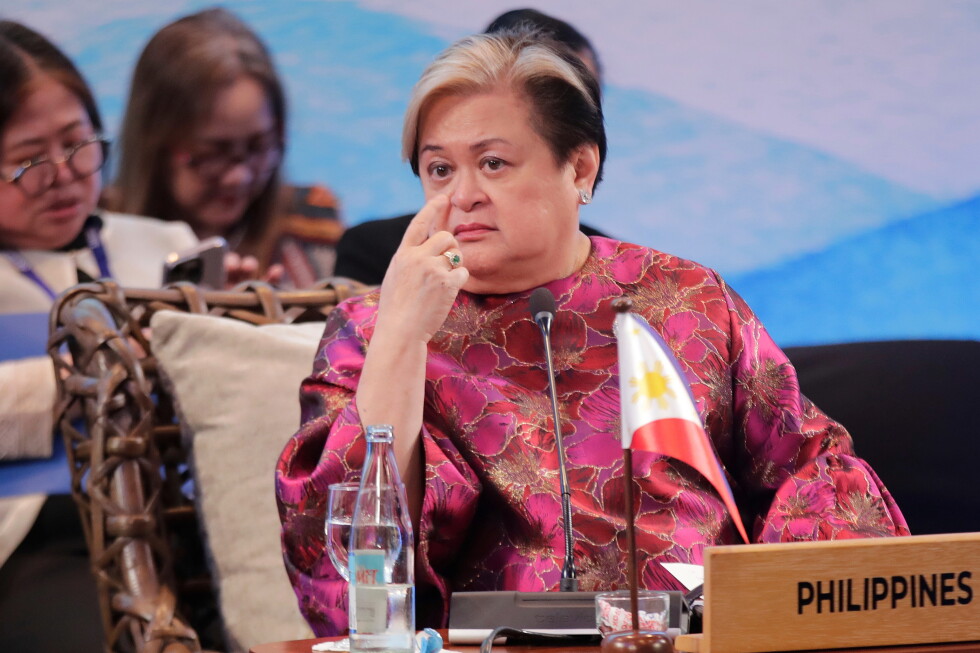
MANILA, Philippines — Top diplomatic leaders from Southeast Asia kicked off three days of high-stakes negotiations in the Philippine capital on Tuesday, bringing pressing regional and global security challenges to the forefront of their agenda against a backdrop of two unfolding crises: renewed warfare in Iran and a violent new confrontation in the disputed South China Sea.
Foreign ministers representing the 10-member Association of Southeast Asian Nations (ASEAN) convened behind closed doors for their initial session, before releasing a joint statement demanding an immediate ceasefire to hostilities in the Middle East and calling for the full, unimpeded reopening of the strategically critical Strait of Hormuz, a major chokepoint for global oil and gas supplies.
“We expressed serious concern over the rapidly evolving situation in the Middle East, particularly the renewed hostilities involving the United States of America and the Islamic Republic of Iran,” the statement from ASEAN ministers read. The bloc also reaffirmed its commitment to the principle that all nations must resolve territorial and political disputes through peaceful means, while upholding universal standards of national sovereignty and territorial integrity.
As a dynamic economic region home to more than 680 million people, Southeast Asia depends heavily on energy imports from the Middle East. The resumption of conflict in Iran has already sent shockwaves through global commodity markets, triggering supply shortages and price volatility that have hit the region hard. In response to these pressures, Philippine President Ferdinand Marcos Jr. declared a national energy emergency back in March, implementing measures to secure steady access to fuel, food and other essential goods, while cracking down on speculative hoarding and price gouging.
U.S. Secretary of State Marco Rubio touched down in Manila early Tuesday, ahead of a scheduled annual dialogue with ASEAN foreign ministers on Wednesday. The escalating Middle East crisis will top the agenda for that meeting, alongside a broader slate of regional security and economic priorities. Rubio will also take part in the ASEAN Regional Forum, a wider regional security dialogue that will bring together senior diplomatic representatives from the European Union, Russia (represented by Foreign Minister Sergey Lavrov) and China (led by Foreign Minister Wang Yi).
As of Tuesday, no formal bilateral meetings between Rubio, Wang, and Lavrov had been announced to the public. If Rubio and Wang do hold talks on the sidelines of the summit, it would mark the highest-level engagement between Washington and Beijing since U.S. President Donald Trump’s May visit to Beijing for talks with Chinese President Xi Jinping. That earlier meeting centered on the Iran conflict, U.S.-China trade relations, and cross-strait relations involving Taiwan, among other thorny issues. All three top diplomats will also attend the final East Asia Summit on Thursday, a gathering of 18 Indo-Pacific nations that will address a broad range of cross-cutting geopolitical, economic and security challenges.
On the regional front, ASEAN ministers are scheduled to hold a separate meeting with Wang Yi on Wednesday focused on advancing negotiations for a long-awaited code of conduct for the South China Sea. The proposed agreement, designed to prevent territorial disputes in the contested waterway from escalating into open conflict, has been under negotiation between China and ASEAN for nearly two decades, with both sides targeting a final agreement by the end of this year.
That timeline gained new urgency this week, after a fresh violent clash underscored the fragility of the status quo. The Philippine military accused China’s coast guard of injuring a Filipino sailor during an altercation on Monday near Second Thomas Shoal, a contested outcrop in the South China Sea. According to Philippine military accounts, Chinese coast guard personnel on a small motorboat repeatedly struck the sailor in the head with a wooden baton, wounding him and damaging his small vessel.
Philippine authorities issued a formal condemnation of the incident, while Chinese coast guard officials blamed Filipino vessels for initiating the confrontation. A spokesperson for President Marcos confirmed that Marcos summoned Chinese Ambassador Jing Quan for an emergency meeting Tuesday afternoon, though no details of the discussion were released to the public.