When the 2026 FIFA World Cup was awarded to the United States, Mexico and Canada, critics and observers braced for a tournament plagued by chaos. Pre-tournament warnings painted a grim picture: exorbitant ticket prices, simmering geopolitical tensions, the shadow of global conflict, and dangerous extreme summer heat across the three host nations. On top of that, FIFA’s landmark decision to expand the field from 32 to 48 teams sparked fierce debate, with many arguing the change would dilute the quality of play at football’s most prestigious global event.
Nearly a month later, as only the final between defending champion Argentina and Spain remains to be played, the verdict is clear: the largest and most logistically complex World Cup in history has defied every low expectation, emerging as an unexpected triumph for the sport. What fans will remember is not the pre-tournament doom-mongering, but a relentless stream of thrilling matches and a joyful, unifying atmosphere that swept across all three host nations.
Fears that adding 16 new teams — including several tiny, first-time qualifying nations — would produce lopsided, low-quality football have been thoroughly debunked. Instead, the expanded format delivered exactly the kind of high-drama, giant-killing upsets that make the World Cup a global cultural phenomenon. Cape Verde, a small Atlantic island nation, held eventual finalist Spain to a stunning goalless draw in their tournament opener, then pushed Lionel Messi’s Argentina to extra time in the Round of 16 before falling 3-2. Caribbean nation Curacao, with a total population of just 185,000, earned a credible 0-0 draw against South American powerhouse Ecuador. Egypt, which reached the knockout stage for the first time in its World Cup history, came within 11 minutes of a massive upset over Argentina, holding a 2-0 lead before Messi’s individual brilliance turned the game around for the defending champions.
These underdog success stories are part of a larger shift: a record nine African nations advanced to the knockout round, marking a clear signal of the continent’s growing prominence in global men’s football.
The tournament’s biggest established stars have also delivered career-defining performances, living up to the global spotlight. Messi, playing in a record sixth World Cup, kicked off Argentina’s campaign with a mesmerizing hat-trick against Algeria. Entering Sunday’s final, Messi has scored eight goals, just two behind tournament leader Kylian Mbappe of France, who has notched 10 goals. Mbappe’s total pushes his career World Cup goal tally to 22, making him the all-time leading scorer in tournament history. Norway’s Erling Haaland quickly became a global fan favorite, scoring seven times including two goals in a Round of 16 upset over Brazil. England’s Jude Bellingham also scored seven goals, with captain Harry Kane adding six, as the Three Lions secured a third-place finish. All three host nations — Canada, Mexico and the United States — advanced to the Round of 16 before exiting the tournament.
Through 103 matches, the 2026 tournament has produced 307 goals, for an average of 2.98 goals per game. That makes it the highest-scoring World Cup since the 1958 finals in Sweden, which averaged 3.6 goals per match.
Off the pitch, the event has drawn record crowds despite steep ticket prices. FIFA’s controversial “dynamic pricing” model, which adjusts prices based on demand, was condemned by fan groups as a “monumental betrayal” before the tournament even began. But even with some tickets costing thousands of dollars, fans turned out in record numbers. Before Saturday’s third-place match, FIFA released figures showing total attendance had reached 6,665,825 — more than the combined total attendance of the 2018 Russia World Cup and 2022 Qatar World Cup. Average attendance per match sits at 65,351, with stadiums hitting a 99.7% occupancy rate.
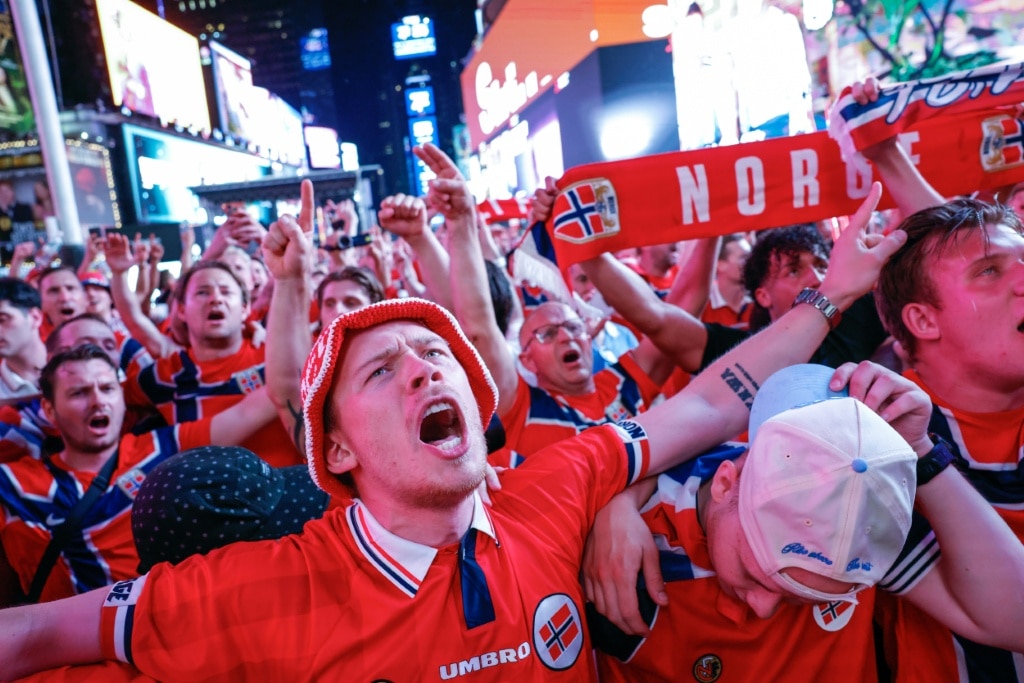
The celebration extended far beyond stadium walls. Host cities were transformed into global carnival grounds: Scotland’s famous Tartan Army packed Boston bars dry, while thousands of Norwegian fans performed their iconic collective “Viking row” in New York’s Times Square. With the majority of matches held across the United States, international visitors took to social media to gush about quintessentially American experiences, from oversized grocery stores to massive BBQ ribs and creamy ranch dressing. One U.S. commentator noted the surprising turnaround: “The 2026 World Cup has become a global love fest for the US — at a time when the rest of the world has plenty of reasons to dislike us.”
For all its successes, the tournament has not been without controversy, much of it tied to U.S. government policies and former president Donald Trump. Somali referee Omar Artan was barred from entering the United States due to the Trump administration’s hardline immigration restrictions, with U.S. officials citing “vetting concerns” for the denial. Iran’s team was also forced to navigate crippling visa restrictions: after relocating their training camp from Arizona to Mexico, players and staff were required to leave the U.S. within hours of finishing each match. “I think we are the most oppressed team in the World Cup,” Iran head coach Amir Ghalenoei said bitterly after his side’s opening match.
The biggest scandal erupted when news broke that Trump had personally intervened with FIFA president Gianni Infantino to delay a one-game suspension for U.S. striker Folarin Balogun ahead of the team’s knockout round match against Belgium. The improper intervention sparked widespread outrage across the global football community, and neutral fans widely celebrated when Belgium defeated the U.S. 4-1.
While the controversy has been an embarrassment for Infantino, it is not expected to threaten his bid for re-election as FIFA president in 2027. The powerful confederations of Asia, Africa and South America have already pledged their support for his next term. And the overwhelming success of the 2026 expanded tournament is expected to give Infantino political capital to push for even further expansion, with a proposal to expand the 2030 World Cup to 64 teams already set to be discussed in coming years.