The rapid escalation of direct military conflict between the United States and Iran has inflicted mounting damage on critical civilian infrastructure across the Persian Gulf region, triggering widespread disruption of basic services and raising alarms over the risk of a full-scale regional war. In the most recent civilian casualty of the escalating hostilities, Iranian officials confirmed that overnight US airstrikes destroyed a key coastal desalination plant that supplied drinking water to roughly 10,000 residents across 20 rural communities.
Hamzeh Pour, chief executive of Hormozgan Province’s Water and Wastewater Company, told Iran’s state-run Tasnim News Agency that the strikes targeted desalination pumps and core electrical infrastructure in Bunji village, located in the coastal Jask district. “The supply of drinking water to 20 villages with a combined population of approximately 10,000 people has been completely disrupted,” Pour said. He labeled the attack on the civilian water facility “a series of crimes and terrorist acts,” noting that the facility’s seawater pumping station and main power transformer were “completely destroyed” and that the affected communities are now grappling with a severe drinking water shortage.
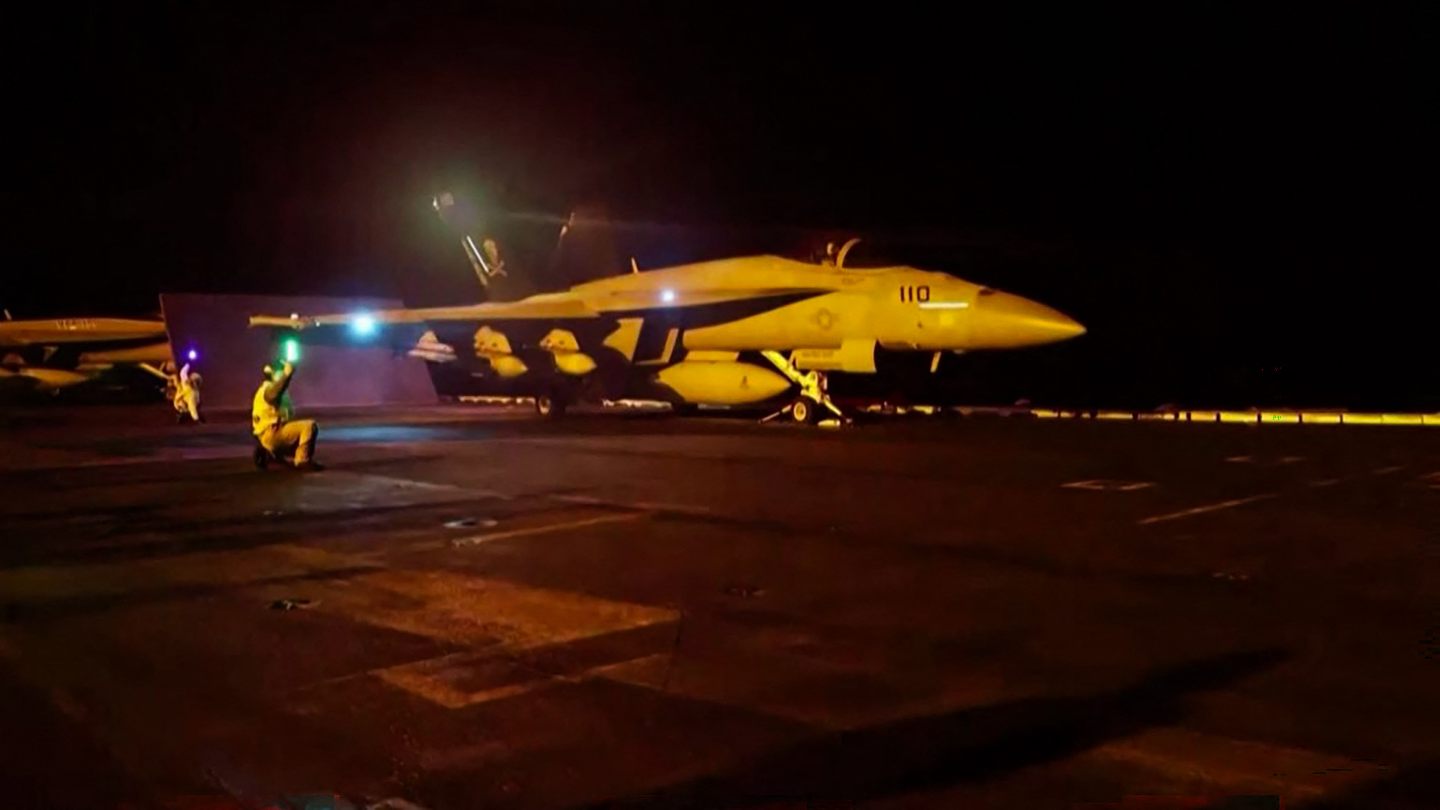
The strike on the desalination plant came as part of the United States Central Command (Centcom)’s seventh consecutive round of overnight airstrikes targeting Iranian positions across the region. Centcom confirmed in a public statement that the latest wave of attacks focused on Iranian surveillance outposts, military logistics hubs, underground weapons storage facilities and maritime military assets. The operation drew on a full spectrum of US military capabilities, including fighter aircraft, attack drones, and naval warships, and unfolded as more than 50,000 US service members remain deployed across the Middle East to support ongoing operations against Iran.
As hostilities spread across the Gulf, neighboring Kuwait reported its own critical infrastructure damage following Iranian retaliatory strikes. Kuwait’s Ministry of Electricity, Water and Renewable Energy announced that a fire broke out at a key component of one of the country’s integrated power generation and desalination plants after an Iranian attack. In response, authorities implemented precautionary safety measures, taking several power generating units offline to protect plant staff and preserve the stability of the national electrical grid. The ministry confirmed that emergency response plans have been activated to maintain uninterrupted power and water services, while technical teams continue round-the-clock monitoring of the situation. Kuwait also temporarily closed its airspace, suspended operations at Kuwait International Airport, and rescheduled nearly all commercial flights amid the wave of incoming missile and drone attacks.
Iran’s Islamic Revolutionary Guard Corps (IRGC) has issued a stark warning to all nations hosting US military forces in the region, urging them to prepare for imminent retaliatory action. In an official statement, the IRGC called on host countries to “activate their civil defence units to protect their citizens and move them away from potential military targets,” accusing these states of allowing their territory to be used as “launchpads for aggression against Iran.” The IRGC confirmed it launched missile and drone strikes against multiple US-aligned military sites, including Camp Arifjan and Ali Al Salem Air Base in Kuwait, US naval facilities at Kuwait’s Mina al-Ahmadi port, and key military installations in Bahrain. Bahraini authorities activated air raid sirens across the country multiple times during the attacks, while Kuwaiti military forces confirmed they intercepted a number of incoming missiles and drones before impact.
Iranian state media also reported new damage to two key bridges along the busy Bandar Abbas-Rudan highway, while provincial officials confirmed that at least eight civilians were killed in US strikes carried out in Hormozgan Province on Friday. Against this backdrop, a senior Iranian military official has announced a major shift in Tehran’s military posture, warning that Iran will abandon its long-held policy of restraint if US attacks continue. “Iran will no longer limit itself to retaliatory, like-for-like responses… and no political border will be safe,” Major-General Mohsen Rezaee told Iran’s state-run IRIB news agency. “Until now, we have not focused on expanding the war, nor on launching an invasion. Until now, the goal was deterrence, to put an end to the conflict,” he said, adding that “the policy of negotiating during war is over.”
Beyond the immediate human and infrastructure damage, the latest round of cross-border attacks has disrupted one of the world’s most critical energy chokepoints. Data from ship-tracking platform MarineTraffic shows commercial vessel traffic through the Strait of Hormuz has fallen to its lowest level in three years, with only eight vessels transiting the strategic waterway on Thursday, down from 15 the previous day. Roughly 20% of the world’s daily oil supply passes through the strait, so any extended disruption to shipping there risks roiling global energy markets and driving up fuel prices worldwide.