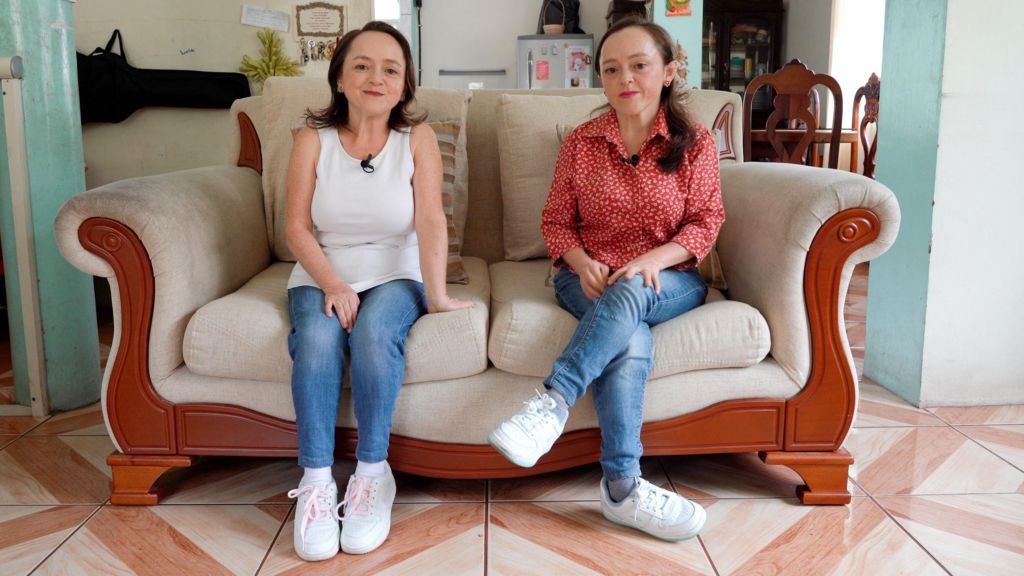
Tucked into the winding Andes valleys of southern Ecuador, the small town of Piñas—home to just 8,000 residents scattered across rolling hills—holds an unusual distinction: it hosts one of the highest concentrations of people living with Laron syndrome, an extremely rare genetic disorder that limits adult height to a maximum of 1.2 meters. For 40-year-old twin sisters María Luisa Romero and María del Cisne Romero, both born with the condition, shared experience has been their greatest source of strength through life’s challenges.
Laron syndrome, also called growth hormone insensitivity, develops when a genetic mutation leaves the body unable to utilize the growth hormone it produces naturally. First identified 60 years ago by Israeli pediatrician Zvi Laron, the condition counts only 840 confirmed cases worldwide, with a large majority residing in the southern Ecuadorean provinces of El Oro and Loja. Genetic research traces the mutation’s origins back thousands of years to Indonesia, before it spread along ancient trade routes. Sephardic Jewish carriers later brought the mutation to the Americas, and generations of intermarriage in isolated mountain communities left Ecuador with the world’s highest prevalence of the condition.
For the Romero twins, growing up surrounded by other community members with Laron syndrome softened many of the daily struggles that come with the condition. “We always lean on each other, pool our strength, and stand up for one another,” explains María Luisa, sitting beside her sister. “We can share every experience, good and bad, because we know we face the same daily challenges.” Their perspective shifted when they moved away for university, however, where they faced stares and public curiosity from locals who had never met people with their condition—a reminder of the stigma many Laron syndrome patients experience outside their tight-knit community.
Beyond its impact on height, Laron syndrome has uncovered a surprising, potentially life-changing biological quirk: decades of research show Laron patients experience drastically lower rates of cancer and type 2 diabetes than the general population. Endocrinologist Dr. Jaime Guevara, who has studied Ecuadorean Laron syndrome patients for 22 years, partnered with University of Southern California aging specialist Dr. Valter Longo to investigate this protective effect. The team compared 100 Laron syndrome patients to 1,600 of their normal-height relatives from the same villages, tracking health outcomes over 22 years. In the Laron group, researchers recorded zero cases of diabetes and just one non-fatal cancer. By comparison, 5% of the control group developed diabetes, and 17% received a cancer diagnosis.
The researchers traced the protection to the core genetic mutation that causes Laron syndrome: a defective growth hormone receptor in the liver that stops the body from producing Insulin-like Growth Factor 1 (IGF-1), a hormone that drives growth. Their hypothesis holds that high levels of IGF-1 prevent cancer cells from dying off through the natural process of apoptosis, meaning Laron patients’ naturally low IGF-1 levels cut their cancer risk. Even as they confirm this link, the researchers note gaps remain in their understanding: Zvi Laron, now a professor at Tel Aviv University who has documented 70 years of research on the condition he named, has observed that even Laron patients who received childhood IGF-1 treatment still do not develop cancer, indicating other biological factors are at play. Laron, who is publishing a landmark paper this July cataloging all 840 confirmed Laron cases identified between 1966 and 2025, says research on animal models is ongoing to uncover the full mechanism. “It is the first time we know the exact number of Laron syndrome patients and the many variants of the growth hormone receptor defects,” he told the BBC.
If researchers can fully map the protective effect, the end goal is to replicate it in the general population through targeted drug or dietary interventions, creating new cancer prevention treatments. “It would be a great contribution from this wonderful community to the world,” Guevara says.
For the Romero twins, who have participated in Guevara’s research for years, the knowledge that their condition may help advance global medicine has helped them cope with daily challenges. Still, their experience has also brought a sobering reminder of the limits of current understanding: two years ago, María del Cisne received a colon cancer diagnosis, debunking the pair’s earlier assumption that Laron syndrome offered complete immunity. The diagnosis was a wake-up call, she says: “That made us realise that we weren’t, as we thought, completely immune to these diseases. We had to take care of ourselves, we had to exercise, we had to watch what we ate.” Today, the twins each have an 8-year-old child, neither of whom inherited symptomatic Laron syndrome, and both already stand taller than their mothers. Outside of their medical participation, the sisters run a small artisanal chocolate business and harbor a dream of expanding to open their own factory.
While Laron syndrome research offers new hope for global cancer treatment, patients today still face steep barriers to care. A medication called Increlex, introduced 15 years ago, can boost childhood growth if administered before puberty, but it is prohibitively expensive and difficult to access. Produced by only one pharmaceutical company, the drug costs more than $800 per bottle, and a child requires at least three bottles per month, putting annual treatment costs above $28,000—out of reach for most families in southern Ecuador. Two-year-old Camila Loaiza, a Laron syndrome patient from Piñas, was supposed to start her first dose six months ago, but her family has yet to access the medication. “I want my daughter to have as normal a life as possible. I don’t want her to be discriminated against because of her size,” says her mother Mayra. For older patients like the Romero twins, who missed the treatment window because Increlex did not exist in their youth, the barrier is a poignant reminder of what could have been. “We now accept ourselves as we are, but the treatment would have saved us a lot of heartache,” María Luisa says. “I’ve accepted myself as I am, I accept myself, and I thank God for who I am.”