In the latest crackdown on the shrinking remnant of domestic political dissent within Russia, two prominent critics of the Kremlin have been targeted with detention and legal restrictions designed to bar them from political participation, just weeks before the country’s September parliamentary elections. The simultaneous actions against former Putin supporter turned dissident blogger Ilya Remeslo and veteran pro-peace politician Boris Nadezhdin mark the newest chapter in a years-long campaign to eliminate organized opposition to the Kremlin’s domestic and foreign policies.
The detention of Remeslo, once a high-profile pro-Putin commentator, marked a striking capstone to his dramatic political reversal earlier this year. Last March, the blogger published an explosive blog post on Telegram titled Five reasons why I stopped supporting Vladimir Putin, in which he labeled the sitting president a “war criminal and thief” and called for his immediate resignation. The public about-face shocked Russian political circles, as Remeslo had spent years backing Putin’s leadership, supporting the full-scale invasion of Ukraine and publicly denouncing opposition figures, including the late Alexei Navalny.
Within days of publishing his critical post, Remeslo was involuntarily committed to a psychiatric hospital for a month, a move he has decried as retaliation for his views. Just hours before his court appearance on Friday, he was arrested at his home in St. Petersburg and transferred to Moscow for processing. A judge has since ordered he be held in pre-trial detention for two months on charges of spreading false information about the Russian military, an accusation routinely used to target dissenting voices in the country. On the eve of his arrest, Remeslo published one final Telegram post warning that domestic conditions for the Kremlin were deteriorating rapidly, pointing to an ongoing national energy crisis fueled by repeated Ukrainian strikes on Russian oil infrastructure that have sparked fuel shortages as far as the Moscow region, and growing friction among Russia’s ruling elite. He argued that even a small disruption could lead to the collapse of Putin’s hold on power.
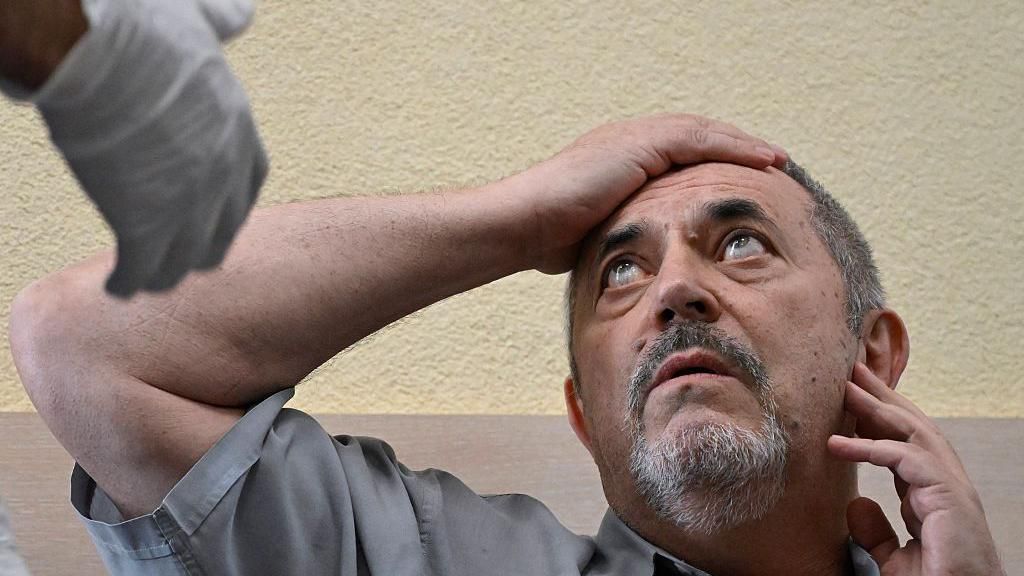
In a separate, coordinated crackdown on political opposition, former Duma candidate Boris Nadezhdin, a 63-year-old pro-peace politician who gained international attention for his 2024 anti-war presidential bid, has been convicted of “displaying extremist symbols” in a ruling that strips him of his last legal path to run for September’s parliamentary election. Nadezhdin first attempted to run for the Russian presidency two years ago on an explicit anti-war platform, but was ultimately barred from the ballot after electoral officials claimed signature gathering irregularities invalidated his candidacy.
Last week, Nadezhdin was formally designated a “foreign agent” by Russian authorities, a label that typically disqualifies individuals from running for public office. A last-minute legal loophole still allowed him to collect signatures to qualify for the ballot, however, a path that was closed off by Friday’s extremist symbols conviction. The charges stem from a 2023 video Nadezhdin reposted that briefly showed an image of Alexei Navalny, the most prominent Russian opposition leader, who died suddenly in an Arctic penal colony in February 2024. While Russian authorities maintain Navalny died of natural causes, the United Kingdom and four major European nations have confirmed they believe he was poisoned with a lethal toxin. Nadezhdin was also detained earlier this week and barred from leaving the country.
During Friday’s court hearing in his hometown of Dolgoprudny, just north of Moscow, Nadezhdin—who lives with chronic high blood pressure and diabetes—briefly collapsed and required emergency medical attention. He has rejected all charges against him, telling the court the ruling is an open political retaliation intended to silence him and prevent his candidacy for the Duma. He added that he cannot pay the 1,000 rouble ($13 USD) fine levied against him because Russian authorities have already frozen all of his financial accounts. Nadezhdin retains the right to appeal the conviction, though political analysts say an overturn is highly unlikely.
The crackdown comes as new public opinion polling shows Putin’s national approval rating has fallen to its lowest point since the start of the full-scale invasion of Ukraine in February 2022. Two separate Russian pollsters released data this month showing a measurable decline in support: the independent Public Opinion Foundation (FOM) recorded a five-point drop over one week ending July 12, pushing Putin’s approval rating to 66%, while state-run pollster VTsIOM recorded a more modest decline that still put his rating at 65.1%, the lowest in more than four years. Today, nearly all major genuine opposition figures in Russia have been forced into exile, imprisoned, or killed, leaving almost no open space for anti-government or anti-war political organizing inside the country.