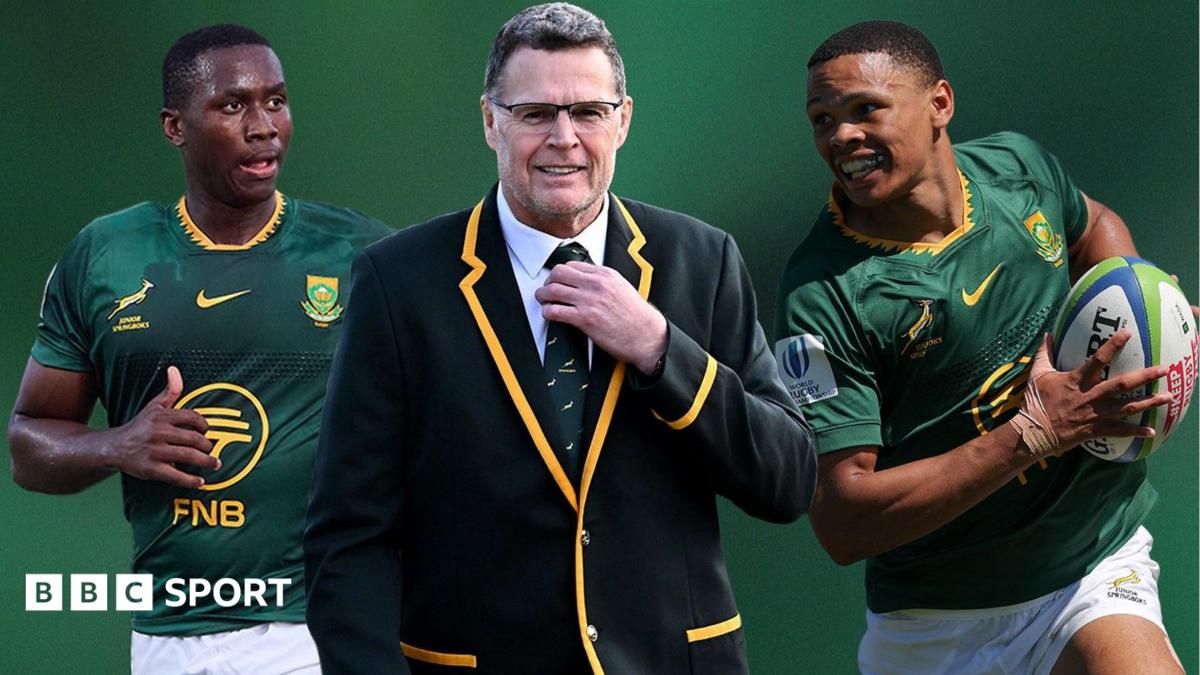
South African rugby’s unmatched global legacy—four Rugby World Cup titles, with the 2027 title defence already in planning—has long left other rugby-playing nations green with envy. Every time veteran stars retire or talented players move abroad to chase club contracts, the national men’s side, the Springboks, somehow replenishes its ranks with next-generation world-class talent. No recent example illustrates this better than 20-year-old Sharks fly-half Vusi Moyo, who will make his Test debut starting against Wales in Durban this Saturday, having logged only 58 minutes of senior professional rugby to his name. For most national programs, handing a starting cap to a player with so little top-flight experience would be a massive, risky leap of faith. For South Africa, it is just the latest normal outcome of a talent development system that has been refined for decades. Many point to South Africa’s massive pool of registered rugby players as the simple explanation for the country’s consistent output, but industry insiders argue that only scratches the surface of what makes the Springboks’ production line work.
Rito Hlungwani, forwards coach for the Cape Town-based United Rugby Championship side Stormers, says large-scale participation is just the starting point. Backed by back-to-back World Cup wins in 2019 and 2023, following the transformative 1995 post-apartheid title, participation across racial demographics has exploded, vastly expanding the base of young athletes entering the system. But participation alone is not enough: a cultural mentality focused on emulating the Springboks’ iconic identity drives improvement from a young age. “Kids these days, that’s all they want to be like. They want to be like the Springboks. They talk about physicality at the age of nine,” Hlungwani explained. Former Springbok player Hanyani Shimange echoed this, noting that defensive solidity, high work rate, and powerful play are core expectations for any player who wants to wear the famous green and gold national jersey. Hlungwani argues this collective mindset, paired with intentional coaching and fierce domestic competition, turns promising raw youth into Test-ready internationals.
If broad participation provides the raw material, South Africa’s school rugby system is where the production line truly fires into action. Veteran South African rugby journalist Simnikiwe Xabanisa compares the cultural status of rugby in the country to that of New Zealand, calling it a de facto national religion. Unlike many other nations, school rugby draws national television audiences comparable to professional club matches, and top school rugby coaching roles can pay more than positions at the professional level. After school, the best young talent is filtered through a structured development pathway: elite youth tournaments such as the iconic Craven Week for under-18 players act as a national scouting showcase, before athletes move on to university-level competition in the Varsity Cup and eventually into professional provincial rugby. A unique strength of the system, Hlungwani notes, is that schools are not forced to adhere to a rigid national playbook, allowing them to develop distinct playing identities that blend into a diverse, adaptable talent pool at higher levels. “If you go to Cape Town, the Afrikaans schools have bigger kids and they play similar to the Springboks. If you come to the southern suburbs, it’s more evasive skills, more flair,” he explained. This diversity of development styles ultimately creates more well-rounded players when they converge at the provincial and national levels. Xabanisa adds that young South African players also gain an edge by growing up playing in front of packed stadiums, becoming accustomed to high pressure from early in their careers that prepares them for Test rugby.
The biggest shift expanding South Africa’s talent pool over the past 30 years has been the removal of apartheid-era barriers that excluded non-white players from national selection and limited access to the sport for non-white communities. Today, the talent net is cast far wider than the small demographic that dominated the sport for most of the 20th century. “If you cast your net wider than that 10%, surely you’re going to get better athletes. You’re going to get better players, you’re going to get more players, and as a result of getting more players, you’re going to get better players,” Xabanisa said. For many young Black athletes from low-income communities, rugby has also become a tangible path out of poverty, driving extraordinary commitment and ambition among the next generation, Hlungwani added.
Even with a strong development pathway, producing talent is only half the battle: national leadership must be willing to trust young prospects with key opportunities early. Shimange argues that current head coach Rassie Erasmus’ greatest strength is his focus on building a deep, competitive national squad rather than just selecting a starting 15, and he is unafraid to throw young players into the deep end if he believes they are ready. This philosophy played out with the rise of Sacha Feinberg-Mngomezulu, who made his Springboks debut after fewer than 20 senior appearances, and it is on full display with Moyo’s selection this weekend. Age and senior club experience are no longer barriers for prospects with proven talent, a policy that keeps the Springboks’ depth chart consistently stocked with emerging stars.
Remarkably, even with the system’s current success, Xabanisa argues that South Africa’s talent production is still operating below its full potential. He points to two-time World Cup winner Makazole Mapimpi, who rose to stardom from a rural area with almost no formal rugby infrastructure. Today, large swathes of rural South Africa remain untapped for talent, with no clear development pathway for passionate young players in those regions. “The great irony, or scary thing for the rest of the free world, is that there are places we could still tap into – more markets that haven’t been tapped,” Xabanisa said. “The day we work that out too, it could be a scary one for the rest of the free world.” Right now, the next generation of Springbok stars is already waiting in the wings: alongside Moyo, other highly touted prospects include Junior Springboks captain Riley Norton, a 20-year-old lock who chose rugby over elite cricket; fly-half Yaqeen Ahmed, praised for his cool temperament and kicking skill; elusive full-back Zekhethelo Siyaya; and 18-year-old loose forward Jacobus de Villiers, already signed to the Stormers and rated as one of the top young prospects in the country. With a proven system, expanding participation, and a culture that nurtures talent from childhood to Test rugby, South Africa’s rugby production line shows no signs of slowing down as it builds toward the 2027 World Cup.