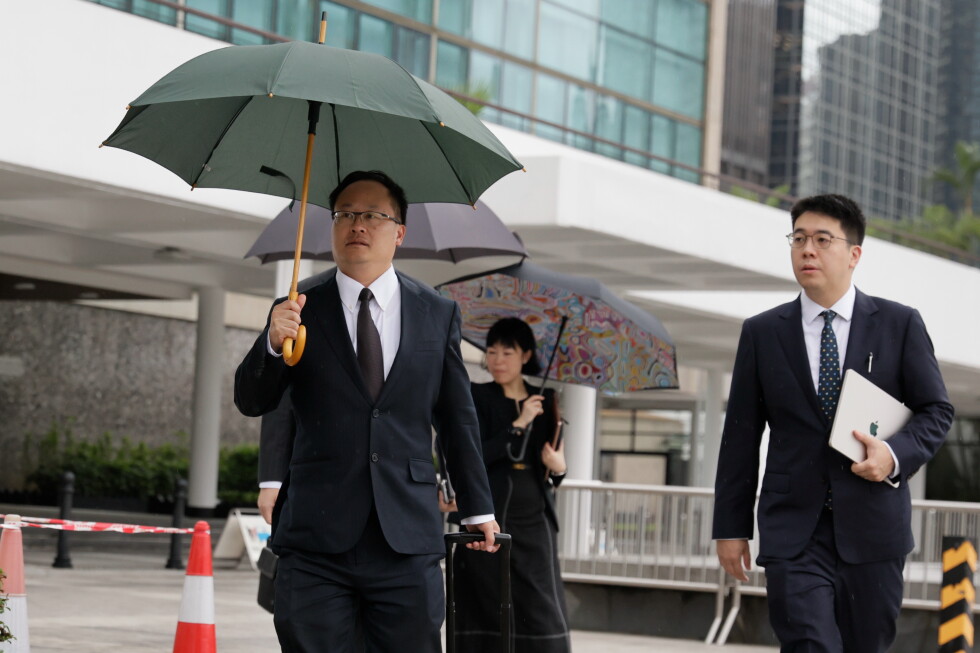
As an independent public inquiry into Hong Kong’s worst fire disaster in decades wrapped up its evidentiary hearings Friday, closing arguments laid bare how a cascade of regulatory gaps, industry malpractice and irresponsible corner-cutting turned a small blaze into a catastrophe that claimed hundreds of lives and upended thousands of lives.
The tragedy unfolded last November at Wang Fuk Court, a sprawling residential complex in Hong Kong’s suburban Tai Po district. When the fire ignited, the site was mid-way through a large-scale building renovation project. It rapidly raged across seven connected apartment blocks, leaving 168 residents dead and forcing thousands more to flee their homes permanently. Many of those displaced remain in temporary government housing months after the disaster.
In his closing address to the inquiry committee led by High Court Justice David Lok, lead investigating counsel Victor Dawes outlined the core failures that turned a contained fire into an inferno. Dawes argued that the use of unapproved, non-fire-retardant scaffolding netting, a cost-cutting choice by the project’s contractors, was almost certainly the primary factor enabling the fire’s explosive spread across the building’s exterior. Compounding this danger, he added, was the decision to board up staircase ventilation windows with untreated wooden planks, which turned escape routes into toxic smoke traps that trapped residents and blocked emergency responders.
Dawes pulled no punches in assigning blame to the project’s key industry players: lead consultant Will Power Architects Company and general contractor Prestige Construction & Engineering Co. According to his arguments, the two firms intentionally cut corners on both workmanship and material quality, while deliberately misleading regulatory bodies and the Wang Fuk Court homeowners’ association that hired them. The inquiry heard evidence of widespread falsified inspection compliance documents, with mandated professional inspectors signing off on substandard work as a meaningless “rubber stamp” rather than conducting proper oversight.
Dawes also levied criticism at Hong Kong’s government regulatory framework, noting that authorities relied entirely on a voluntary honor-based system to oversee renovation works. This approach, he argued, created a fatal gap that collapsed completely when confronted with bad-faith actors cutting corners for profit. “When faced with dishonest bad actors, the entire system collapsed,” he told the hearing.
Representatives of Hong Kong’s government pushed back against these claims on Thursday, during the earlier phase of closing arguments. Government counsel Jenkin Suen acknowledged that the existing oversight system has clear structural vulnerabilities, but argued it would be inaccurate and unfair to frame government departments as the direct cause of the tragedy. He instead placed the blame on industry professionals and contractors, who exploited a public safety-focused mechanism to cut corners and betrayed the public trust placed in them.
Emotions ran high during Friday’s concluding hearing, with multiple affected residents breaking down in tears as the details of the tragedy were rehashed. Jeffrey Tam, a legal representative for nine affected Wang Fuk Court residents, told reporters after the hearing that many survivors and family members of victims had chosen to give evidence despite the deep emotional trauma the process triggered. Tam added that many residents had grown angry watching witnesses attempt to deflect blame for the disaster onto other parties. “Deflecting responsibility like this would not help the city find out the truth,” Tam stressed.
The independent inquiry committee, which was convened to unpack the fire’s root causes, identify systemic regulatory gaps, and assess whether existing fire safety regulations and penalties are sufficient, is expected to publish a final report with policy and regulatory recommendations once all deliberations are complete. No firm timeline has been announced for the release of the committee’s findings. Critically, the inquiry’s mandate does not extend to determining legal liability for the tragedy; that process is already underway via separate criminal investigations led by Hong Kong law enforcement agencies.
Back in June, Hong Kong authorities laid formal charges against seven individuals and both Will Power Architects and Prestige Construction & Engineering Co. The charges include severe offenses ranging from manslaughter to conspiracy to defraud, marking one of the largest criminal cases linked to a building safety disaster in the city’s recent history.