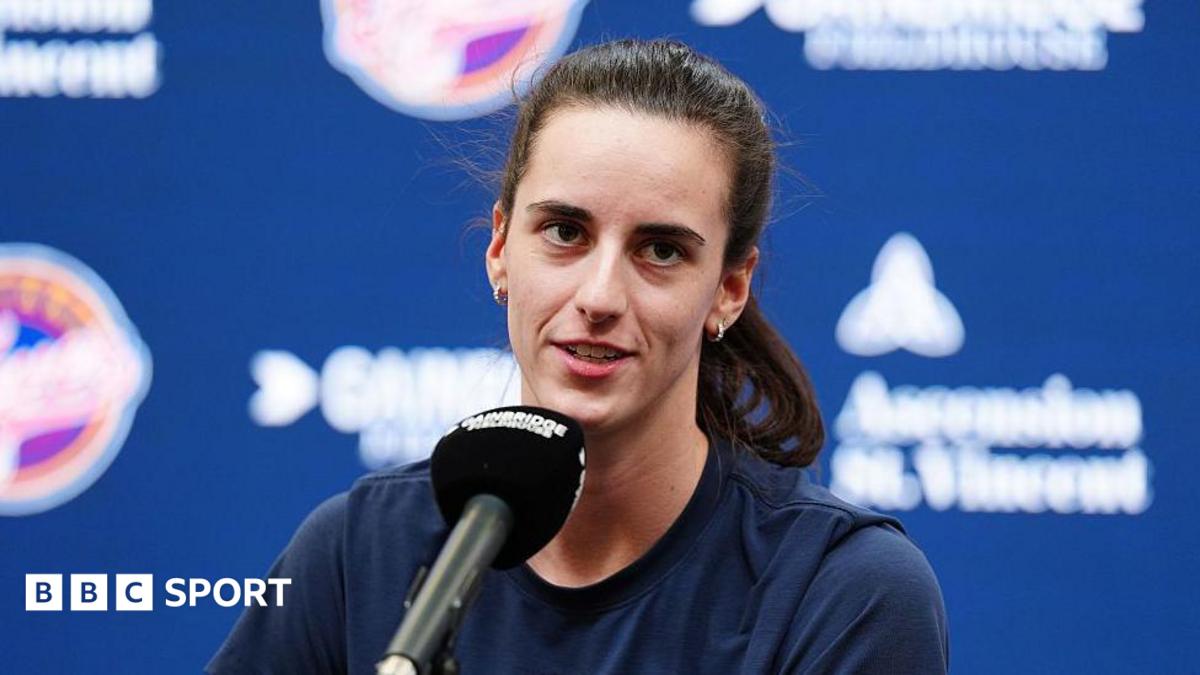
The ongoing controversy surrounding star Indiana Fever rookie Caitlin Clark, the top overall pick in the 2024 WNBA Draft, has spiraled far beyond basketball officiating and become a divisive political talking point in the United States, according to NBA Commissioner Adam Silver. Since entering the league, 24-year-old Clark has emerged as one of the WNBA’s biggest mainstream draws, drawing massive public attention to how opposing defenders and game officials interact with the high-scoring guard. The latest wave of debate was sparked by an on-court incident last month between Clark and Phoenix Mercury forward Alyssa Thomas, who later received a retroactive one-game suspension and $1,000 fine for kneeing Clark in the groin and shoving a fist into her neck while competing for a loose ball.
In the aftermath of the incident, Fever head coach Stephanie White publicly slammed WNBA officiating for games involving Clark, calling the treatment of the star “egregious” and “utterly disrespectful.” Thomas, meanwhile, revealed she had received death threats and racist abuse in response to the play, turning what began as an in-game foul into a national cultural flashpoint. A group of 11 Republican lawmakers amplified the controversy by sending an open letter to WNBA Commissioner Cathy Engelbert, demanding the league take formal accountability and claiming repeated physical attacks against Clark may be driven by racial bias. Right-leaning political analysts have echoed that framing, arguing mistreatment of Clark stems from both racism and professional jealousy among other WNBA players.
Speaking during a panel discussion at a New York event earlier this week, Silver pushed back on framing the debate as a simple officiating dispute. The NBA chief, who has built a public relationship with Clark, made clear that the discourse surrounding the young star has become tangled in broader U.S. political and cultural divides, rather than focusing on the rules of basketball. “That particular incident is not about whether a foul should have been called at the time of the game or whether that was ultimately a flagrant non-review,” Silver explained. “I’ve come to know Caitlin really well. She’s an incredible player and also an incredible person. And she wants to focus on being the best player she can. And she’s become a bit of a political football in this country, and I think it’s incredibly unfair to her.”
When asked to confirm widespread reports that he pressured WNBA Commissioner Engelbert to suspend Thomas following the incident, Silver declined to comment. He did acknowledge that WNBA officiating as a whole needs visible improvement, but reaffirmed that the outsized focus on Clark-related incidents is no longer about basketball, describing it as a game of “political ping-pong” that punishes the young athlete. “She’s a young woman who’s trying to improve her game and focus on being the best player she can be,” Silver added. “I don’t even think it’s fair to her that this has become a separate storyline about whether a foul should have been called at the time or whether it should have been ruled a flagrant foul after the fact.”
Engelbert, who appeared alongside Silver on the New York panel, also addressed the growing toxicity around the league, saying, “The vitriol and everything that our players receive is unacceptable.” Coach White has previously echoed that sentiment, pointing to a sharp rise in “toxicity, racism, homophobia” directed at WNBA players, particularly in online social media discussions. Clark herself has spoken out against the harassment that has accompanied the national attention. Earlier this month, the rookie called out “the harassment, the hate” surrounding the ongoing debate, noting that “none of that is OK. That goes for the opposing teams we play, that goes for my team-mates, that goes for my coaches.” Her frustration boiled over publicly earlier this week, when she yelled at a referee and used an expletive after a series of unfavorable calls went against the Fever.