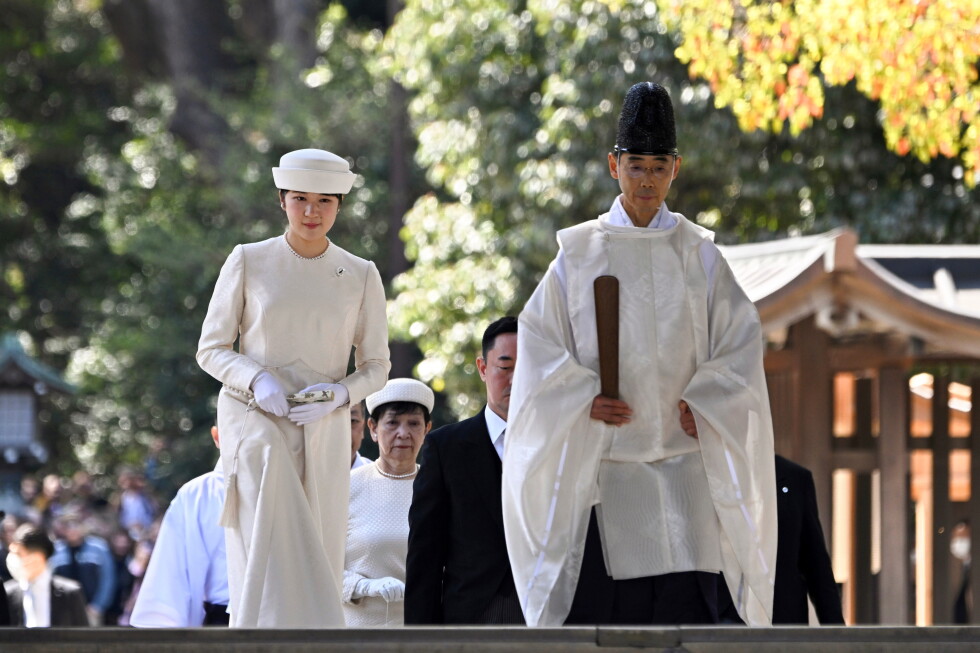
TOKYO — Japan’s parliament is set to approve a controversial revision to the Imperial House Act on Friday, a piece of legislation that critics warn threatens the long-term survival of the country’s 1,500-year-old hereditary monarchy by entrenching a rigid male-only succession rule amid a rapidly shrinking and aging imperial household.
Under the existing law, women born into the imperial family are barred from ascending the Chrysanthemum Throne, even when they are the incumbent emperor’s direct eldest child. This rule blocks 24-year-old Princess Aiko, Emperor Naruhito’s only daughter and one of the most popular members of the royal family, from succeeding her father. Public support for Aiko’s accession remains widespread across Japan, but the law dictates the line of succession will next pass to Naruhito’s 60-year-old younger brother Crown Prince Akishino, followed by Akishino’s 19-year-old son Prince Hisahito — the first male royal child born into the immediate imperial family in four decades. After Hisahito, the next eligible heir is 90-year-old Prince Hitachi, Naruhito’s elderly uncle.
Today, only 5 of the 16 adult members of the imperial family are men, and there are no minor children in the household. This demographic collapse is the core backdrop to the legislative revision, which the government of Prime Minister Sanae Takaichi has framed as necessary to protect the purity of the paternal imperial bloodline, which conservative leaders argue is the only source of the emperor’s symbolic authority and legitimacy. While the current emperor’s mother is a commoner, the Imperial House Law requires all heirs to be born to men of royal descent.
The most contested provision in the revised law would allow the imperial family to adopt unmarried male descendants of distant paternal imperial branches, who gave up their royal status in post-World War II reforms, into the household to sire future heirs. A second, less controversial provision would allow princesses who marry commoners to retain their royal status and official duties, a change from current law that requires them to renounce their titles after marrying outside the imperial family. That change was added to address longstanding criticism of the existing rule that pushed princesses like Mako, Naruhito’s niece, to leave the imperial family entirely after marrying a commoner, a move many observers saw as an escape from the institution’s strict, suffocating constraints.
Scholars and critics have denounced the revision as an explicit move to block female monarchs and entrench patriarchal traditions, rather than a practical solution to the monarchy’s demographic crisis. “It’s a declaration to prevent female monarchs and to defend the male-lineage at all costs,” explained Hideya Kawanishi, a Nagoya University expert on Japanese monarchy. “They cannot say it’s male chauvinism, so they call it tradition.”
Prominent Japanese feminist scholar Chizuko Ueno pointed out the stark irony of the nation’s first female prime minister leading the push for male-only succession. She also criticized the framework’s dehumanizing approach to royal women, noting that it “treat male royals as stallions and put female royals under pressure as ‘childbearing machines’ to produce male offspring.” That pressure already took a documented toll on Empress Masako, a Harvard-educated former diplomat and commoner who developed a stress-related mental health condition after decades of public criticism for failing to produce a male heir following Princess Aiko’s birth.
Even former senior palace officials warn the male-only system leaves the monarchy extremely unstable after Prince Hisahito. “Because of the male-only succession rules and the dismissal of princesses who marry commoners, the monarchy after Hisahito is extremely unstable,” former Imperial Household Agency chief Shingo Haketa told Kyodo News recently.
Historians note the male-only system has not functioned as claimed throughout Japanese history: nearly half of all past emperors were born to concubines, a practice that was abolished 100 years ago under Emperor Taisho, Naruhito’s great-grandfather, eliminating the primary safety net that previously guaranteed male heirs. A 2005 government proposal to reform the law to allow female monarchs was scrapped after Prince Hisahito’s birth, leaving the crisis unaddressed.
Critics also question the practicality of the adoption provision. The distant male relatives eligible for adoption are at least 36 generations removed from Emperor Naruhito, tracing their shared lineage back to a common ancestor 600 years ago, after 51 members of 11 branch imperial families renounced their royal status in 1947 to reduce the postwar financial burden on the monarchy. Many question whether any of these distant relatives would agree to upend their lives to enter the highly restrictive imperial institution, where members have no control over their careers, housing, or personal choices. “Who wants the son of an adoptee who nobody knows to be emperor instead of Aiko?” asked Yoshinori Kobayashi, a cartoonist who has campaigned publicly for Aiko’s succession.
Asahiro Kuni, an 81-year-old former member of a renounced imperial branch who worked as an engineer for a major Japanese corporation, told TBS he would advise his own family to decline any invitation to rejoin the royal household. “It’s cruel to tell 15-year-olds to change the entire course of their life for this,” he said, adding he supports allowing female monarchs to lead the institution.
Polling and public commentary confirm broad public support for Princess Aiko’s accession. “The emperor is a symbolic figure, and I don’t see why women cannot serve in the role,” said Junichiro Tsujimura, 78-year-old founder of a popular sushi chain. Another Tokyo resident, 78-year-old Yoshio Iwase, noted Aiko is the emperor’s direct legitimate heir, adding that “there used to be female emperors in Japan’s history, so why not now?” Japan has had eight female monarchs in its history, with the last being Empress Gosakuramachi who ruled from 1762 to 1770.
Many observers also worry the government’s push to entrench male-only succession runs counter to the legacy of former Emperor Akihito, who abdicated in 2019 after working to modernize the monarchy, connect it closer to the Japanese public, and apologize for Japan’s actions in World War II. Palace watchers widely believe Akihito supports reform to allow female succession, and Emperor Naruhito has also signaled quiet disapproval of the current bill. In a June statement, Naruhito said he hoped discussions on the revision would reach a conclusion “that will gain understanding of the people” — a comment interpreted by observers as a subtle expression of his displeasure with the government’s approach.