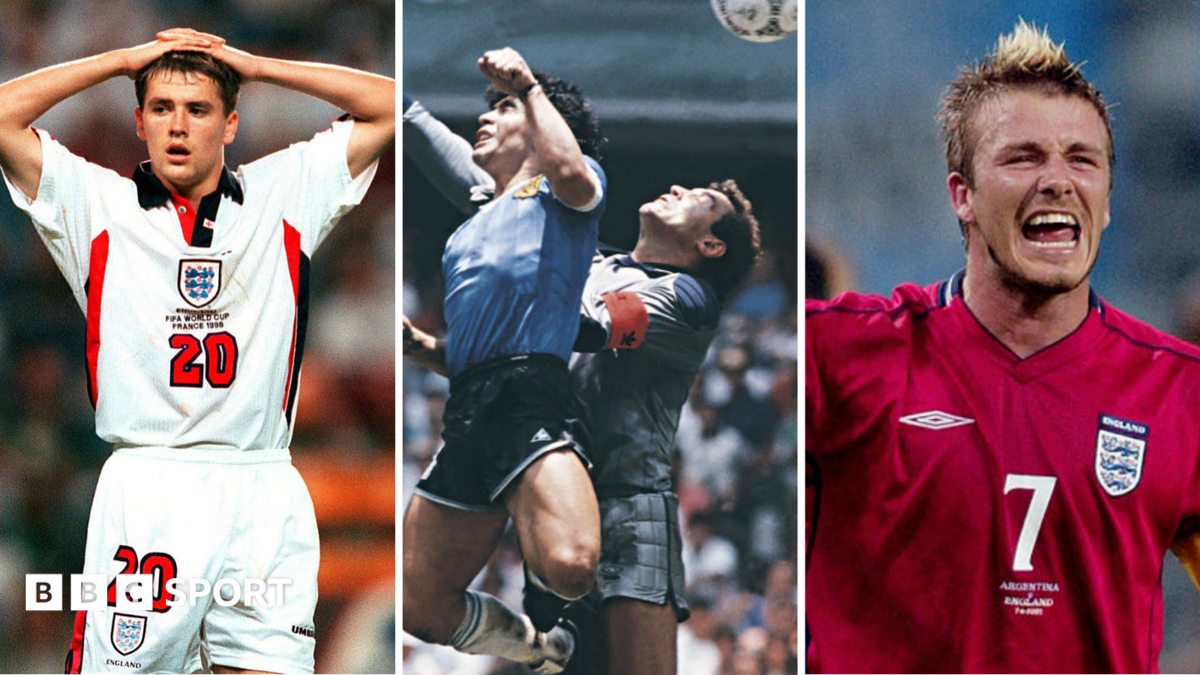
For more than six decades, the World Cup rivalry between England and Argentina has stood as one of the most storied, contentious, and culturally significant matchups in global football. Woven through with iconic individual moments, fiery on-pitch confrontations, and deep-seated geopolitical tension, the fixture has produced memories that still define generations of football fans on both sides of the Atlantic. This Wednesday in Atlanta, the two nations will meet for the sixth time at a World Cup, with defending champion Argentina facing off against England for a spot in the 2026 World Cup final – a matchup that marks Lionel Messi’s first ever career appearance against the Three Lions.
The origins of this bitter rivalry trace back to the 1962 World Cup group stage, where goals from Ron Flowers, Bobby Charlton, and Jimmy Greaves secured England a 3-1 win. While both nations finished the group with one win and one loss, England advanced to the knockout round at Argentina’s expense thanks to a superior goal difference. This early result laid the groundwork for what would become one of the most infamous matches in football history four years later, on home soil for England at the 1966 World Cup.
In that 1966 quarter-final, controversy erupted just 33 minutes in when Argentine captain Antonio Rattin was sent off for a trip on Bobby Charlton and repeated dissent toward referee Rudolf Kreitlein. Rattin refused to leave the pitch for nearly eight minutes, delaying the match and inflaming tensions that boiled over off the pitch too. England manager Alf Ramsey famously labeled the Argentine side “animals” and refused to let his players swap shirts after they held on to a 1-0 win secured by Geoff Hurst’s controversial winner, which Argentina still claims was an offside. The match was so chaotic that it directly prompted the introduction of the red and yellow card system, which debuted at the 1970 World Cup to replace referees’ informal verbal warnings. Rattin, who led Argentina through the 1962 and 1966 tournaments, passed away at the age of 89 just days before this 2026 semi-final clash.
The rivalry reached a new peak of intensity at the 1986 World Cup in Mexico, played just four years after the two nations fought the Falklands War. Political tensions spilled onto the pitch, with Argentine media and fans framing the quarter-final clash as a chance to avenge the military defeat, while British outlets leaned into nationalistic rhetoric to stoke animosity. That match produced two of the most iconic moments in World Cup history: Diego Maradona’s “Hand of God” – an illegal hand punch that beat England goalkeeper Peter Shifton to open the scoring, unseen by officials – and just four minutes later, a 60-yard solo goal that saw Maradona dribble past half the England team to double Argentina’s lead. Gary Lineker pulled a late goal back for England, but Argentina held on to advance, eventually going on to win the tournament. Maradona would not apologize for the Hand of God until 2005, an apology Shilton never accepted.
The 1998 World Cup in France delivered another chapter of drama, this time centered on a young David Beckham. After Gabriel Batistuta and Alan Shearer traded early penalties, 18-year-old Michael Owen scored one of the greatest goals in England’s World Cup history – a blistering solo run past the entire Argentine defense to put England up 2-1. Javier Zanetti equalized before half-time, but the match turned when Beckham, provoked by Argentine midfielder Diego Simeone, lashed out with a kick and was sent off. A late Sol Campbell header that would have won the match was ruled out for a foul, forcing the game to penalties. Argentina advanced after misses from Paul Ince and David Batty, and a year later Simeone admitted he had intentionally gone down to trick the referee into issuing a red card when only a yellow was deserved.
The most recent World Cup meeting between the two sides came in 2002 in Korea-Japan, and it marked redemption for Beckham. Now England’s captain, Beckham scored the only goal of the game from the penalty spot shortly before half-time, after Michael Owen was fouled by Argentine defender Mauricio Pochettino – now a top club manager. The 1-0 win saw England advance to the knockout round, while Argentina were eliminated in the group stage for the first time since 1962. That result remains the last England win over Argentina at a World Cup, and with the last meeting 24 years in the rearview mirror, much of the younger generation of fans on both sides have no first-hand memory of the historic rivalry.
Heading into Wednesday’s 2026 semi-final, the stakes could not be higher. Argentina is defending its 2022 World Cup title, aiming to book a second consecutive trip to the final, while England is looking to end a 60-year drought since its 1966 world title, led by manager Thomas Tuchel. For Messi, the game will be a historic first: the 39-year-old Argentine great has never faced England in his storied career, adding an extra layer of narrative to a clash that already carries six decades of drama, tension, and history.
In the lead-up to the match, Three Lions manager Tuchel has publicly expressed frustration with his side’s recent performances, calling them lucky and sloppy, leaving fans to question whether England’s legendary big-match mentality will be enough to overcome the defending champions.