Fresh rounds of reciprocal strikes between the United States and Iran have sent shockwaves across the Middle East, pushing already fragile regional security to the breaking point and dealing a severe blow to international efforts to de-escalate long-running tensions. On Sunday, Iran’s Islamic Revolutionary Guard Corps announced the indefinite closure of the strategically critical Strait of Hormuz, a move that has already sent global energy markets into turmoil following days of mounting violence. The closure came in response to widespread US airstrikes targeting Iranian military infrastructure, launched after Tehran targeted commercial shipping in the key waterway over the weekend.
The cycle of violence began Saturday, when US Central Command (CENTCOM) confirmed it had launched retaliatory strikes against roughly 140 targets across Iranian territory. The airstrikes targeted a range of key military assets, including missile and drone production and launch sites, Iranian naval capabilities, ammunition storage depots, communications infrastructure, and coastal surveillance outposts, according to CENTCOM statements. The operation came after Iran attacked multiple commercial vessels operating near the Strait of Hormuz, the narrow passage through which roughly 20% of the world’s global oil supplies transits daily.
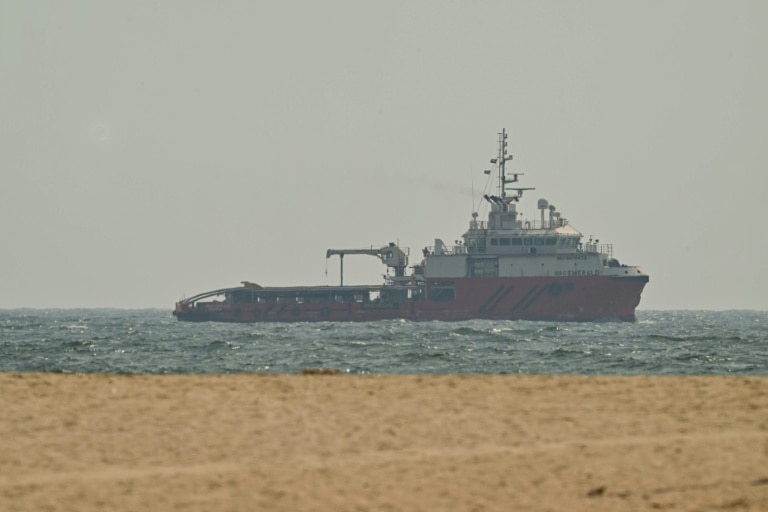
Iran moved quickly to retaliate, launching a wave of drone and missile strikes across US-aligned Gulf states and targeting additional commercial shipping in the strait. The Revolutionary Guard confirmed it had fired on a second vessel in the strait, after an initial incident where it said it fired warning shots to force a ship that ignored designated shipping routes to stop. CENTCOM reported the first vessel was left dead in the water after damage to its engine room from the Iranian strike. In the attack on a vessel off the coast of Oman, which the US has blamed on Iran, Indian officials confirmed 10 Indian crew members had been rescued, while one remains unaccounted for. The UK Maritime Trade Operations (UKMTO) had earlier reported the entire crew abandoned ship and evacuated to a lifeboat after the strike.
The Iranian retaliatory strikes spread across six Gulf nations, targeting both military infrastructure and US facilities in the region. Jordan’s military confirmed three Iranian missiles landed across multiple locations inside the kingdom, though no casualties were reported. Kuwait’s military activated air defense systems to intercept an ongoing drone and missile attack on its territory, while both Bahrain and the United Arab Emirates activated air raid sirens and engaged incoming threats with air defense systems. Qatar also reported intercepting incoming missile attacks, confirming three civilians had been injured in the strikes. Iran also confirmed it had targeted a US military base inside Qatar, alongside striking US logistical support facilities at Oman’s Port of Duqm, which houses refueling infrastructure for US aircraft carriers and naval vessels. The strike on Oman came just hours after Omani officials hosted Iran’s foreign minister for talks focused on de-escalating tensions around the Strait of Hormuz, prompting a formal condemnation from the Omani government Sunday.
In the wake of the strikes, US Defense Secretary Pete Hegseth reiterated Washington’s hardline stance, saying “Iran made a poor choice. Now they pay.” For Iran, the strikes come as new Supreme Leader Mojtaba Khamenei formally committed to avenging the killing of his father and predecessor Ali Khamenei, who was killed February 28 on the first day of the current open conflict between the US-Israeli alliance and Iran. “Vengeance is the will of our nation and must inevitably be carried out,” Mojtaba Khamenei said in a written statement released Saturday, his first public comment since his father’s funeral.
Regional powers have already begun calling for urgent de-escalation. Pakistan’s top diplomat spoke by phone with his Iranian counterpart Sunday, issuing a formal call for all sides to exercise maximum restraint to prevent the conflict from spreading beyond the current flashpoints. The closure of the Strait of Hormuz has renewed immediate pressure on global energy markets, with prices already soaring amid fears of prolonged disruption to one of the world’s most critical energy chokepoints, raising the stakes for international actors scrambling to prevent a full-scale regional war.