A sharp escalation of hostile threats between the United States and Iran has sent regional security concerns soaring over the weekend, just days after mutual exchanges of military strikes derailed a fragile interim ceasefire agreement that was meant to end a conflict launched by massive U.S.-Israeli air operations in late February.
In his first public statement since assuming the role of Iran’s supreme leader following his father and predecessor Ali Khamenei’s death in the late February U.S.-Israeli strikes, Mojtaba Khamenei issued a firm vow of retaliation Saturday. In a written message released to the public — his first since his father’s funeral earlier this week — Khamenei emphasized that vengeance is a non-negotiable demand of the Iranian people, and its execution is inevitable regardless of leadership changes. “This matter depends neither on my personal existence nor on that of other officials. Whether we are present or not, it will come to pass,” he wrote, adding that Iranian authorities have already compiled a targeted list of individuals for retaliation.
The fiery Iranian statement came just hours after former U.S. President Donald Trump took to his Truth Social platform to issue a stark warning of his own, threatening catastrophic military retaliation if Tehran makes any attempt to assassinate him. “1000 Missiles are Locked and Loaded and aimed at the Islamic Republic of Iran, with thousands of more to immediately follow, should the Iranian Government act on its threat, pronounced in many corners of the Globe, to assassinate, or attempt to assassinate, the sitting President of the United States of America, in this case, ME!” Trump wrote. He added that full orders have already been issued to U.S. military forces, which he said are prepared to completely decimate all key areas of Iran for a period of at least one year, extendable upon order.
The rapid back-and-forth of threats comes as regional mediators led by Qatar rush to salvage diplomatic efforts that have stalled since the conflict resumed this week. According to Iranian state media, a Qatari mediation delegation arrived in Tehran on Friday to reinforce Doha’s role as a neutral broker in talks. Qatar’s emir also held a diplomatic call Friday with Pakistani Prime Minister Shehbaz Sharif, whose country has also joined mediation efforts. Sharif’s office confirmed that the Pakistani leader has also spoken directly to Iranian President Masoud Pezeshkian, urging Tehran to prioritize protecting the region’s hard-won opportunity for peace. Despite these outreach efforts, Iran’s chief negotiator for talks with the U.S., Mohammad Bagher Ghalibaf, struck a defiant tone in comments carried by Iran’s ISNA news agency. “Ending the war is a priority for the countries of the world, but everyone must know that this confrontation will never end with Iran’s surrender,” Ghalibaf said, noting that the Iranian people are fully prepared to defend their territory and sovereignty.
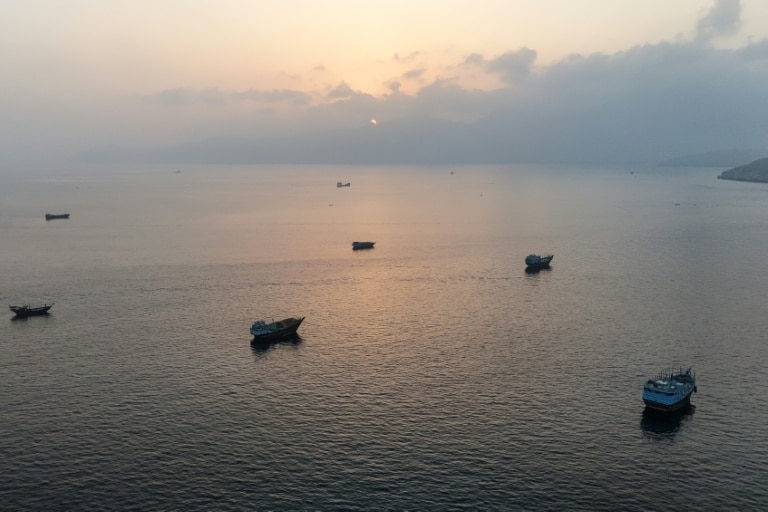
The core sticking point preventing a long-term diplomatic breakthrough remains the status of the Strait of Hormuz, the strategically critical chokepoint that carries roughly a fifth of the world’s daily oil trade and is the primary export route for energy-rich Gulf nations. Iran closed the strait to commercial shipping after the outbreak of war in February as retaliation for the U.S.-Israeli strikes, a move that sent shockwaves through global energy markets and disrupted the world economy. Tehran has rejected calls to return to the pre-war status quo of free unimpeded navigation, instead insisting on retaining full authority to control ship transits through the waterway and announcing plans to charge transit fees. This position violates customary international law, which bars nations from collecting tolls on straits used for international navigation, and Washington has flatly rejected Tehran’s terms.
According to reports from U.S. outlets Axios and Politico, the Biden administration gave Tehran a deadline of Saturday to end all attacks on commercial vessels transiting the strait and formally reaffirm the waterway’s open status to global shipping. This week’s resumption of large-scale hostilities was triggered by Iranian attacks on three commercial ships that Tehran said had deviated from its approved transit route. In response, the U.S. military launched a massive wave of air strikes across Iran, hitting approximately 90 targets across the country. Iran’s health ministry confirmed Saturday that the U.S. strikes left 17 people dead and another 115 injured. The strikes also prompted a wave of retaliatory attacks by Iran against U.S. allied Gulf states that host American military bases.
On Saturday, Iranian Foreign Minister Abbas Araghchi traveled to Oman, the neighboring nation that shares the Strait of Hormuz with Iran, for talks focused on the strait’s future administration. Araghchi has insisted that Tehran has fully complied with its obligations under the memorandum of understanding signed with the U.S. last month, saying “Tehran has so far kept its word. Reality check: There can only be mutual compliance.” Trump, who has said talks with Iran will continue on paper, has publicly dismissed the negotiations as “a waste of time.”