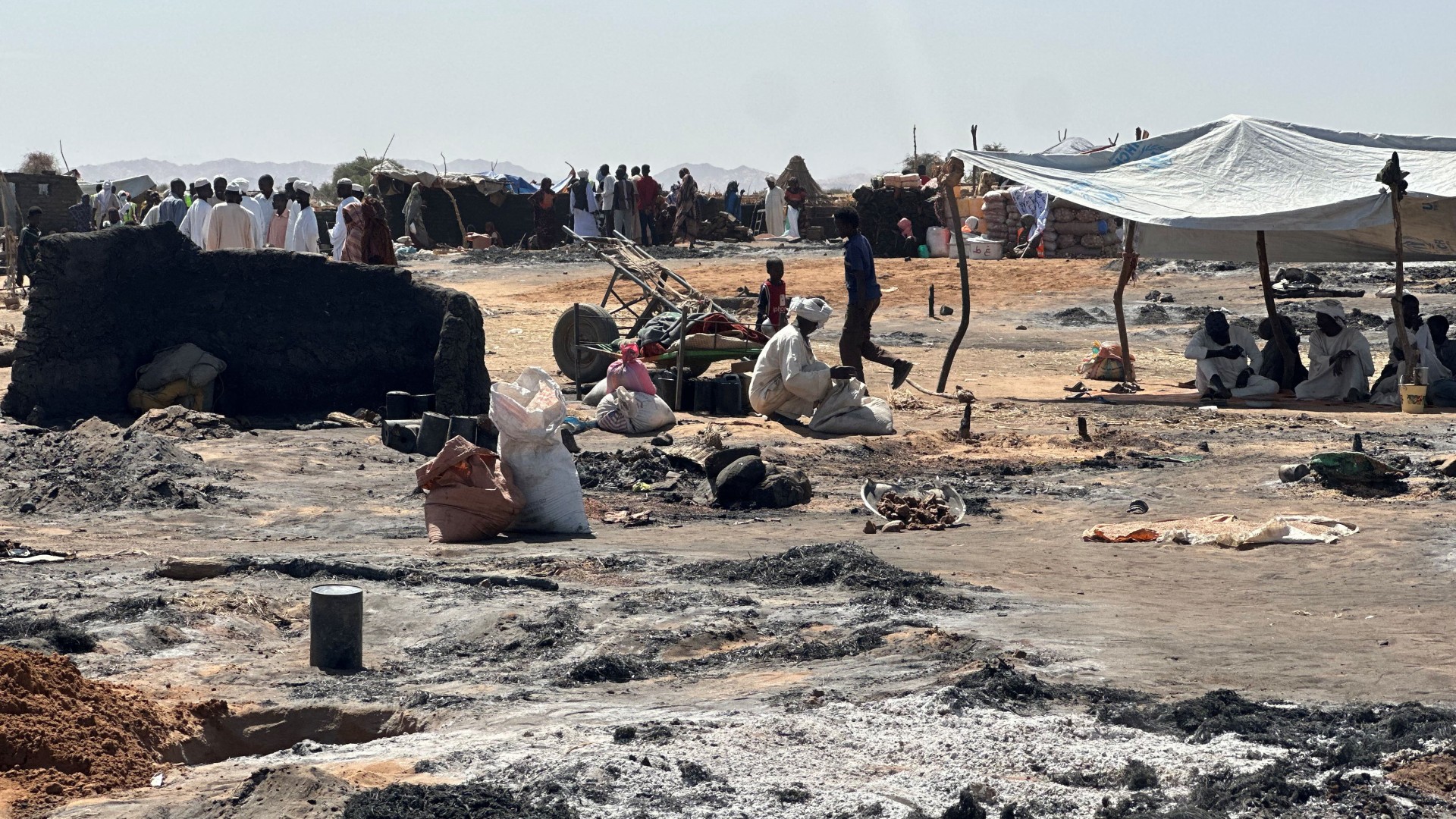
On Wednesday, the United Nations Fact-Finding Mission for Sudan (FFMS) published a fresh batch of harrowing survivor testimonies collected from the aftermath of the Rapid Support Forces (RSF) capture of el-Fasher, the capital of North Darfur. The new accounts reinforce the mission’s earlier finding that the RSF, Sudan’s powerful paramilitary group, has carried out acts of genocide targeting non-Arab communities in the region.
Established by the UN Human Rights Council as an independent oversight body, the FFMS is tasked with documenting violations of international human rights and humanitarian law amid the ongoing civil conflict that erupted between the RSF and Sudan’s regular armed forces (SAF) in April 2023. Since its last public update in February, the mission has expanded its evidence base to 333 interviews with people who survived the el-Fasher offensive, adding 13 new firsthand accounts that solidify its original assessment.
The mission reaffirmed Wednesday that three core elements required to classify atrocities as genocide under international law are overwhelmingly present in attacks carried out by the RSF in and around el-Fasher: the systematic killing of members of the targeted non-Arab groups, the infliction of severe physical and psychological harm, and the deliberate imposition of living conditions designed to eradicate the group. Investigators added that clear genocidal intent can be inferred from multiple patterns observed during the offensive: the large-scale scope of targeted killings, the consistent use of ethnically charged rhetoric by RSF commanders and foot soldiers, and the deliberate practice of sparing Arab civilians while attacking, detaining, or sexually assaulting non-Arab residents.
Currently, the mission is conducting a formal review to determine whether the widespread patterns of sexual violence documented in el-Fasher — including mass rape, forced pregnancy, and the deliberate denial of reproductive health care to non-Arab communities — qualify as a fourth act of genocide: measures intended to prevent births within the targeted group, as defined under Article II(d) of the UN Genocide Convention.
Beyond documenting atrocities committed by the RSF itself, the FFMS also addressed the potential legal complicity of foreign states that continue to provide military, financial, logistical, or intelligence support to the paramilitary group. Under Article I of the Genocide Convention, all states hold a binding legal obligation to prevent acts of genocide. The mission noted that any state that continues to supply support to the RSF despite awareness of a credible risk of genocide could be found in violation of this obligation, and may face allegations of complicity under Article III(e) of the convention in some cases.
Extensive independent reporting, including multiple investigations by Middle East Eye, has repeatedly linked the United Arab Emirates to the provision of arms and other critical supplies to the RSF, claims the UAE has repeatedly denied. Sudan previously attempted to file a formal genocide case against the UAE at the International Court of Justice, but the proceedings were unable to move forward after the UAE invoked a reservation it made to Article IX of the Genocide Convention, which excludes the ICJ’s jurisdiction over such disputes against the country. However, the FFMS emphasized that other states that supply the RSF have not made similar reservations, leaving them vulnerable to identical legal claims in the future. In recent weeks, international human rights organizations have submitted two formal communications to the International Criminal Court calling for an investigation into the role of foreign actors, specifically senior UAE officials, for aiding and abetting RSF atrocities.
“The obligation to prevent arises at the instant a State learns of, or should normally have learned of, the existence of a serious risk that genocide may be committed,” the FFMS wrote in its conference room paper. “It is an obligation of conduct rather than result, requiring States to employ all means reasonably available to them, within their capacity to influence the relevant actors, to prevent the commission of genocide.” The mission issued an immediate call for all states to halt all flows of weapons, ammunition, and logistical support to the RSF and its allied militias, a move that would comply with the existing UN arms embargo on Darfur.
The new testimonies released Wednesday add graphic, previously undisclosed details of atrocities carried out by RSF fighters during and after the October 2024 takeover of el-Fasher. Investigators confirmed that foreign fighters have been identified among RSF ranks, and that many of these fighters have participated in acts of sexual violence against non-Arab civilians. RSF fighters are readily identifiable by their distinctive sandy-colored uniforms.
One newly published account describes RSF fighters storming a takiya, a communal shelter for displaced civilians, on October 26. Fighters killed men, women, and children inside the shelter indiscriminately. As a survivor attempted to flee with her husband, fighters grabbed the woman and raped her. When her husband tried to intervene, one fighter slit his throat with a knife, killing him instantly. In another incident, RSF fighters stormed El Saudi Hospital, a major medical facility in el-Fasher, killed wounded civilians sheltering inside its wards, and raped multiple women within the hospital grounds.
In the town of Shagra, one witness told investigators that RSF fighters stopped a convoy of civilians attempting to escape the city, then gang-raped between 15 and 20 women and girls, some as young as 13 years old. One of the victims, a woman in her 70s, later died from the injuries she sustained during the attack. Along the road leading to Tawila, a survivor recounted being intercepted by RSF fighters alongside a group of women. Fighters separated several of the women to rape them while forcing the other women to watch, telling the waiting group, “Sit here until we ‘marry’ your sister.”
Multiple testimonies confirm that fighters explicitly targeted and spared civilians based on their ethnicity. In one incident, a RSF fighter who had already begun assaulting a woman stopped when she told she belonged to the Arab Fallati tribe, saying “you are my cousin” and allowing her to leave unharmed. Another woman was released after claiming membership in the Masri neighborhood, which is majority Arab. The testimonies also include new accounts of brutal sexual violence: multiple survivors described rapes committed with sharp objects, which resulted in at least one victim’s death, and witnesses reported that perpetrators laughed while carrying out their assaults.
The FFMS also documented that women who resisted rape or attempted to protect their family members were extrajudicially killed by RSF fighters. On the road to Tawila, a mother was shot dead after trying to stop fighters from abducting her daughters. Two young women being held captive by the RSF were killed immediately after fighting off an attempted rape. The mission also received multiple new accounts of abductions of women and girls, which investigators are treating as part of a broader pattern of enforced disappearances. One witness described seeing RSF fighters tie the hands of three girls she knew, force them into a military vehicle, and drive away.
Newly recorded statements from RSF fighters further reinforce the ethnic motivation behind the atrocities. Direct quotes from fighters include statements such as “The Rapid Support Forces are above everything” and “Any Zaghawa we will capture will not survive the night.” Investigators said these statements confirm that ethnicity is the primary criterion used to target victims for killing and sexual violence.
The testimonies also lay bare the horrific conditions faced by thousands of civilians detained by the RSF after fleeing el-Fasher. The FFMS confirmed that detainees were first held in makeshift facilities across el-Fasher, including local schools, El Saudi Hospital, and abandoned government buildings, before being transferred to the main prison in Nyala — known as Daqris Prison — by the end of 2024. Daqris Prison was already severely overcrowded with detainees captured in other regions of Sudan, but thousands of additional el-Fasher detainees were sent there anyway. Thousands of detainees remain in the facility to this day, held without any formal legal process, denied access to legal counsel and blocked from receiving visits from family members. Even humanitarian workers who attempted to gain access to the detention sites have themselves been detained by the RSF.
Former government employees — particularly teachers and doctors — were separated from the general detainee population and face a far higher risk of extrajudicial killing, the mission found. In many cases, these separated detainees have not been seen again by family members or witnesses. At a former children’s hospital in el-Fasher that the RSF repurposed as a detention and execution site, detainees were forced to drink contaminated water, resulting in a cholera outbreak that killed multiple people in custody.
Conditions inside the besieged El Saudi Hospital during and after the RSF offensive were also documented: medical staff ran out of critical supplies, forcing them to clean open wounds with only salt water. Specialists reported that they lacked the equipment and medication needed to provide adequate medical and psychological care to survivors of rape. Women who became pregnant as a result of rape were forced to seek unsafe illegal abortions due to the lack of timely reproductive care, and several of these women died from hemorrhage. Pregnant women across el-Fasher also suffered higher rates of stress-induced premature labor due to constant shelling and violence.
On the question of command responsibility for the atrocities, the FFMS presented verified video evidence placing RSF deputy commander Abdelrahim Hamdan Dagalo at the captured 6th Infantry Division base in el-Fasher delivering a speech between 10 a.m. and 11 a.m. on October 26, just hours after the RSF secured control of the city. Dagalo was also spotted in el-Fasher two days after the takeover and again on November 4. The commander has already been sanctioned by the European Union, the United Kingdom, and the UN Security Council for his role in overseeing the RSF’s military campaign in Darfur.
The FFMS shared the final draft of its new report with Sudan’s transitional government on July 3 but has not received any formal response to date. The RSF answered a small number of questions from investigators in a June 7 letter but has not followed through on public promises to meet with investigators, the mission confirmed.
The release of these new findings comes just days after the FFMS issued an urgent warning that the RSF appears to be preparing to replicate its el-Fasher offensive in another major Sudanese city: el-Obeid, home to more than 500,000 permanent residents plus more than 100,000 people who have already been displaced from el-Fasher and other war-ravaged regions. During an urgent debate at the UN Human Rights Council on July 3, FFMS member Mona Rishmawi reported that the RSF has built up military forces on all approach routes to el-Obeid except the eastern corridor. Local residents have reported a sharp increase in drone strikes targeting critical infrastructure including power stations, fuel depots, water treatment facilities, and transport routes, alongside repeated strikes on hospitals, markets, schools, and residential neighborhoods.
“We have seen this modus operandi by the RSF before. In El-Fasher and elsewhere, growing encirclement was followed by restrictions on movement, disruption of aid and food supplies, damage to critical infrastructure, aerial and artillery bombardment and ultimately indiscriminate attacks against civilians,” Rishmawi told the council. “The warning signs are unmistakable.”