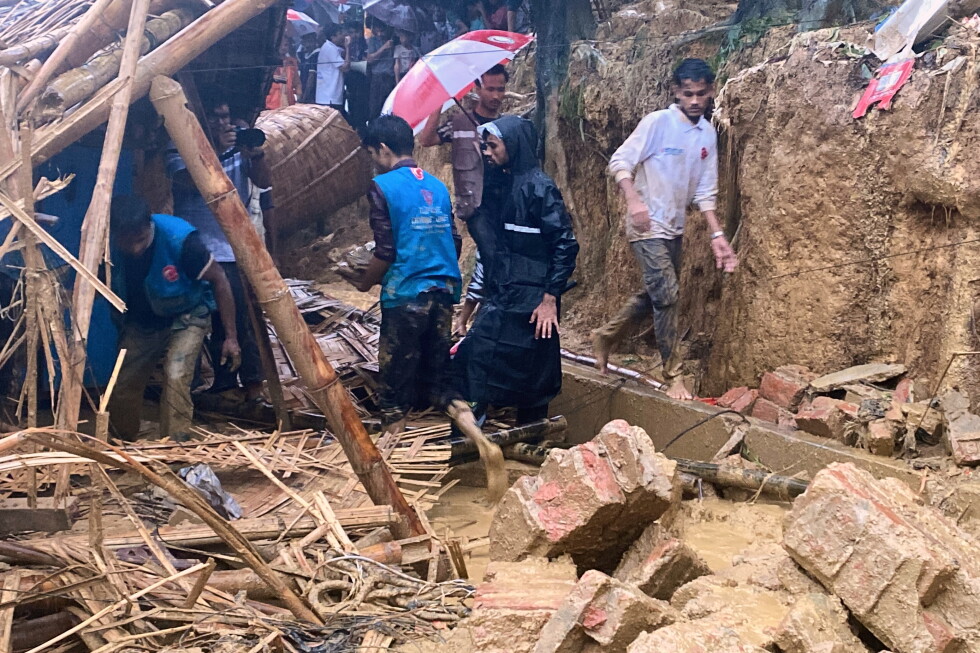
Deadly monsoon-driven landslides have claimed the lives of at least 13 Rohingya refugees sheltering in overcrowded camps in Cox’s Bazar, Bangladesh, prompting local authorities to launch urgent relocation efforts to move vulnerable populations out of high-risk zones ahead of forecasted additional rainfall. Over 1 million Rohingya, who fled persecution in neighboring Myanmar, currently reside in the sprawling coastal camp complex where steep, deforested hillside settlements amplify the risk of seasonal rain-related disasters.
The most recent fatal incident unfolded Wednesday, when a sudden landslide swept through an on-site Islamic school, killing five children. Begum Jahan, a Quran teacher at the school, described the chaotic scene that unfolded as students prepared for morning lessons. A portion of the school’s hillside-adjacent building collapsed without warning, burying everyone on the eastern side of the structure under tons of mud and debris. “Those of us who were on the western side managed to get out, but everyone on the eastern side was buried under the debris,” Jahan recalled, adding that many survivors suffered severe injuries including broken bones, while multiple female students lost their lives in the collapse.
Local camp residents launched immediate rescue efforts before official emergency responders could reach the remote site, according to Dollar Tripura, head of Cox’s Bazar’s local fire service and civil defense. Once emergency personnel arrived, they extracted injured survivors and recovered the remains of those killed, wrapping up the formal search operation Wednesday evening. Jamal Hossain, a Rohingya refugee who volunteered to assist with the rescue, confirmed all recovered fatalities were women, but added that uncertainty remains about the full human cost of the disaster. “However, we do not know whether there are any more bodies buried underneath,” Hossain said.
This latest incident follows an earlier landslide Sunday night that killed eight other refugees in the camp complex. Across Bangladesh, local media outlet Prothom Alo, the nation’s largest Bengali-language daily, reports that landslides and structural collapses linked to monsoon rains have killed at least 22 people across the country over the past three days, including all the camp casualties recorded so far.
In response to the escalating danger, Cox’s Bazar authorities have mobilized a multi-pronged evacuation campaign, using loudspeaker announcements and a network of community volunteers and camp leaders to encourage residents of at-risk hilly areas to relocate to safer ground. More than 1,000 people have already been moved out of high-risk zones, but officials face a persistent challenge: many refugees are reluctant to abandon their makeshift homes, even after repeated official warnings of impending danger. The Bangladesh Meteorological Department has forecast additional heavy rainfall across the region in the coming days, raising fears of more mudslides and casualties.
The disaster comes amid a long-running stalemate over the future of the Rohingya refugee population. Bangladesh has spent years calling on the international community to support a large-scale repatriation of Rohingya to their home country of Myanmar, but the repatriation process has been stalled for years by political and security challenges, leaving more than a million people trapped in the high-risk coastal camps.