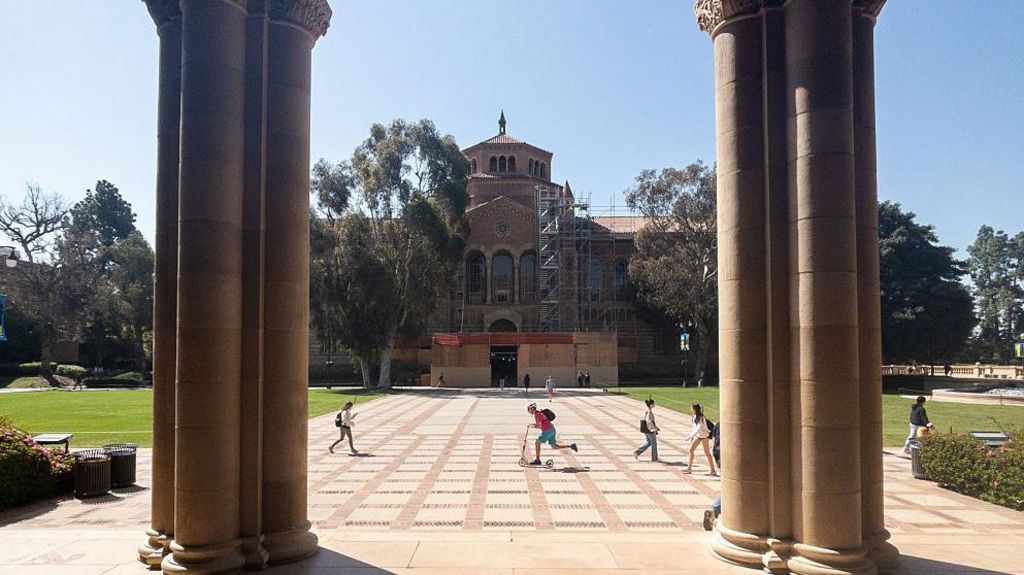
An elaborate forgery-fueled theft scheme that targeted one of the United States’ most significant collections of rare historical artifacts has concluded with sentencing for the perpetrator, a California man who stole centuries-old Chinese manuscripts worth hundreds of thousands of dollars from the University of California, Los Angeles (UCLA) Library.
Jeffrey Ying, 39, a resident of Fremont in the San Francisco Bay Area, pleaded guilty to one felony count of major artwork theft for stealing a 17th-century Qing Dynasty ancient Chinese manuscript. In a California federal court ruling, he was sentenced to time served — equal to roughly one month he spent in jail following his arrest — followed by one year of home confinement and three years of supervised release. No immediate fine was issued, though court documents note that the amount of restitution owed to the library for its losses has not yet been finalized.
The criminal complaint against Ying lays out the sophisticated plot he carried out between December 2024 and July 2025. Prosecutors allege that Ying exploited a then-existing UCLA Library policy that allowed members of the public to request library cards for access to rare collections entirely online, with no requirement to present in-person government-issued identification. Using three different aliases — Jason Wang, Alan Fujimori, and Austin Chen — he created multiple library accounts to check out the rare ancient Chinese texts held in the institution’s archives. The UCLA Library houses one of the nation’s largest open collections of rare books and historical artworks, making it accessible to outside researchers under controlled public access policies.
After renting out each manuscript, Ying traveled back and forth between the U.S. and China within days of each check-out, according to prosecution records. Investigators believe he used custom forging equipment and blank parchment matching the style of the original ancient documents to create detailed counterfeit copies. When he returned the fakes to the library under his aliases, the switch went undetected for months.
The scheme was only uncovered when library staff processing recently returned items noticed inconsistencies that revealed the submitted documents were forgeries. An internal review launched by library administration identified multiple suspicious returns linked to the aliases, and cross-checking with surveillance footage confirmed that all the checked-out original manuscripts had been picked up by the same individual, later identified as Ying.
When law enforcement arrested Ying in August 2025, a search of his hotel room located near UCLA’s campus uncovered blank manuscript paper and reference documents matching the stylistic characteristics of the stolen texts. Prosecutors’ arrest affidavit states these materials were explicitly used to create “dummy” counterfeit books to swap for the authentic historical artifacts. At the time of arrest, authorities also seized a fraudulent California state ID issued under the name Austin Chen, as well as two library cards registered to aliases Austin Chen and Jason Wang.
Prosecutors estimate the total value of the manuscripts Ying is accused of stealing amounts to roughly $216,000, equal to approximately £161,300. The stolen items include two particularly valuable artifacts: a text dating back to 1393 and another published in 1575. As of the sentencing ruling, Ying has only been charged and convicted for the theft of the 17th-century Qing manuscript. Court records do not currently outline where the stolen authentic manuscripts are being held, leaving the ultimate fate of the historical artifacts unknown. Following the exposure of the theft scheme, UCLA has revised its public access policy for rare collections, now requiring in-person identity verification before granting access to high-value archival materials.