In a landmark diplomatic shift that signals a new chapter for post-Assad Syria, the United States announced Wednesday it will remove the country from its decades-old list of state sponsors of terrorism, a major show of support for new Syrian leader Ahmed al-Sharaa. The long-awaited move, formally notified to Congress by Secretary of State Marco Rubio, will go into effect in 45 days, and congressional opposition to the delisting is widely viewed as an unlikely outcome.
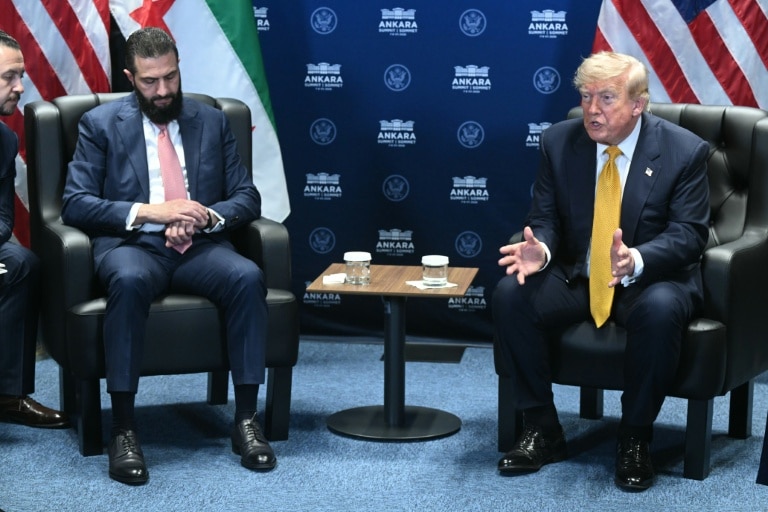
The announcement coincided with a face-to-face meeting between U.S. President Donald Trump and Sharaa held on the sidelines of the NATO summit in Ankara, Turkey. Sharaa, a former jihadist who has rebranded himself as a unifying national leader following the 2024 collapse of the Assad regime that ruled Syria with authoritarian control for 50 years, traded his previous guerrilla attire for a formal suit for the high-profile diplomatic encounter.
“This is yet another historic step by President Trump to give the Syrian people a chance at greatness,” Rubio said in an official statement. He emphasized that removing the terrorism designation, paired with broader sanctions relief, will unlock critical international trade and foreign investment that Syria desperately needs to rebuild its infrastructure and institutions after years of devastating civil conflict. “A stable, unified Syria at peace with itself and its neighbors benefits not only the region, but the entire world,” Rubio added.
Trump echoed this positive assessment of Sharaa’s leadership during their meeting, saying, “He’s doing an unbelievable job in unifying Syria. What a job he’s doing. Syria was a mess with what happened with the previous government.”
The delisting comes despite lingering misgivings from Israel, one of Syria’s long-standing regional adversaries that has carried out repeated airstrikes on Syrian territory in recent years. Trump has previously publicly pushed for Syria to reach a formal peace agreement with Israel, but moved forward with the delisting even without tangible progress on that front. Last month, Trump suggested that Sharaa’s Sunni-led government could lead a military campaign to weaken Lebanese Shia militant group Hezbollah, a proposal Sharaa quickly rejected, noting Syria has no intention of repeating the Assad regime’s decades-long military intervention in Lebanon.
For months, the U.S.’s initial round of sanctions relief had little tangible impact on Syria’s economy because the state sponsor of terrorism designation remained in place. The label left U.S. and international businesses facing significant legal risks for any commercial activity in Syria, effectively blocking most foreign investment. Rubio confirmed that the decision to delist Syria followed “formal assurances” from Sharaa that the new government will not support any acts of international terrorism moving forward.
With Syria’s removal, only three countries — Iran, North Korea, and Cuba — will remain on the U.S. terror blacklist. Cuba was controversially added to the list during Trump’s first presidential term amid rising pressure on the island’s communist government.
The U.S. first designated Syria as a state sponsor of terrorism back in 1979, during the rule of Hafez al-Assad, the late father of ousted president Bashar al-Assad. For decades under the Assad dynasty, Syria hosted a number of Palestinian militant groups, and Damascus was accused of direct involvement in high-profile attacks, including a 1986 attempted bombing of an Israeli El Al airliner. In recent decades, the designation was primarily tied to the Assad regime’s close alliance with Iran and its long-standing support for Hezbollah. Today, Syria is in desperate need of international economic assistance to rebuild after years of brutal civil war that allowed the Islamic State extremist group to seize large swathes of territory and triggered one of the worst global refugee crises of the 21st century.