For billions of fans across the globe, soccer is far more than a pastime—it is a generations-deep cultural obsession woven into the fabric of national identity. But as the United States serves as co-host of the 2026 men’s FIFA World Cup, the sport still fights for space in a domestic landscape long dominated by homegrown favorites: American football, basketball, baseball and ice hockey, which claim the lion’s share of media attention, sponsorship revenue and public discourse.
While men’s soccer has made notable gains since the U.S. last hosted the World Cup in 1994, it still trails the wildly successful U.S. women’s national team, a global powerhouse that has long secured a higher standing in the nation’s sports pecking order. Now, with the men’s national team (USMNT) on the cusp of a quarter-final berth facing Belgium on Monday, fans and analysts alike are asking whether this high-profile home tournament can finally push soccer to new heights of popularity, challenging the stranglehold of America’s top domestic leagues.
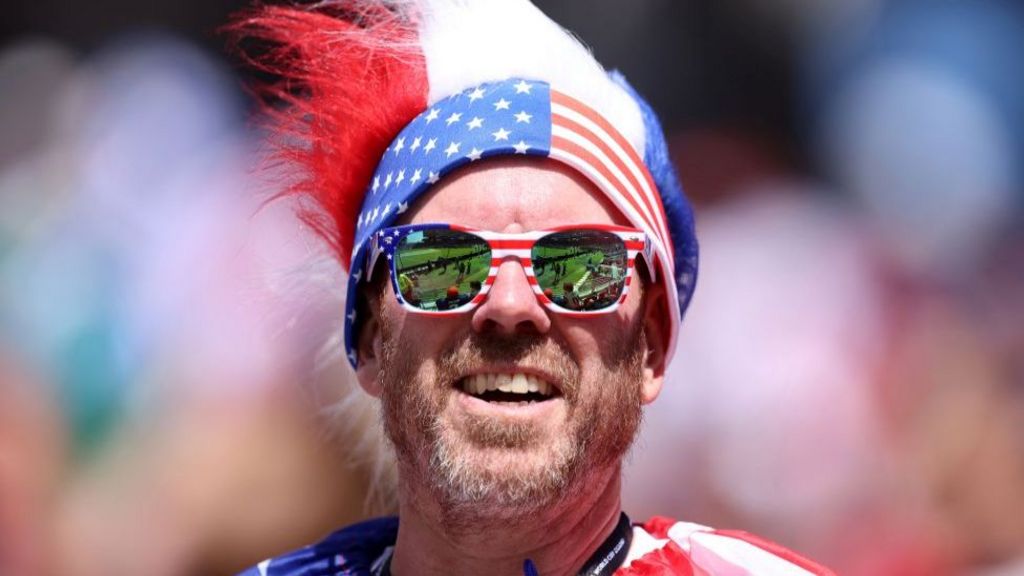
Across every corner of the U.S., fans are turning out in droves for World Cup action. A-list celebrities and die-hard supporters alike don the red, white and blue of the USMNT, pop-up merchandise stores sell out of team gear, and public watch parties pack parks, shopping malls and even museums. In host cities, streets are lined with fans in vibrant team jerseys, and every bar and restaurant with a screen draws crowds transfixed by matchday drama. Many long-time fans are convinced this tournament marks a long-awaited turning point for the sport, regardless of the USMNT’s final result.
Erik Olsen, a documentary filmmaker and lifelong World Cup viewer who spoke to the BBC while waiting for food ahead of the U.S.-Turkey match in downtown Los Angeles, described the 2026 tournament as a rare unifying force for Americans. “To have all these different people come together to cheer on the US team, and maybe even their own team if you’re from Mexico or Argentina or someplace else—we need that kind of global spirit right now,” he said.
Steve Salcedo, a lifelong fan who has supported both the U.S. and Mexican teams during the tournament, noted that younger generations are embracing soccer more enthusiastically than his own. He predicted that the current surge in interest would outlast the final match. “The hype is definitely here for the World Cup, it’ll be here until the World Cup ends. Of course it’s going to die down, but in general I think soccer is here to stay,” he said. For 16-year-old Keenah Pacheco, who visited a Seattle fan zone with her family, the excitement has already rekindled a personal passion: after quitting the sport at age 8, she now plans to pick up play again.
Early data already confirms a historic surge in U.S. interest: the 2026 World Cup has already notched record-breaking TV ratings and unprecedented ticket demand, with packed fan events across all three host nations. Broadcasters reported that a combined 25 million American viewers tuned into the USMNT’s opening match against Paraguay—18 million across Fox’s broadcast platforms, and an additional 7 million on Spanish-language network Telemundo. While co-host Mexico has long had deep-rooted cultural ties to soccer, the U.S.’s co-hosting status and the fact that the majority of matches are played on American soil has driven more domestic engagement than ever before.
Even global and U.S. political leaders have highlighted the tournament’s success: U.S. President Donald Trump, who has not yet attended a match, called the record attendance numbers “a great tribute to the United States”, while FIFA President Gianni Infantino has already named it the “most successful event in history”. The expanded 48-team format means more matches than any prior men’s World Cup, and North America’s large-capacity stadiums have accommodated unprecedented crowds: FIFA announced last month that total attendance surpassed 3.6 million in the tournament’s first two weeks, beating the previous record of 3.58 million set at the 1994 U.S. World Cup. A large share of those attendees are American fans, including both those rooting for ancestral home nations and supporters who have adopted competing teams out of sheer love for the sport.
Despite soaring attendance and TV ratings that now rival the NBA Finals and MLB World Series, industry analysts remain divided over whether this moment will mark a permanent breakthrough for soccer in the U.S. Jeff Schneider, executive director of the Center for Sports, Entertainment, Media & Technology Law at the University of Southern California, explained that while soccer has moved from the cultural fringes to the mainstream as a beloved sport for a large, loyal minority, it is unlikely to ever displace American football or basketball in national popular culture. Those sports developed deep roots during an era when media was less pervasive, when leisure time centered on in-person participation rather than passive consumption, and have been cemented as American cultural institutions over more than a century.
Still, Schneider acknowledged that soccer has built a solid, growing base of loyal fans who both play and watch the sport—a shift driven largely by changes in youth sports participation. Steve Bank, a sports law expert at the UCLA School of Law, explained that soccer has filled the gap left by declining youth American football participation, as parents increasingly avoid the contact sport due to widespread concerns about concussion-related brain injuries.
The USMNT’s performance against Belgium on Monday will do much to shape the sport’s trajectory: a deep tournament run would significantly boost momentum for domestic growth. The match already carries extra scrutiny following the controversial reversal of striker Folarin Balogun’s red card, which came after a reported phone call between President Trump and FIFA President Infantino.
The groundwork for today’s growth was laid 30 years ago, when the U.S. launched Major League Soccer (MLS) as a requirement of its agreement to host the 1994 World Cup. Today, MLS has expanded to 30 teams across the U.S. and Canada, and has attracted global superstars including Lionel Messi, raising the league’s domestic profile. Even so, the biggest draw for American viewers remains top European leagues: England’s Premier League and Spain’s La Liga have driven a sharp rise in soccer media rights spending, according to research from Ampere Analysis, and the U.S. is now the largest foreign market for the world’s top four European leagues. A recent Ampere survey found that soccer has now narrowly overtaken baseball as the third most popular sport in the U.S., with 10% of Americans naming it their favorite.
Significant structural barriers remain, however. Sports law expert Steve Bank noted that attempts to transplant European-style league structures to the U.S. market have long been unrealistic. Other analysts point to cultural differences in how Americans engage with sports: domestic leagues are structured to deliver high-scoring, definitive outcomes that often allow for sustained dominance by top franchises, a dynamic that does not exist in global soccer.
“You have to be okay with not winning [in football], and Americans are not okay with not winning,” Schneider said. “One of the main reasons why Americans have never adopted soccer is because it’s impossible to dominate. You can’t win year after year after year after year, like the Patriots or the Yankees. They’re bandwagon hoppers, they love to get on the bandwagon for a good team, and that’s not soccer.”
Despite these challenges, a confluence of cultural and technological shifts are pushing soccer further into the American mainstream. Widespread streaming access and expanded sports programming have made international matches far more accessible to casual fans, while hit scripted shows like Ted Lasso and Welcome to Wrexham have introduced the culture of soccer to new American audiences in approachable, humorous ways. Mass immigration from soccer-mad nations across Latin America, Africa and Europe has also grown the fan base, alongside the enduring popularity of FIFA-branded soccer video games that introduce the sport to generations of young American children.
For long-time fans like Olsen, the energy around the 2026 World Cup feels like a true shift. “There’s something about the fact this team is young and hungry and doing well that makes me feel there could be kind of a sea change about soccer in the U.S,” he said. With the hashtag “Why Not Us?” already a viral rallying cry for USMNT supporters, the nation waits to see whether this home World Cup will finally cement soccer’s place among America’s top sports.