A firestorm of debate has swept through global football after FIFA’s stunning decision to overturn a red card for United States breakout star Folarin Balogun, a move that came just days after former US President Donald Trump personally pressured FIFA president Gianni Infantino to revisit the call.
The disciplinary action against Balogun stemmed from a round-of-32 match against Bosnia and Herzegovina, where the American forward was sent off with 30 minutes remaining after VAR upgraded a challenge on opponent Tarik Muharemovic to a straight red. While most observers agree the collision was accidental, the red card carried an automatic one-match suspension that would have forced Balogun to sit out the USMNT’s critical round-of-16 clash against Belgium on Monday. As the host nation for the remainder of the 2026 World Cup, and with Balogun one of the team’s standout talents, the Trump administration moved quickly to challenge the ruling.
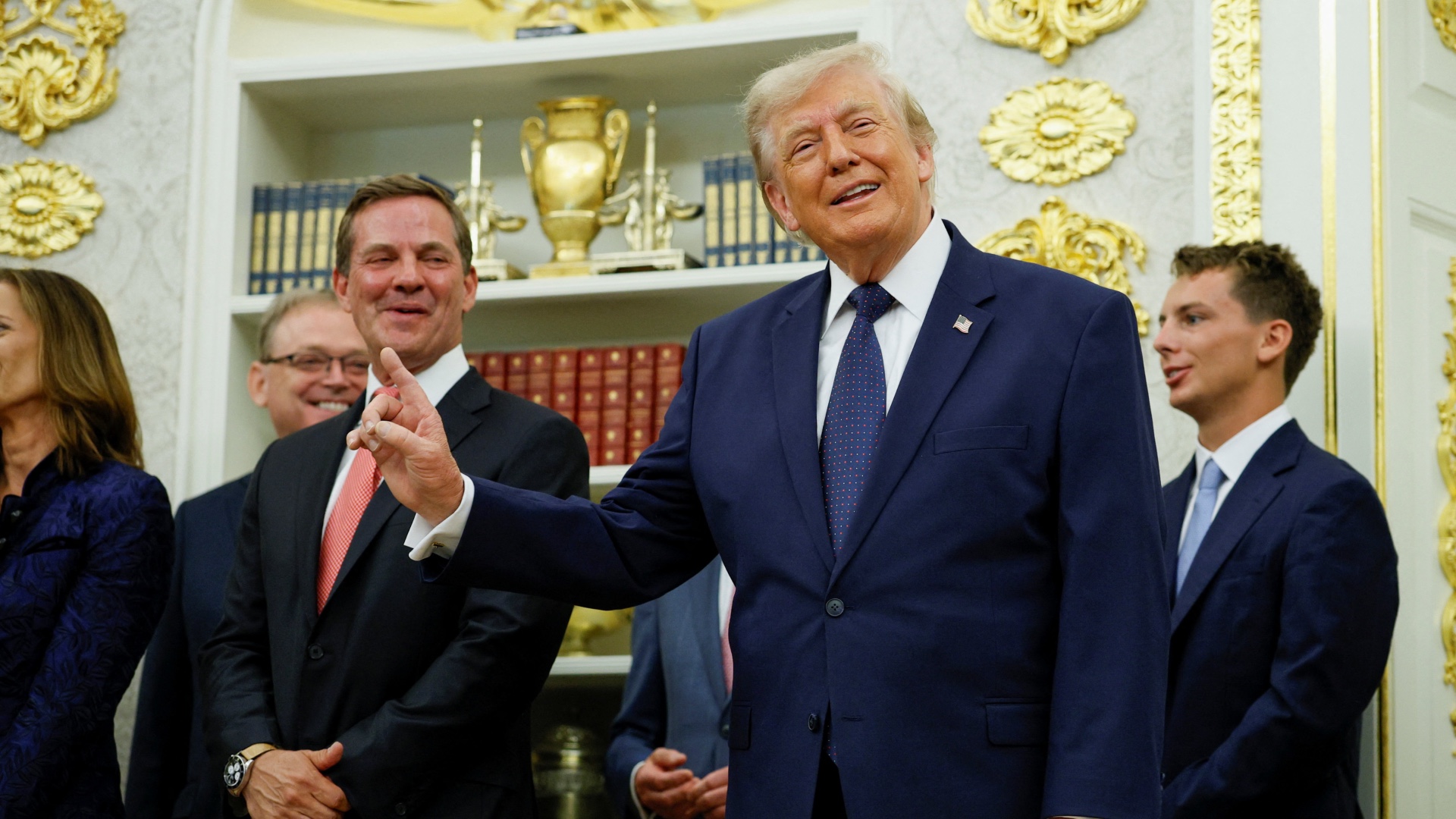
Trump confirmed his intervention to reporters at the White House on Monday, arguing the challenge never rose to the level of a foul, let alone a sending-off. “That wasn’t even an infraction, that was two guys running full speed that happened to crash into each other,” Trump said. He also questioned the integrity of Brazilian referee Rafael Claus, who issued the card, calling his record “very suspect” – remarks that have already sparked intense backlash against Claus on social media. Confirmation of the high-level lobbying campaign emerged earlier from Politico, which reported that Andrew Giuliani, executive director of the White House FIFA World Cup Task Force, Commerce Secretary Howard Lutnick, and senior US Soccer Federation officials spent four days coordinating the appeal.
In a move that shocked the global sports community, FIFA announced Sunday it was reversing the red card, replacing the suspension with a one-year probation. The governing body used Article 27 of its Disciplinary Code, a rarely used provision colloquially known as the “Cristiano Ronaldo Rule” after it was invoked to clear the Portuguese star for his 2026 World Cup opening matches last November. The decision has reignited longstanding criticism that FIFA has cultivated overly close ties to the US administration to protect the commercial success of the ongoing tournament, which the US is co-hosting.
Infantino pushed back against accusations of political interference in a statement released hours after Trump’s confirmation. “FIFA’s judicial bodies are independent. They operate autonomously,” he wrote, adding that he always respects the rulings handed down by FIFA’s disciplinary panels, regardless of whether he agrees with them. He also noted that regular conversations with heads of state regarding the World Cup are standard practice.
For Team USA, the reversal is a welcome outcome. Head coach Tim Ream told *Good Morning America* that Balogun has been overjoyed by the news, and is now eager to contribute on the pitch rather than sit on the sidelines. “He’s been beaming ear to ear since we all found out the news,” Ream said.
But the precedent set by FIFA’s ruling has triggered an immediate wave of demands for equal treatment from other qualified teams, with high-profile pushback from across global football. France has already appealed a yellow card received by star player Michael Olise during its round-of-16 match against Paraguay. England manager Thomas Tuchel joked at a recent press conference that he may ask Trump to help overturn a red card suspension for Jarell Quansah, adding: “Where does it start, and where does this end now?” Norway head coach Stale Solbakken, whose side knocked out three-time champion Brazil Sunday, called FIFA’s choice a “bad bad bad bad bad decision.”
Within minutes of FIFA’s Sunday announcement, Belgium – the US’s opponent in Monday’s knockout match – filed a formal challenge to Balogun’s eligibility. In a statement Monday, the Royal Belgian Football Association said it had yet to receive any formal explanation from FIFA, leaving it no option but to contest the ruling. “Regardless of the sporting outcome of this match, the RBFA is deeply saddened by the course of events and will continue to fight in the coming hours, days and months in defence of the fundamental principles of ethics, fair competition, and the interests of football as a whole,” the statement read.
Criticism has also come from veteran football leadership. Former FIFA president Sepp Blatter, who has been banned from FIFA activities since 2015 amid a corruption scandal, weighed in on social media platform X Monday, writing: “Red cards are not overturned by political phone calls. They are overturned by rules, evidence and independent bodies. If a US President intervenes with the FIFA President – and a player is suddenly cleared before a World Cup knockout match – the question is unavoidable: Quo vadis, FIFA?” European governing body UEFA went even further, saying the reversal “crossed a red line.” The organization noted that automatic one-match suspensions for red cards are non-discretionary: “In this case not,” the statement said. “A minimum automatic suspension of one match following a red card is not a discretionary option and does not require the decision of a competent body to be enacted.”
The controversy also carries a subtle political subtext: Balogun, a dual US-UK national born in New York and raised in London, qualifies for the US national team via birthright citizenship, a policy Trump has repeatedly tried and failed to overturn during his time in office.