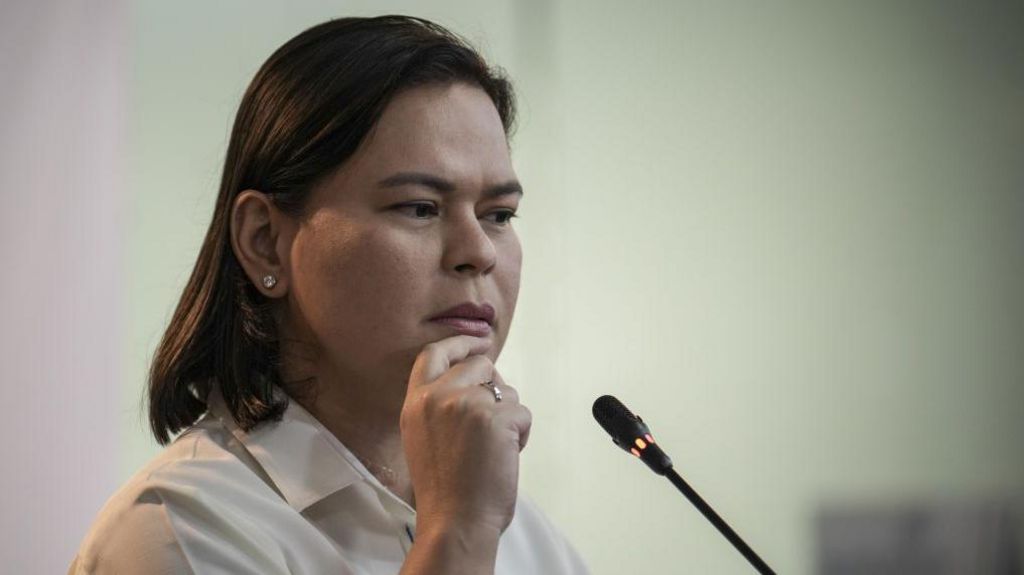
Manila, Philippines — The Philippines has entered uncharted political territory this week, as the nation’s Senate convened as an impeachment court to open the first ever trial of a sitting vice president, Sara Duterte, a high-stakes proceeding that puts her planned 2028 presidential bid directly in jeopardy. If convicted on the two charges against her — misuse of hundreds of millions of pesos in public funds and allegations of threatening an assassination plot against incumbent President Ferdinand “Bongbong” Marcos Jr. — Duterte would be removed from office and permanently barred from holding any future public position.
The trial marks the public escalation of a bitter, long-simmering feud between Marcos and Duterte, whose once-powerful political alliance collapsed spectacularly in full view of the Filipino public just months after the pair won a landslide victory in the 2022 national election. The 48-year-old vice president, who is the daughter of former Philippine President Rodrigo Duterte, needs at least 16 of the 24 sitting Senate votes to be convicted. However, the final result remains deeply unpredictable, as the upper legislative chamber is evenly split between backers of Marcos and Duterte, with allegiances shifting constantly in a political system long defined by dynastic power and last-minute coalition changes.
This pattern of volatile leadership has been on clear display already this year: the Senate has seen four different presidents take the gavel in 2026 alone, with each leadership shakeup, dubbed a “coup” by local Filipino media, decided by the defection of just two or three senators. Adding further uncertainty to the trial’s outcome, three senators allied with Duterte are currently unavailable to participate: two have been arrested in recent weeks, while a third, former police chief Bato dela Rosa, remains in hiding to avoid an International Criminal Court (ICC) arrest warrant linked to the deadly drug war carried out under Rodrigo Duterte’s administration. Legal and legislative experts remain divided over whether the three absent lawmakers will be permitted to cast their votes in absentia.
The corruption charges against Sara Duterte stem from allegations that she misallocated millions of dollars in public funds during her concurrent tenure as education secretary, centering on hundreds of confidential expense claims that Duterte has declined to disclose or justify. During the prosecution’s opening arguments Monday, Congresswoman Gerville Luistro, lead counsel for the prosecution, emphasized that the standards for accountability must apply to all public officials regardless of rank. “If a small village treasurer can’t explain missing funds, he is investigated. If a school principal squanders public funds, even just 5,000 pesos ($81; £60), she is punished,” Luistro told the court. “If ordinary people are held to account, why not the most powerful government official?”
In her opening defense of the vice president, Duterte’s lead counsel Sheila Sison hit back, framing the trial as a politically motivated effort to force Duterte out of office before her 2028 presidential run. Sison pointed to Duterte’s historic 32 million votes in the 2022 election — more than Marcos himself or any other elected official involved in the impeachment proceedings — as evidence that the trial undermines the will of the Filipino electorate. Duterte herself was not present for the opening of the trial, a choice she defended after proceedings began.
To prevent civil unrest amid the bitter political split, thousands of police officers in riot gear were deployed around the Senate building in Metro Manila on Monday, as separate groups of pro-Duterte and pro-Marcos protesters gathered for peaceful demonstrations outside. Dozens of national and international reporters were assigned to a dedicated media room to cover the proceedings, while millions of Filipinos across the country followed the opening day via official livestreams and community watch parties. Senate leaders have allocated a maximum of 92 days to complete the trial, a timeline that will keep the nation focused on the political drama through the end of 2026’s third quarter.
Political tensions have been building across the Philippines for months ahead of the trial. In May, a chaotic confrontation erupted in the Senate chamber after dela Rosa helped install Duterte ally Alan Peter Cayetano, a former foreign minister under Rodrigo Duterte, as Senate president. Just one month later, Cayetano was voted out of the leadership post in another leadership shakeup. Just days before the impeachment trial began, Philippine authorities filed a plunder charge against another prominent Duterte-aligned senator, Rodante Marcoleta, prompting three days of large-scale protests on Manila’s busiest major highway by supporters from an influential national religious group. Marcoleta turned himself in to authorities hours before the trial opened on Monday.
For his part, Marcos sought to project detachment from the proceedings Monday, with his office saying the president has “far more important work to attend to” than monitor the trial. Still, the president issued a public call for Duterte to appear in person to answer the charges against her. Duterte pushed back swiftly against Marcos’ comments, saying her absence “does not diminish accountability or imply a lack of transparency,” and adding that Marcos’ opinion on her impeachment is of “no importance” to her legal defense or political future.