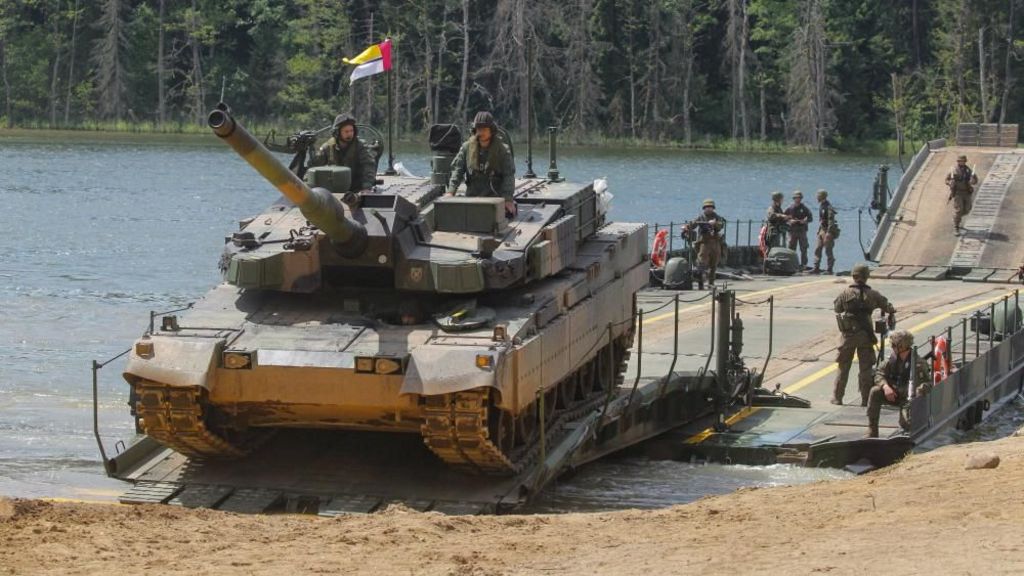
Tensions along NATO’s eastern flank have spiked in recent weeks as top Polish officials warn that the coming months could bring high-risk Russian provocations, even a direct attack against the alliance member, amid Moscow’s ongoing full-scale invasion of Ukraine. In late June, Polish and Lithuanian military units conducted a joint exercise along their shared border, a move that underscores growing unity and preparedness as regional anxieties about Russian aggression rise to their highest level in months.
Polish Prime Minister Donald Tusk laid out the gravity of the situation during a press briefing Friday, acknowledging that while he does not seek to stoke public panic, shifting dynamics in the Ukraine war have created a uniquely volatile period for Eastern Europe. “I don’t mean to scare anyone but the coming months may truly be critical, also due to the changing nature of the war. These concerns are particularly palpable in the Baltic states,” Tusk told reporters, confirming that Warsaw is drawing up contingency plans for a wide range of potential scenarios.
Tusk’s comments came in response to emerging media reports, citing declassified and shared U.S. intelligence, that claim Moscow is plotting an armed provocation inside Polish territory designed to test NATO’s collective defense commitment. According to Polish outlet Onet, sources close to Polish President Karol Nawrocki confirmed U.S. officials have issued multiple formal warnings to Warsaw about the alleged plot. The U.K.’s Telegraph further detailed the purported plans, which include possible missile or drone strikes on Polish critical infrastructure, or even the deployment of Russian ground forces into the NATO country.
The overarching goal of any such provocation, analysts and reports suggest, would be to force Western backers of Ukraine to suspend military and economic aid to Kyiv, allowing Russia to secure a favorable position on the battlefield more than two years after launching its full-scale invasion. Neither the White House nor the U.S. State Department has issued an official response to requests for comment from the BBC on the alleged intelligence warnings.
Tusk emphasized that Polish officials are not overreacting but are taking the threat seriously, noting that intelligence shared by allied partners has helped Warsaw map out potential risks. “Let’s not be afraid, we are preparing for various situations, but we cannot ignore them… We are aware of the threats, also thanks to information from our allies,” he said. Nawrocki is set to join fellow NATO heads of state for a critical alliance summit in Washington D.C. next week, where two key topics will dominate the agenda: increasing European defense spending in line with longstanding calls from former U.S. President Donald Trump, and cementing ongoing pledges of military aid to Ukraine.
This is not the first time Tusk has sounded the alarm about Russian expansion toward NATO territory. In an April interview with the Financial Times, he warned that Russia could launch an attack on a NATO member state within months. His deputy, Deputy Prime Minister Radek Sikorski, doubled down on that warning in a June interview with CBS News, saying he could not rule out a Russian “false flag” operation within the next two years that would provide a pretext for an attack on the alliance.
Regional anxiety over Russian aggression is not isolated to Poland. Baltic NATO members, which share direct borders with Russia and its exclave of Kaliningrad, have long flagged their own vulnerability to attack. In June, Latvian intelligence services publicly warned that Moscow was planning military provocations in the Baltic region or in Poland. On Thursday, Lithuania’s NATO ambassador told the country’s public service broadcaster LRT that Russia is far more likely to pursue hybrid tactics—such as unauthorized missile or drone incursions—than a full-scale conventional military attack.
At the core of the current standoff is NATO’s foundational Article 5, which enshrines the principle of collective defense: an armed attack against any single alliance member is considered an attack against all, requiring all members to take action to defend the targeted state. Any Russian provocation inside Polish territory would therefore represent the most significant test of this core principle since the alliance’s founding, adding extra weight to next week’s summit as leaders seek to project unified resolve against Russian aggression.