LONDON – In a historic legal proceeding that marked the first test of Britain’s 2001 International Criminal Court Act against an alleged perpetrator of atrocities abroad, a British judge has ruled that a former Syrian air force colonel is medically unfit to face a full criminal trial on charges of murder, torture, and crimes against humanity.
Fifty-eight-year-old Salem al-Salem was accused of orchestrating and participating in the killing of three civilian protesters and the torture of three detainees during the Syrian regime’s violent 2011 crackdown on Arab Spring-era anti-government demonstrations. Charges were brought under UK law that grants domestic courts jurisdiction over grave international offenses including crimes against humanity and torture, regardless of where the alleged acts took place. This marked the first time British prosecutors had brought a charge of murder as a crime against humanity under the 2001 legislation.
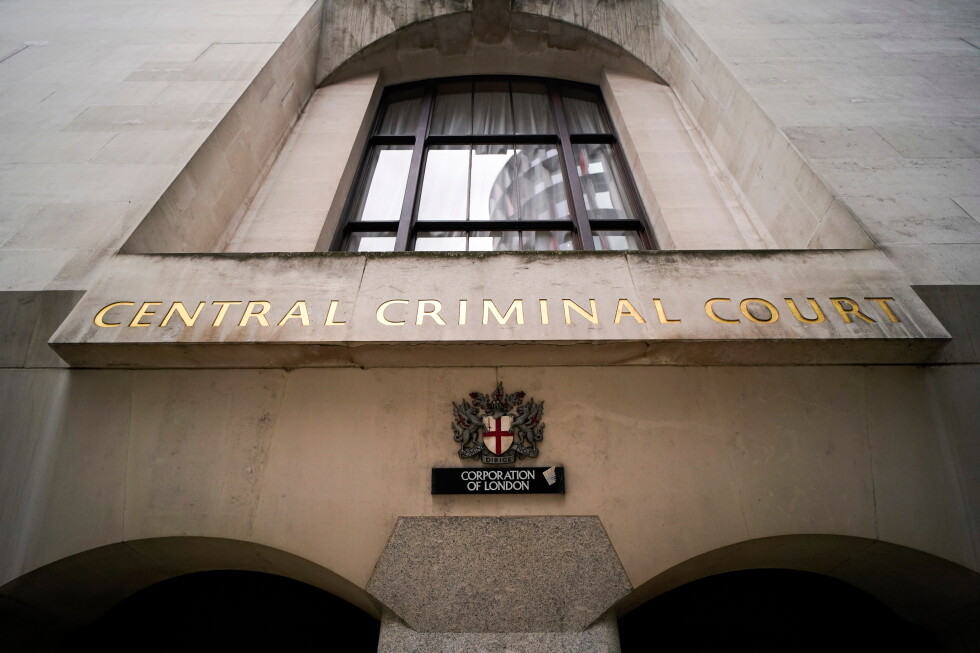
Prosecutors formally accepted medical assessments confirming al-Salem suffers from an advanced, progressive and fatal motor neuron disease that has left him quadriplegic, with significant cognitive impairment and severely limited communication abilities. According to medical evidence submitted to the Central Criminal Court, the former colonel can only communicate in monosyllables, is only understandable to close family members, and also suffers from clinical depression and apathy that leave him unable to participate meaningfully in legal proceedings. Not guilty pleas were formally entered on his behalf by court representatives following the judge’s ruling.
Justice Bobbie Cheema-Grubb announced that while al-Salem cannot face a full trial that could result in a conviction, a non-conviction trial of facts will be held in 2025 to examine the evidence to determine whether the alleged acts actually occurred. Al-Salem will not be required to attend the proceeding, even remotely, due to the severity of his health condition.
Prosecutors outlined the allegations against al-Salem during earlier hearings, saying he was a senior member of a Syrian Air Force Intelligence unit deployed to suppress pro-democracy demonstrations in Jobar, a suburb of Damascus, at the start of the Syrian uprising. Prosecutor Emilie Pottle told the court that al-Salem was directly tasked with quelling civilian protests against the government of then-President Bashar Assad, and personally ordered his subordinates to open fire on unarmed demonstrators, as well as taking part in shootings himself. Prosecutors allege the three killings for which he was charged took place between April and July 2011, and that the murders constituted part of a widespread, systematic attack on the civilian population aligned with opposition to the Assad regime.
Beyond the murder charges, al-Salem also faces allegations of official torture: prosecutors say he directly participated in interrogations of detained opposition supporters, during which detainees were subjected to beatings, electric shock torture, and suspension from ceilings by their handcuffs. He also faces a single charge of conduct ancillary to murder in connection with an additional death linked to his unit’s operations.