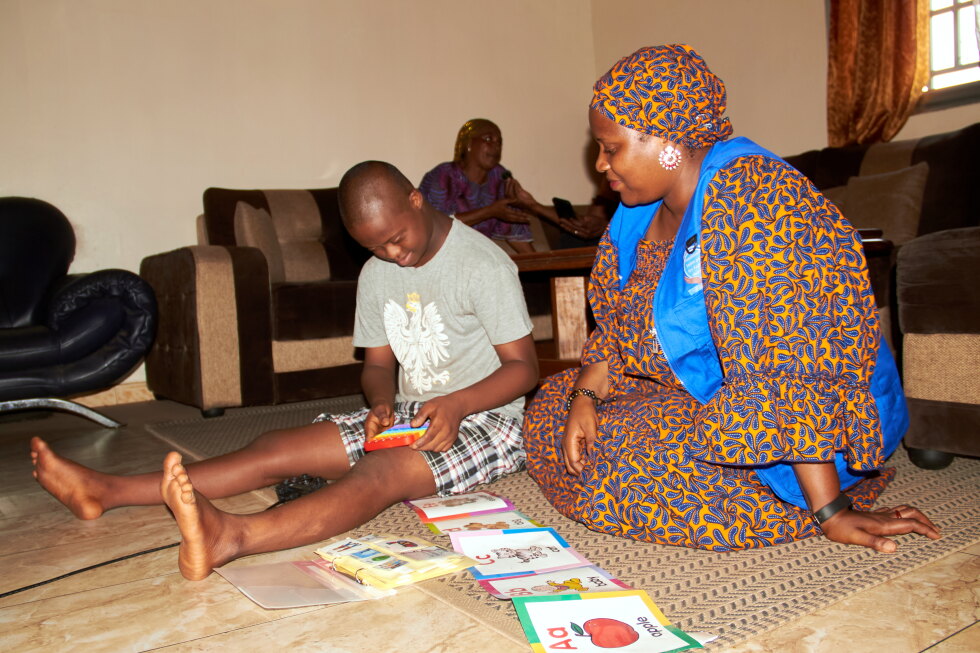
In the small Guinean town of Fria, 15-year-old Kazaliou Balde’s journey through life has been shaped by deep-rooted misconceptions about autism and a systemic lack of support for neurodivergent people in one of West Africa’s poorest nations. From his earliest childhood, Balde’s unusual social behaviors—avoiding eye contact, struggling to connect with others, and later, an inability to walk unassisted—left his family confused and desperate for answers.
Like many Guinean families facing unfamiliar developmental conditions, Balde’s parents first turned to traditional healing, seeking protective amulets to ward off what many community members already whispered was a curse from evil spirits. When his condition did not improve, the family traveled to the capital Conakry for a formal diagnosis, where doctors confirmed what none of them had ever heard of: autism spectrum disorder.
The stigma that followed the diagnosis was immediate and cruel. Neighbors whispered about the boy, made demeaning comments to his family, and even urged his mother, 55-year-old trader Kadiatou Diallo, to abandon Balde in the remote bush. “Some suggested that I take him to the bush and throw him away,” Diallo recalled.
Deep-seated misinformation about autism is not an isolated issue in Guinea. Across much of sub-Saharan Africa, a crippling lack of reliable population data, public awareness campaigns, and government support has allowed harmful myths about neurodevelopmental conditions to persist. Experts confirm these misconceptions routinely delay life-changing diagnosis and force generations of autistic children and their families to carry unnecessary social stigma. Many families still hide their autistic loved ones away at home to avoid public mockery and rejection.
Autism spectrum disorder is a complex neurodevelopmental condition that impacts people in wildly varying ways. It can cause delays in language development, learning, and social-emotional processing, ranging from profound nonverbal autism accompanied by intellectual disability to milder symptoms that allow for independent living. The World Health Organization estimated that one in every 127 people globally lived with autism in 2021, but prevalence data for most low- and middle-income countries, including Guinea, remains uncollected and unknown. The Guinean government currently keeps no official records of autism diagnoses or cases nationwide.
For Diallo, the diagnosis did not lead to despair—it sparked a fierce determination to secure care and dignity for her son. After her late husband spent years traveling across Guinea searching for support before dying in a road accident, hope finally arrived in their own hometown. In 2023, the newly opened Salim Foundation for Children with Autism, a rare tuition-free facility for autistic youth, conducted a community outreach sweep, identified Balde’s unmet needs, and enrolled him in their program.
Founded by social worker and philanthropist Mariam Aisha Barry—who launched the initiative inspired by her own autistic daughter—the Salim Foundation currently serves 15 students in a repurposed residential home, with three specialized teachers, bright educational toys, and sensory-friendly learning spaces. Unlike traditional schools that failed to accommodate Balde’s needs, the foundation focuses on building foundational daily living skills: identifying common objects, assembling educational toys, and mastering practical tasks like using a television remote. Registered with Guinean educational authorities but entirely self-funded, the foundation made history last year by organizing Guinea’s first ever international autism awareness seminar.
“Our mission is to break the stigma surrounding autism through awareness-raising, family training and advocacy for better care,” Barry explained. “These children deserve acceptance, understanding, education and unconditional love.”
Even with Balde now enrolled in the program, stigma still follows him outside the school’s walls. Many community members continue to view his condition as a mark of evil and demand he be shunned from public life, but Diallo has refused to bow to this pressure. She rejected repeated calls to pull him out of school and hide him away, standing firm against the negative judgments that have followed her son for his entire life.
Across Guinea, a country of 15 million people, only a tiny number of schools cater to autistic children, and most charge monthly fees of up to $300—an unimaginable sum for most Guinean households. The national minimum wage sits at just $63 per month, and the World Bank estimates 43.7% of Guineans live below the international poverty line. “In Guinea, the care for autism is very poor,” noted Dr. Alhassane Cherif, a Conakry-based clinical psychologist. “Private organizations and nonprofits are the only ones addressing this disorder and training staff to try to identify children.”
Advocates at the Salim Foundation estimate that hundreds of autistic children remain hidden in family homes across Fria alone, kept out of sight by parents terrified of social stigma. “We have 15 autistic children here, but there are several hundred in this city,” said Hassanatou Diallo, the foundation’s advocacy officer. “Some parents hide them in their homes to avoid mockery and stigmatization.”
Global research gaps compound these local challenges. A 2023 study published in the Review Journal of Autism and Developmental Disorders labeled sub-Saharan Africa a “critically understudied” region for autism research, noting that the region’s extraordinary genetic diversity could unlock critical global insights into autism’s origins and interventions. Without targeted investment in research and support, however, millions of autistic children across the continent will continue to be left behind.
For Diallo, the fight is personal. Despite every obstacle placed in her path, she remains committed to securing an education for Balde, holding fast to a simple, heartfelt dream: “My most ardent wish is that he knows how to read and write,” she said.