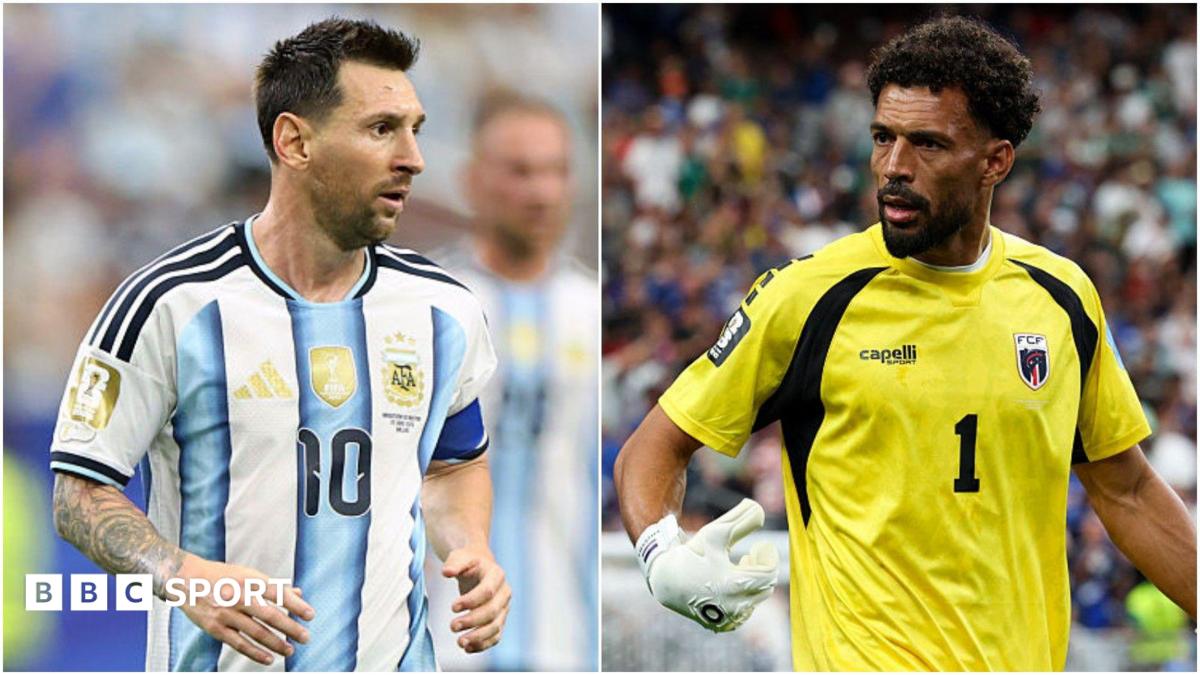
When football fans around the world began making their predictions for the 2026 FIFA World Cup knockout stage, few could have imagined the mouthwatering underdog story that would dominate pre-match hype: Lionel Messi, widely regarded as the greatest player to ever step onto a football pitch, preparing to face 40-year-old Cape Verde goalkeeper Vozinha in one of the most lopsided but anticipated matchups in modern tournament history.
The game will kick off Friday at Miami Stadium, kicking off what is already being framed as a classic meeting between tournament powerhouse Argentina and the smallest nation ever to reach a World Cup knockout round: first-time qualifier Cape Verde. What makes the matchup so captivating is not just the gulf in experience and resources between the two sides, but the incredible underdog journey that brought the African side to this point, a run that has already secured their place in World Cup folklore.
Few gave Cape Verde any chance of progressing out of their group, even before they faced off against defending European champions Spain. But the Blue Sharks held the giants to a shock 0-0 draw, a result that already ranked among the biggest upsets in modern World Cup history – even without a win. Back-to-back draws against two-time winners Uruguay and Saudi Arabia followed, enough to secure a second-place group finish and a historic ticket to the round of 32. Their reward? A clash with the current world champions.
On paper, it looks like one of the biggest mismatches World Cup football has ever seen. Argentina is one of the most storied national teams in the sport, with a legacy stretching back to the very first World Cup in 1930, where they finished as runners-up. The side has won the World Cup three times: first in 1978 with a 3-1 final victory over the Netherlands, again in 1986 against West Germany, and most recently in 2022 in Qatar, where they defeated France on penalties after a thrilling 3-3 draw. Beyond global success, Argentina hold the record for most Copa America titles with 16 wins, including the last two consecutive tournaments, and have ranked among the top three in the FIFA world rankings since March 2022, holding the number one spot for two years before France claimed the top position last year.
Cape Verde’s football origin story could not be more different. The nation only gained independence from Portugal in 1975, its national football federation was founded in 1982, and it only accepted FIFA membership in 1986 – the same year Argentina lifted their second World Cup trophy. The Blue Sharks first entered World Cup qualifying in 2002, and did not come close to qualification until the 2022 cycle, when they missed out on Qatar by just one point, falling short after a 1-1 draw with Nigeria in their final group match. For 2026, despite being drawn into a qualifying group with eight-time qualifier Cameroon, Cape Verde finished top of the group with just one loss from 10 matches to secure their first ever World Cup berth.
At the continental level, Cape Verde only made their first Africa Cup of Nations appearance in 2013, where they reached the quarter-finals, and have since qualified for three more tournaments, including another quarter-final run in 2023. They currently sit 64th in the FIFA world rankings, having hovered between 60th and 80th for the last nine years.
Much of Cape Verde’s recent progress can be traced back to a 2010 strategic shift, when then-manager Joao de Deus began tapping into the nation’s large global diaspora to strengthen the national squad, a common tactic for small nations in modern international football. Today, 12 members of the 2026 World Cup squad were born in Cape Verde – including Kevin Pina, who scored the nation’s first ever World Cup goal in their 2-2 draw with Uruguay – but the side relies heavily on diaspora talent, with five players born in the Netherlands, three in France and three in Portugal. No players currently play in Cape Verde’s semi-pro domestic league, with 23 plying their trade across Europe. Only one, Villarreal defender Logan Costa, plays in one of Europe’s top five leagues.
The squad’s surprise star, 40-year-old goalkeeper Vozinha, is currently an official free agent after his contract with Portuguese second division side Chaves expired earlier this week. Vozinha is one of seven squad members playing in Portugal, with only full-back Sidny Lopes Cabral, who is set to join Turkey’s Trabzonspor after leaving Benfica, playing at a top-tier club.
The gap in squad value between the two sides is staggering. According to transfer market data site Transfermarkt, Cape Verde’s entire squad has a combined market value of just €54.5 million (£46.8 million), putting them in the bottom nine of the 48 teams at the 2026 tournament. Argentina, by comparison, boast a squad valued at €807.5 million (£693.7 million), the seventh most valuable squad in the tournament, with only 16-time winners France ranking higher. When comparing projected starting lineups, Argentina’s first XI carries a combined value of £360.3 million – more than 18 times the £19.77 million total value of Cape Verde’s entire matchday squad. Five individual Argentine players are each worth more than the entirety of the Cape Verde squad, with Chelsea midfielder Enzo Fernandez the nation’s most valuable player at £77.4 million.
Beyond market value, the gulf in silverware is just as stark. Sixteen members of Argentina’s current squad are already World Cup winners, with countless domestic and continental titles across Europe’s top leagues between them. For Cape Verde, most of their players’ title success has come in lower-tier European leagues or smaller national competitions, with the highest profile honors being Jovane Cabral’s 2020-21 Portuguese league title with Sporting CP and Kevin Pina’s 2024-25 Russian Premier League title with Krasnodar.
Even off the pitch, the gap between the two nations is almost impossible to overstate. Cape Verde is a 10-island archipelago in the central Atlantic, 450 kilometers off the west coast of Africa, with a total land area of just 4,033 square kilometers and a population of roughly 530,000 – smaller than the population of every U.S. state. It is the third-smallest nation ever to qualify for a World Cup, and now holds the record for the smallest nation to ever reach the knockout rounds, breaking a 68-year record held by Northern Ireland. Argentina, by contrast, is the eighth largest country in the world by area, with a population of 46 million and a GDP of $683 billion, compared to Cape Verde’s $3 billion GDP.
For all the lopsided statistics on paper, though, Cape Verde has already defied every expectation placed on them at this tournament. Friday’s clash will not just be a game between the world champion and the debutant underdog: it will be a chance for the Blue Shores to write another shocking new chapter in World Cup history, with Vozinha set to take center stage against the greatest player of his generation. Football fans around the world will be tuning in to see if the ultimate underdogs can pull off one more upset.