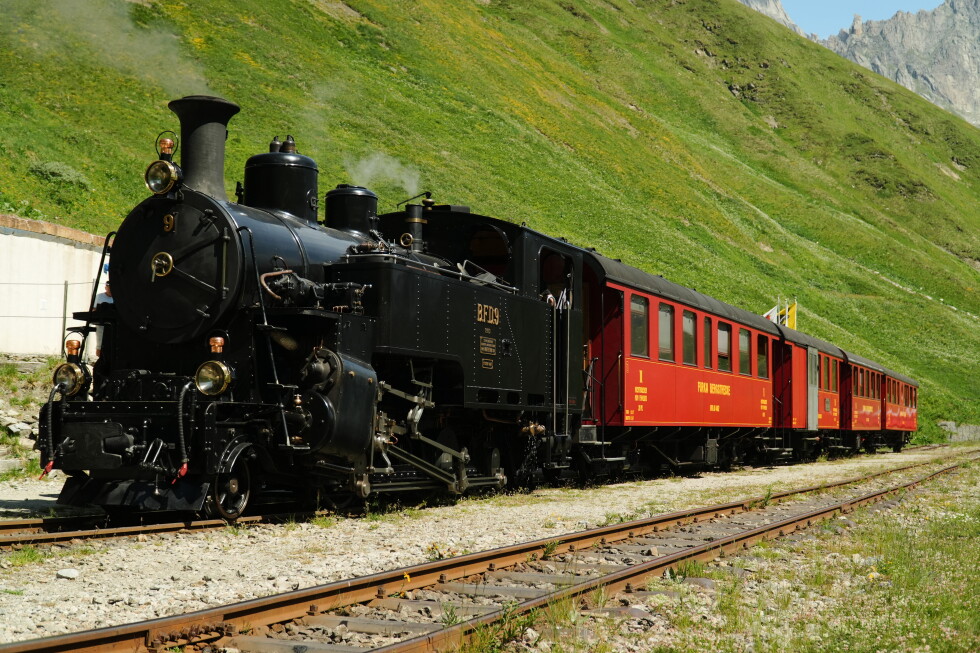
Nestled among Switzerland’s most dramatic high-Alpine landscapes, a beloved piece of railway history is preparing to mark a major milestone this weekend, as hundreds of train lovers and travel enthusiasts gather to celebrate 100 years of continuous connection along the iconic Furka Pass route.
Perched 2,431 meters above sea level, the Furka Pass ranks among Switzerland’s highest mountain crossings, gaining global pop culture fame as the backdrop for a heart-pounding car chase in the 1964 James Bond classic *Goldfinger*. But long before Sean Connery’s 007 navigated the pass’s famous hairpin turns, a steam locomotive made the first full continuous crossing of the steep, winding alpine corridor on July 3, 1926. That historic run established a critical permanent rail link between the central Swiss cantons of Uri and Valais, serving regional communities and travelers for more than five decades.
The original route’s operational era came to a close in the early 1980s, when a new base tunnel built under the Alps diverted all regular rail traffic and left the high mountain tracks abandoned. It would have fallen into complete disrepair if not for a large community of dedicated volunteers, who affectionately call themselves the railway’s “pioneers.” Over thousands of collective hours, these enthusiasts worked to restore, repair, and maintain the original tracks and vintage rolling stock, reviving the line to operate exactly as it did a century earlier.
The first section of the restored route opened as a heritage railway in 1992, and the full 18-kilometer stretch between Realp and Oberwald was finally completed and opened to passenger service in 2010. Today, the vintage steam trains run exclusively as a seasonal tourist attraction, operating only during summer months. Visitors can step into restored heritage carriages for a slow journey through some of the Alps’ most breathtaking scenery, past glacial rivers, wild alpine meadows, and lush green pastures that still hold patches of lingering snow from the winter months.
Unlike modern railway operations, every role along the Furka heritage line is filled by volunteer enthusiasts, who say mastering the art of operating a century-old steam locomotive requires far more than technical training. “It’s something like a living machine, so you have to get kind of the feeling for it,” explained Bernhard Lang, a veteran volunteer driver. “To feel how it behaves, how it moves, how it smells, how it sounds.”
For the youngest members of the volunteer team, the project offers a rare, tangible connection to early 20th-century engineering. “You hear every sound, you hear if everything is right,” said Jacob Kallert, a 21-year-old German transport engineering student and the line’s youngest train manager. “You can pretty much feel how it was then and how it is now.”
Volunteers say the project has a way of winning over anyone who spends time on the line. “We say, in German, that everyone who works here has the ‘Furka Virus, the Furka disease,’” joked volunteer Sergio Rovelli. “Once you come here, you like it, and you stay.”
Tickets for the scenic 2-and-a-half-hour one-way journey start at 46 Swiss francs, equal to roughly $56.82. Centennial anniversary celebrations kicked off Friday and will run through the weekend, giving visitors the chance to mark the milestone while riding the historic locomotives through the Alps.