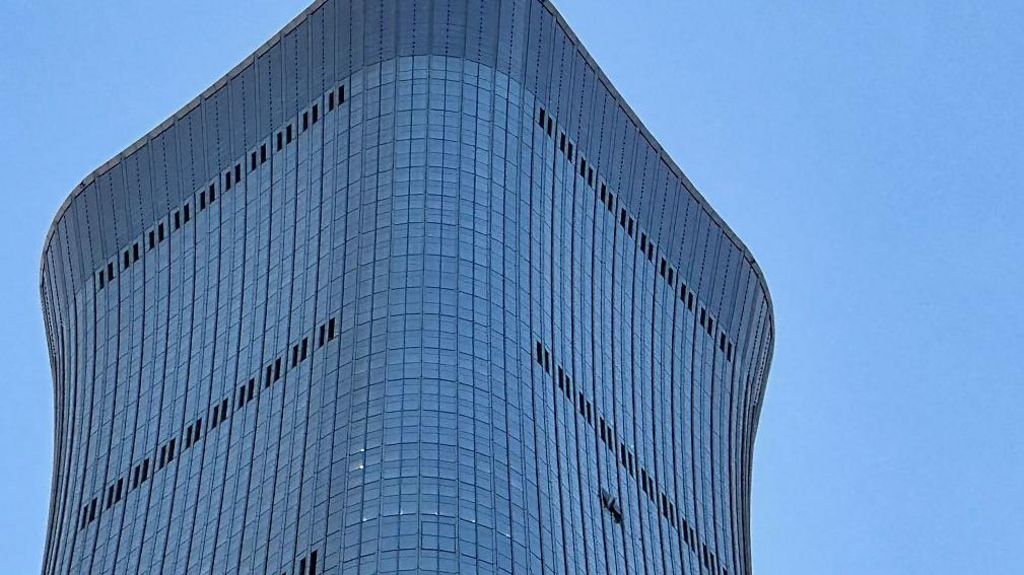
Last Friday, a small civilian aircraft crashed into CITIC Tower — Beijing’s tallest skyscraper, also known as China Zun — leaving the pilot dead and 13 other people injured, according to official statements released by local authorities in Beijing’s Chaoyang District on Thursday.
Nearly a week after the incident, authorities have released the full findings of their ongoing investigation, confirming that the 66-year-old pilot, identified only by his surname Liu, carried out the crash intentionally due to long-standing personal mental health struggles. A divorced freelance worker who lived alone in Beijing, Liu had reportedly lived with chronic insomnia and clinical anxiety for an extended period before the incident. Investigators found multiple references to ending his own life in Liu’s personal diary, leading the inquiry panel to conclude the crash was a deliberate act of endangering public safety driven by personal reasons.
The crash claimed Liu’s life at the scene. Of the 12 injured people hospitalized following the collision, one has already been discharged and the rest are receiving treatment, authorities confirmed.
Located just a few kilometers from Zhongnanhai, the headquarters of the Communist Party of China, the 109-story CITIC Tower is one of the most prominent high-rise structures in central Beijing. Amateur footage of the crash showing debris falling from the skyscraper spread rapidly across Chinese social media platforms in the hours after the incident, before most clips were removed as the investigation got underway. Even unrelated posts, photos and memes featuring the landmark were taken down in the aftermath of the crash, a move that drew attention from international observers.
Following the incident, multiple aviation operators told the BBC that national aviation regulators had ordered an immediate suspension of all light aircraft operations across parts of the country, a precautionary move to enhance security amid the ongoing investigation.
Flight tracking service Flightradar24 confirmed that the aircraft Liu was flying was an Aurora SA60L, a two-seat, single-engine light sport aircraft produced by Chinese domestic manufacturer Sunward Aircraft. Designed primarily for recreational flying, aerial photography and short touring trips, the plane measures 6.9 meters in length and has an 8.6-meter wingspan. Authoritative records show Liu earned his sport pilot license in 2021 and upgraded to a full private pilot license just two years before the crash, in 2024.
According to the official flight timeline, Liu took off from an airfield in Beijing’s Pinggu District on the day of the crash, completing a supervised training flight before departing on a solo flight. During the solo portion of his flight, Liu deliberately deviated from his pre-approved flight route and designated operating area, before losing contact with air traffic controllers at the airfield. Moments later, the plane collided with the CITIC Tower.