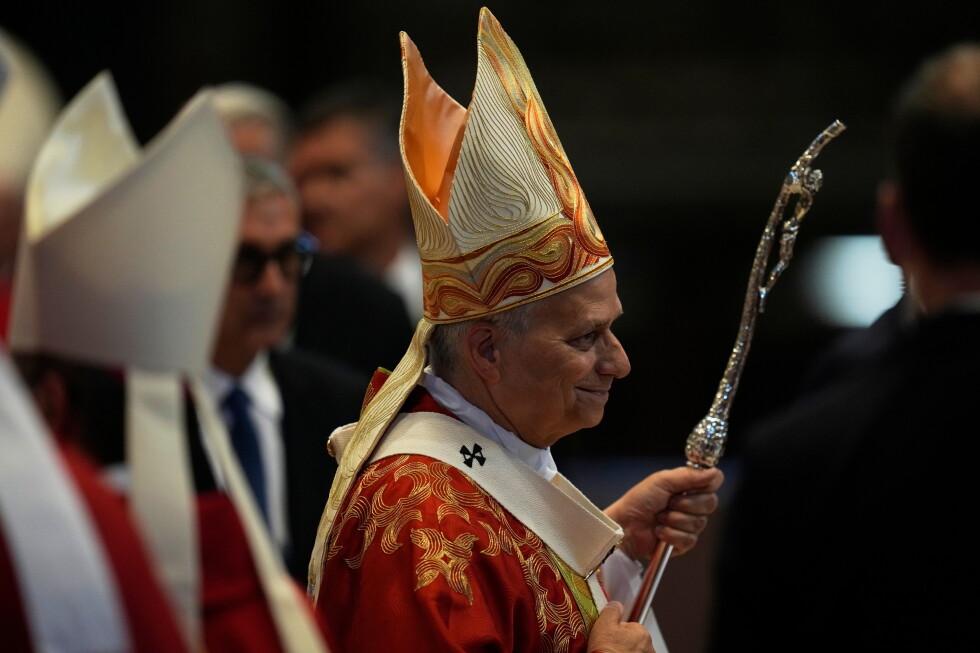
A decades-long theological rift within global Catholicism is set to escalate this week, as the Society of St. Pius X (SSPX), a breakaway ultratraditionalist faction, plans to move forward with consecrating four new bishops without the mandatory approval of Pope Leo XIV — an act that carries the Catholic Church’s most severe penalty under canon law.
The high-stakes ceremony is scheduled for Wednesday at the SSPX’s seminary in Econe, a remote mountain valley in southwestern Switzerland. Organizers expect thousands of attendees to gather, all drawn to the faction’s rejection of modern Catholic reforms and commitment to the pre-Vatican II Latin Mass, which has been largely replaced by vernacular-language liturgies across most of the global Church. Despite a last-minute public appeal from Pope Leo to cancel the ordination, the SSPX has refused to alter its plans. In an open letter released Tuesday, the American-born pontiff warned that ordaining bishops without papal mandate constitutes a “sin of extreme gravity” that inflicts lasting harm on the faction’s own followers.
Under longstanding Catholic canon law, any unauthorized episcopal consecration triggers automatic excommunication for all parties involved: the four bishop-designates and the prelate who will administer the rite. The act is also formally classified as schism, a deliberate break from the institutional unity of the global Catholic Church.
Oddly, the event has been framed by the SSPX as a joyous milestone rather than an act of rebellion. The group’s official consecration website has run a public countdown timer for days, and social media clips show seminarians cheerfully preparing event logistics. Registered attendees can purchase commemorative merchandise, including branded baseball caps marked with the “Econe2026” seal and a 75 Swiss franc ($92.50) souvenir wine set dubbed “Cuvee des Sacres.” The four-bottle gift set features four regional grape varieties, each bottle labeled with an episcopal symbol: a miter, bishop’s ring, cross, and crozier.
For the SSPX, threats of schism and excommunication carry little weight. The faction has long held that it alone is defending the unchanging traditions of the Catholic faith against what it calls widespread heresy in the modern institutional Church. “We don’t fear it. It pains us immensely, but we believe that the good we seek is greater than the pain that will be inflicted upon us,” said Marc-André Mabillard, the SSPX’s media manager. In a formal response to Pope Leo’s appeal, SSPX superior General Rev. Davide Pagliarani asked the pontiff to delay imposing any formal penalties.
The current confrontation is rooted in a split that dates back to the 1970s. The SSPX was founded by French Archbishop Marcel Lefebvre in explicit opposition to the modernizing reforms of the Second Vatican Council (Vatican II), the 1960s global church gathering that transformed Catholic outreach to other faiths, restructured church-state relations, and replaced the universal Latin Mass with local-language services. Thirty-eight years to the day before Wednesday’s planned ceremony, the Vatican declared the SSPX’s last set of unauthorized episcopal consecrations a schismatic act, imposing automatic excommunication on all involved bishops.
Today, the SSPX rejects core tenets of Vatican II teaching, accusing the modern Church of being corrupted by modernism, liberalism, and ecumenism. The faction justifies its new ordinations by what it calls a “state of necessity”: only two of the SSPX’s original four bishops are still living, and the group says it needs additional bishops to serve its global community of 800 worship sites spread across 77 countries, ordain new priests, and administer confirmation via the ancient Latin rite. The SSPX denies the act is a direct challenge to Pope Leo’s authority, saying the sole purpose of the consecrations is to serve the pastoral needs of its followers. The four bishop-designates have been named as Pascal Schreiber (Switzerland), Michael Goldade (United States), and Michel Poinsinet de Sivry and Marc Hanappier (both France).
The planned consecrations have drawn widespread criticism from across the Catholic community, even from many conservative and traditionalist Catholics, who frame the act as an unacceptable act of disobedience to the pope that damages the unity of the Church. “You can’t serve tradition while disobeying the church and her authority,” said Rev. Robert Gahl, an ethics scholar at the Catholic University of America.
Prominent Catholic commentator and St. John Paul II biographer George Weigel noted that the dispute between the Vatican and the SSPX extends far beyond the language of the Mass. Writing in First Things magazine, Weigel explained the divide centers on “a rejection of the Second Vatican Council’s teaching on the church, salvation, religious freedom, church–state relations, and the church’s relationship to other religions.” Weigel also recalled that SSPX founder Lefebvre supported the collaborationist Vichy regime in Nazi-occupied France during World War II, and that one of the faction’s founding bishops publicly denied the Holocaust.
Mabillard acknowledged the faction’s regret over the rift with the Vatican, telling reporters: “We have great sadness to not be understood by our leader,” before confirming: “We are changing absolutely nothing in our plans.”
This report includes contributions from Keaten in Geneva. Associated Press religion coverage is supported via a collaboration with The Conversation US, with funding from Lilly Endowment Inc. The AP holds sole editorial responsibility for this content.